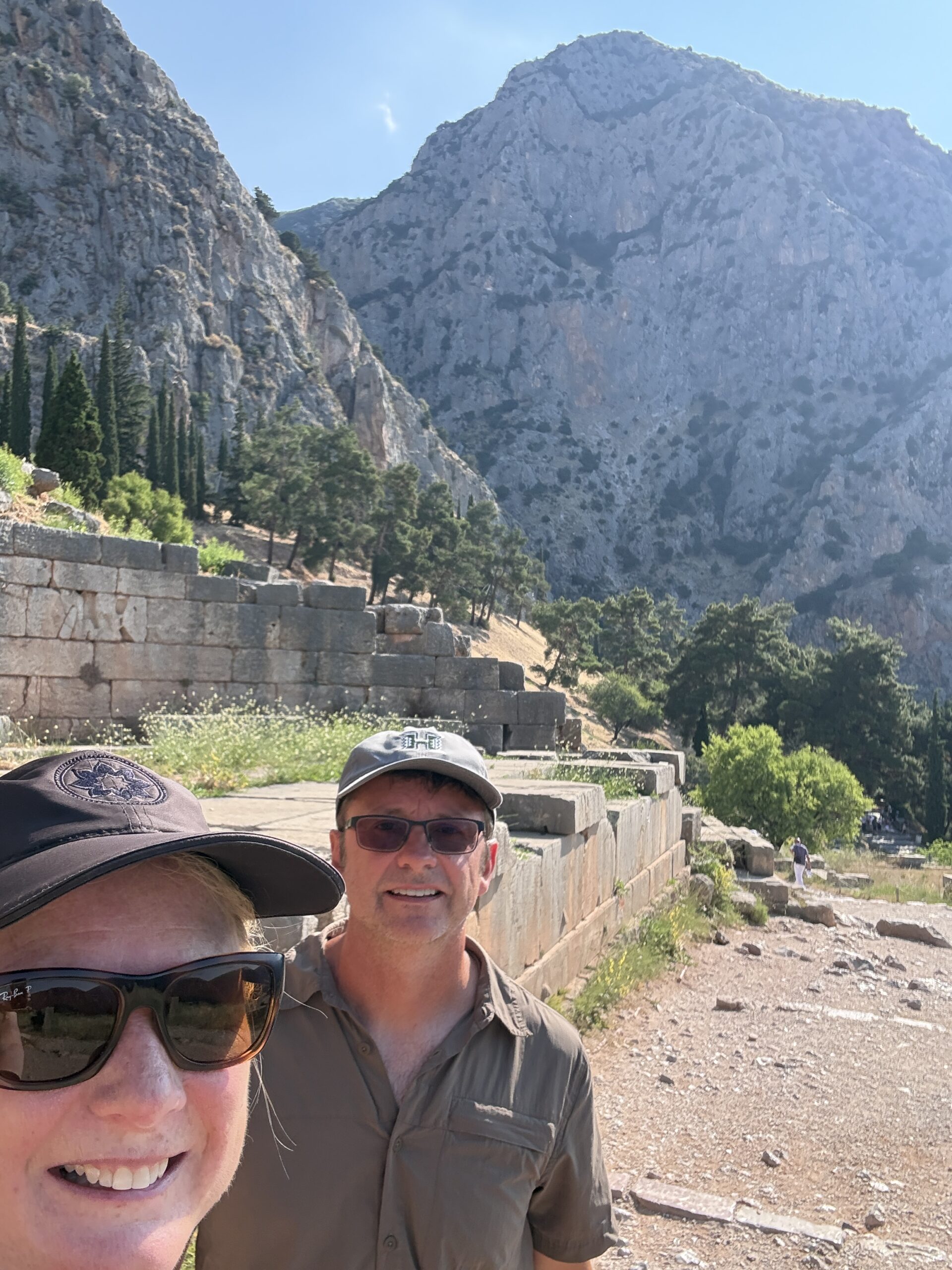
Our upcoming transit through the Corinth Canal may be the headline act this week, but before we got there we had to make a stop that has been on our “Greece” wish list for quite some time: the Archaeological Site of Delphi.
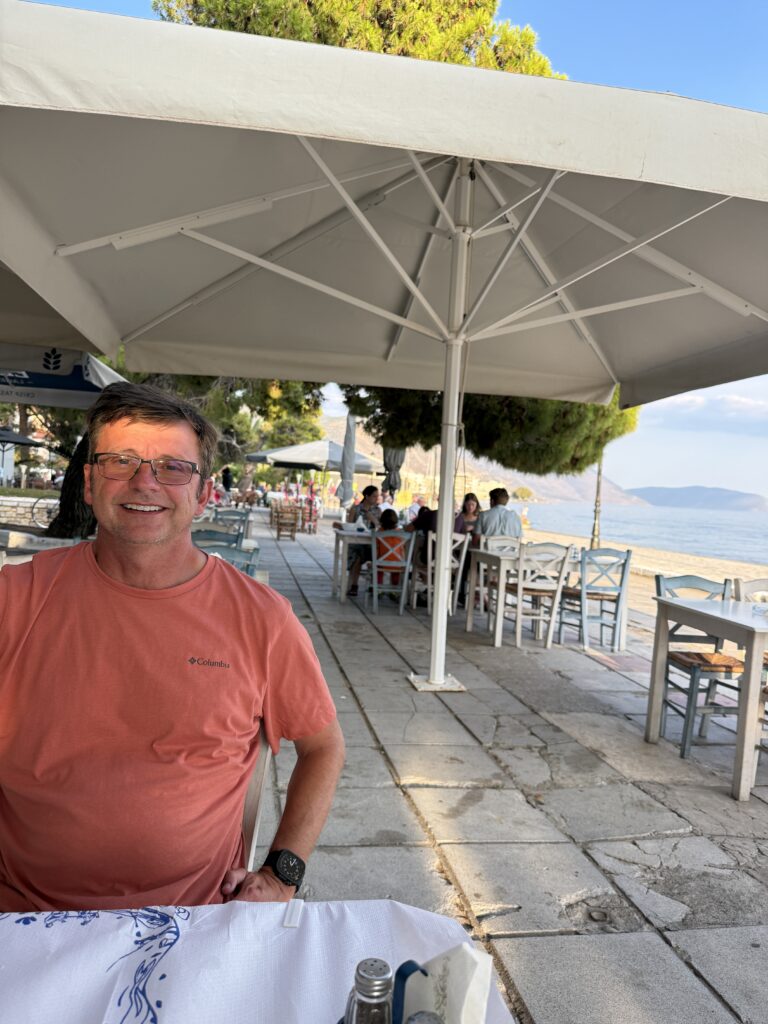
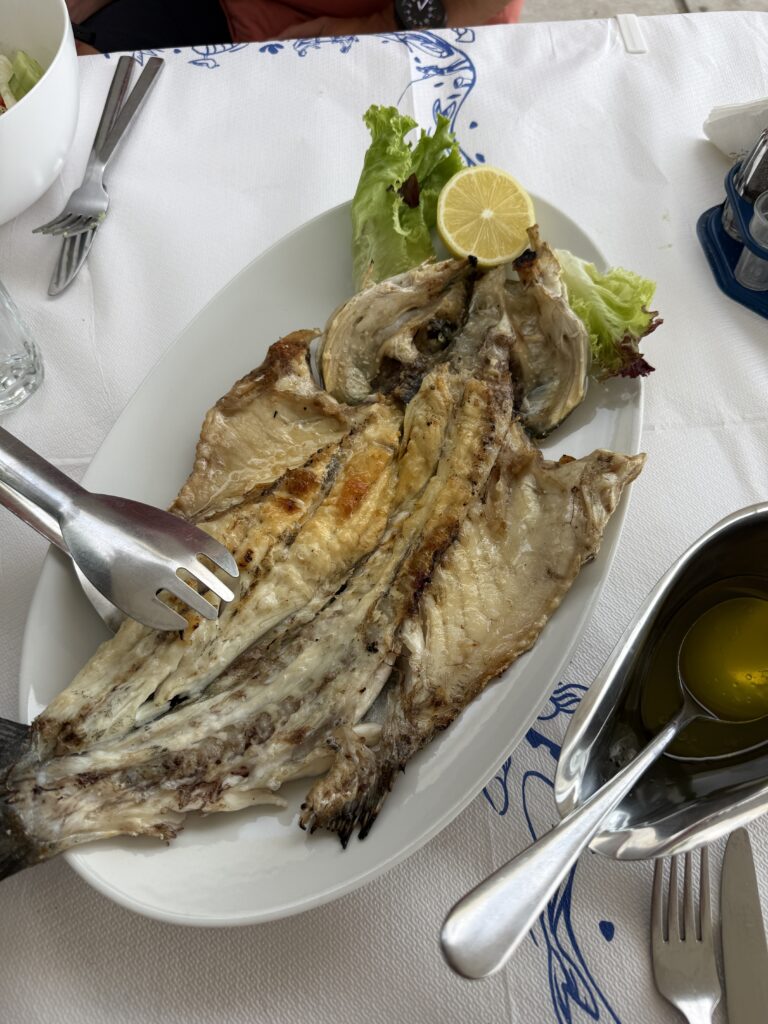
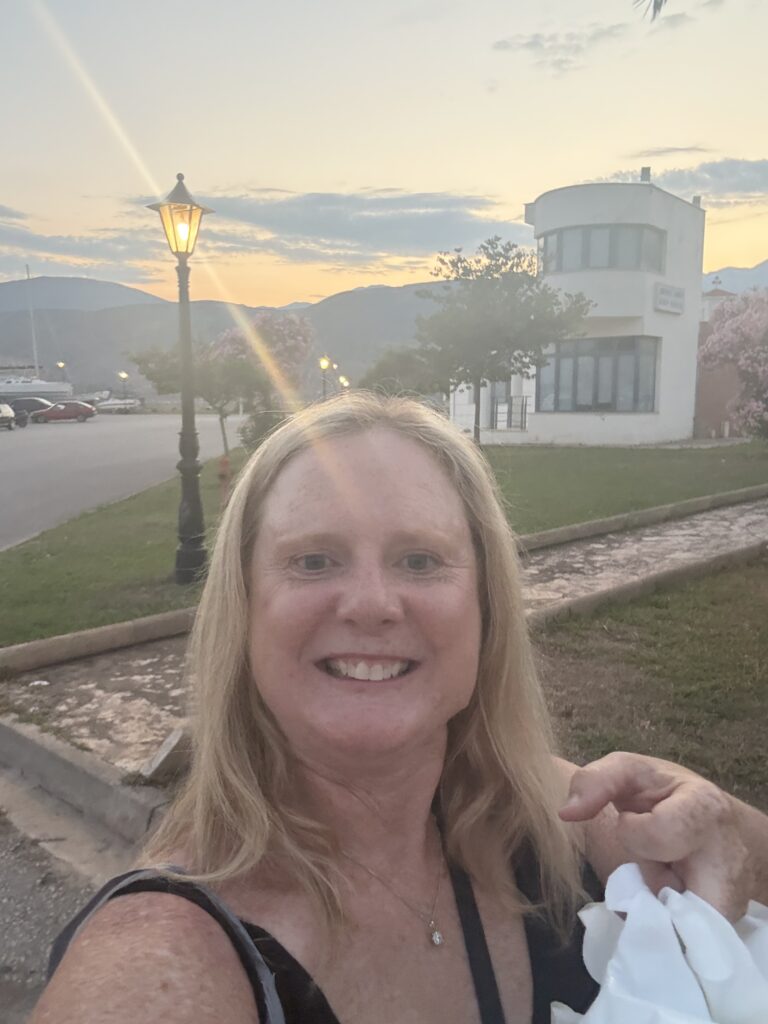
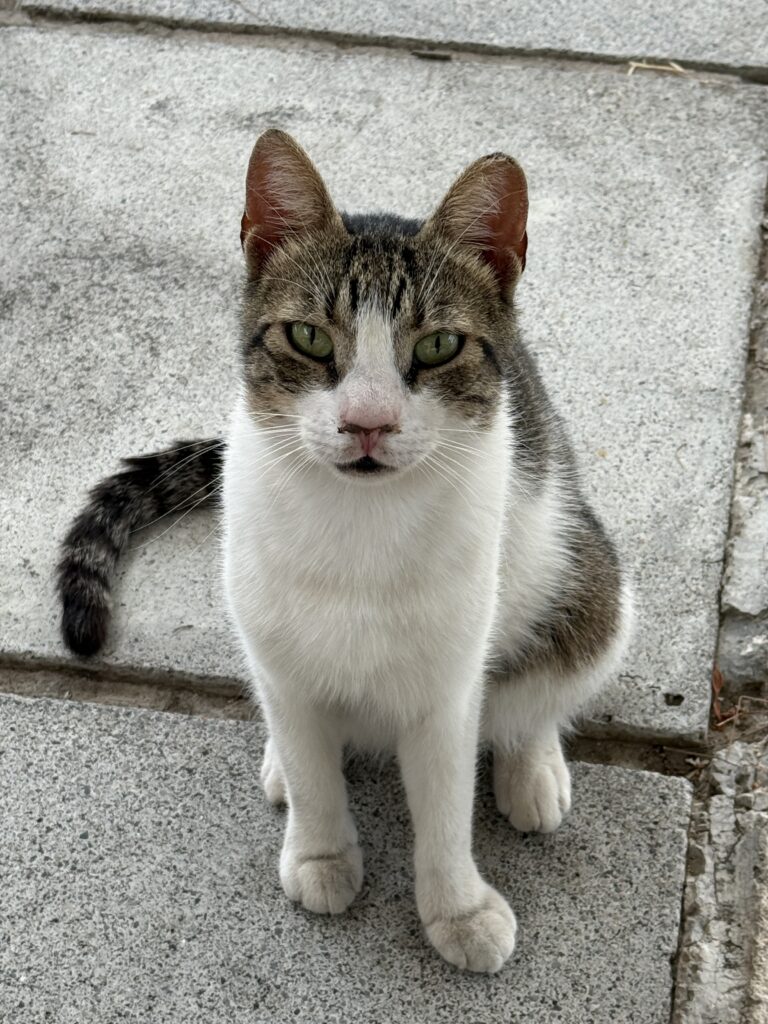
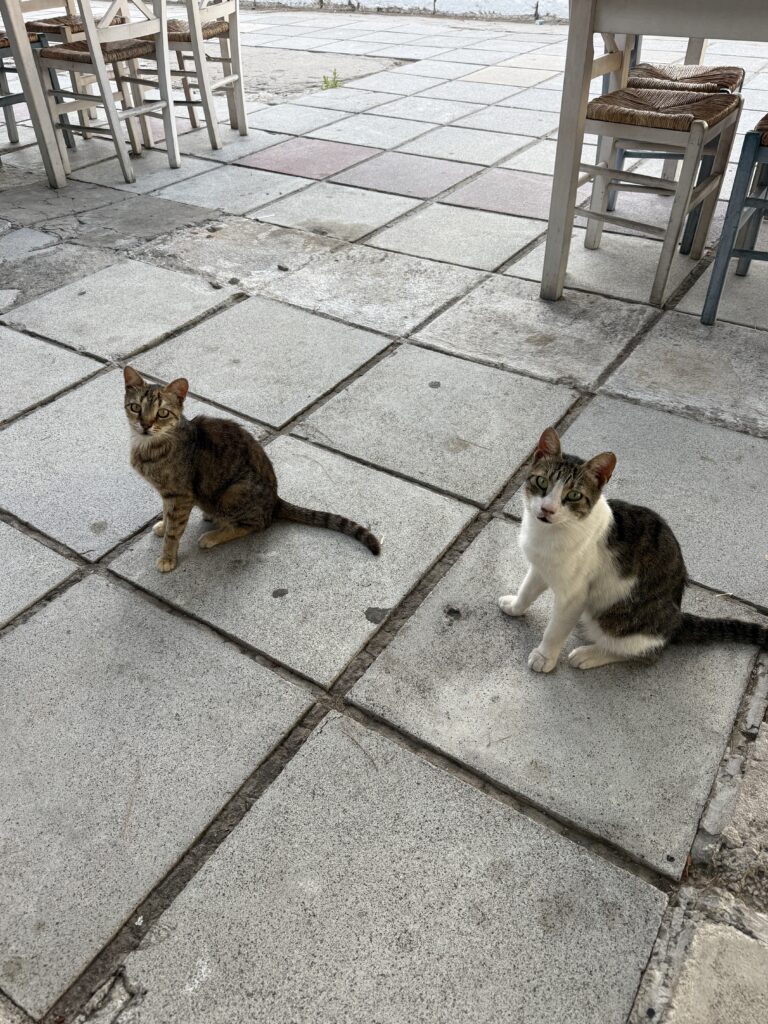
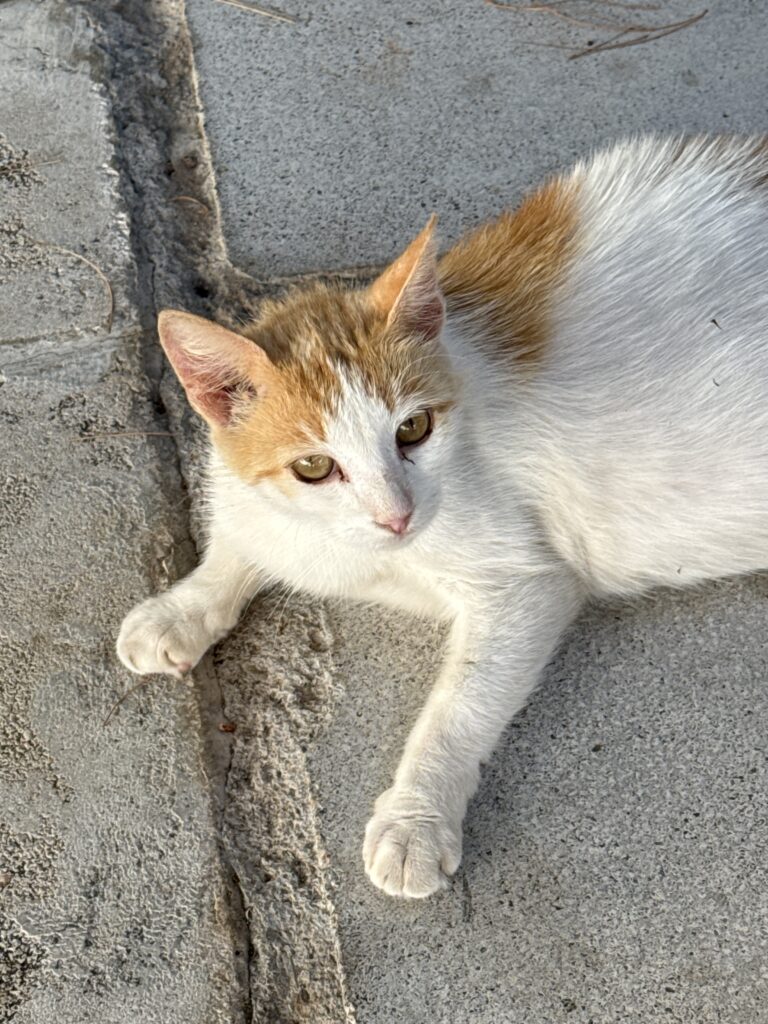
To that end we spent two nights docked in Itea, a laid-back seaside town on the Gulf of Corinth, best known today as the gateway to Delphi and the surrounding olive-covered valleys of central Greece. The first evening was spent provisioning KORA and enjoying a wonderful dinner of fresh sea bream and perhaps slightly more vino than strictly necessary. Joining us for dinner were several friendly locals. The first cat appeared beside our table shortly before the main course arrived. Then another. Then another. Before long we seemed to be hosting an unofficial feline convention. To their credit, none attempted theft. They simply sat nearby, gazing at us with expressions suggesting they hadn’t eaten in weeks and that we were personally responsible for correcting this terrible injustice.
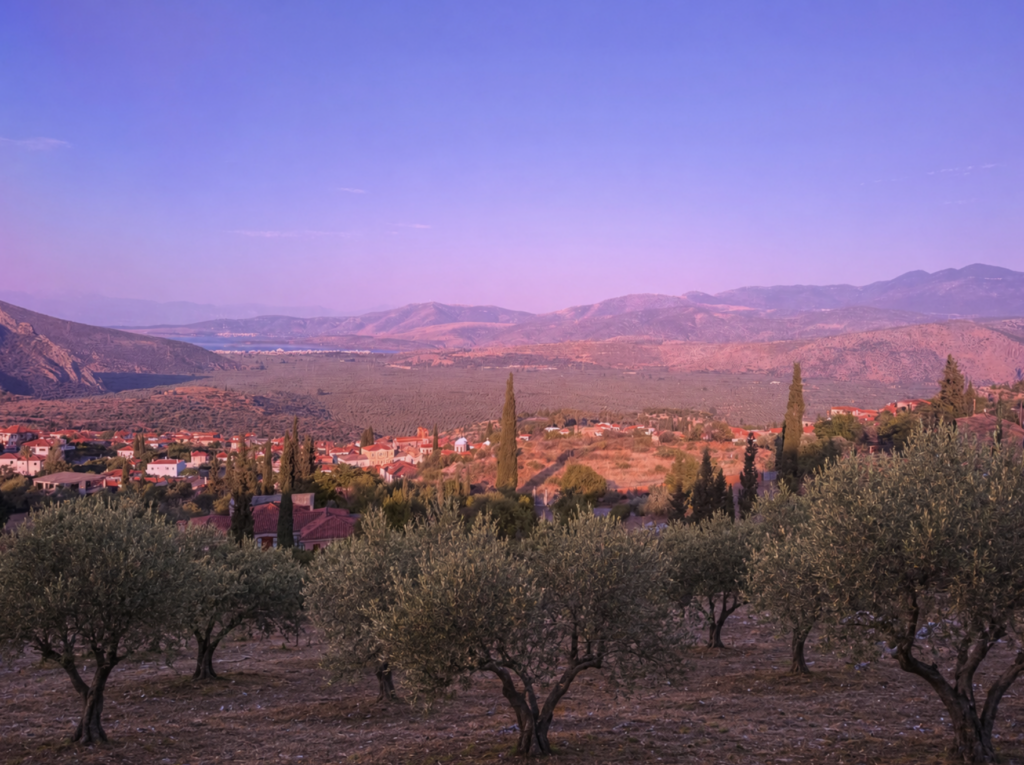
The next morning we arose early to board a local bus and climb the hills toward Delphi before the heat of the day was upon us. The below photo was taken through the bus window on the trip there. What a setting! Nestled on the slopes of Mount Parnassus, surrounded by rugged peaks and overlooking a vast valley blanketed with olive groves, Delphi is definitely a spectacular location for this archaeological site. Before we’d even learned a single thing about its history, the scenery alone had already justified the trip.
Of course, Delphi is famous for much more than its views. Ancient Greeks believed this was the very centre of the world. According to mythology, Zeus released two eagles from opposite ends of the earth. They met at Delphi, marking the location of the omphalos – the “navel of the world” and the spiritual centre of ancient Greece.
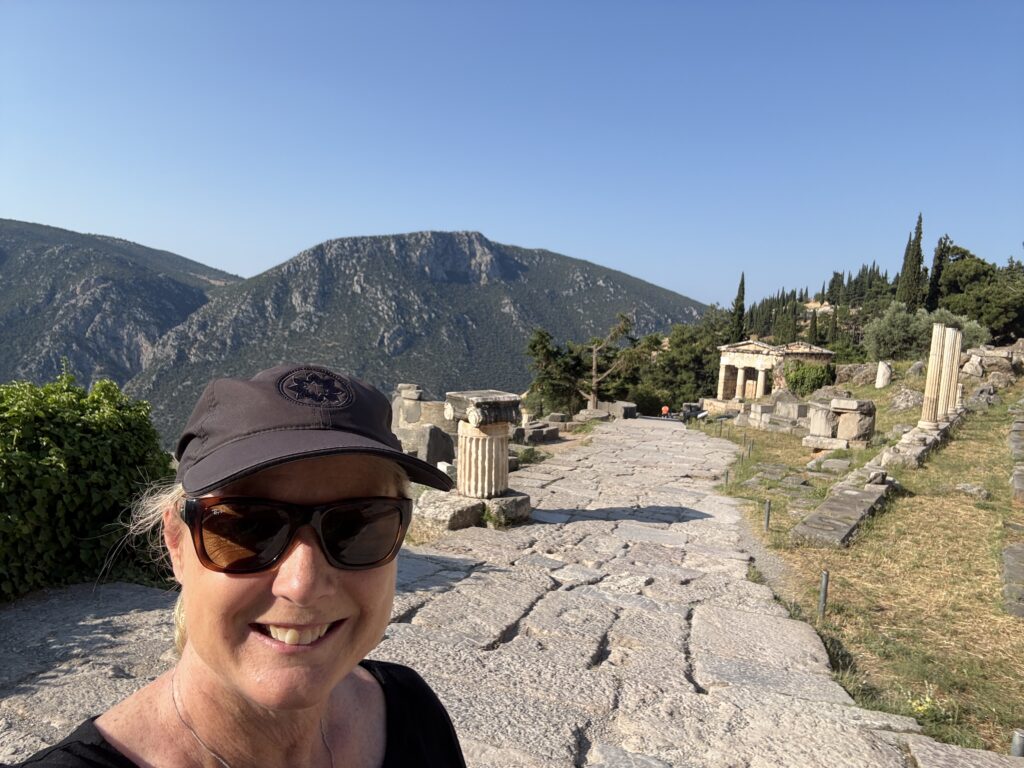
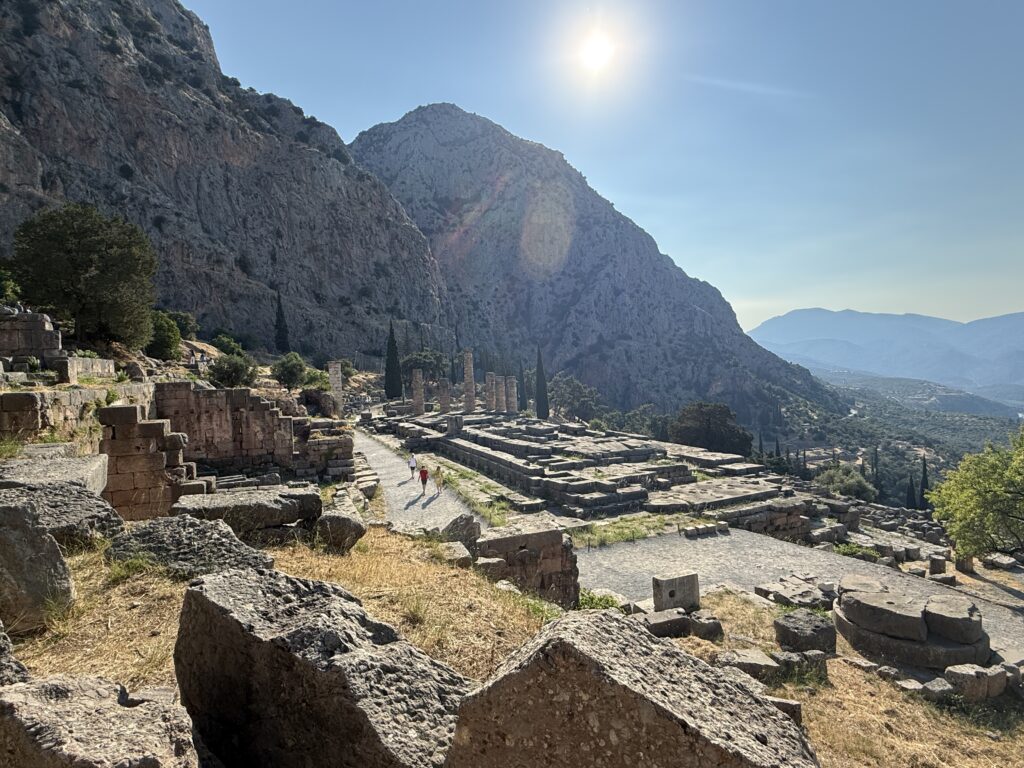
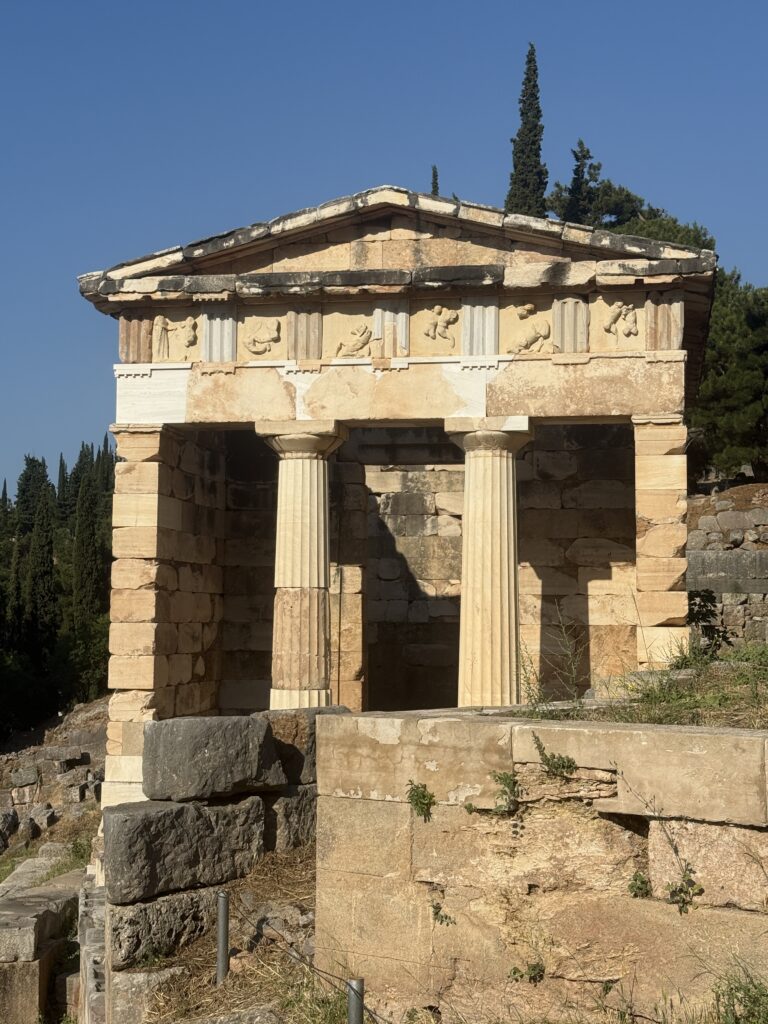
For more than a thousand years, kings, generals, city-states, and ordinary citizens travelled here seeking guidance from the Oracle of Apollo. The priestess, known as the Pythia, would deliver cryptic prophecies said to come directly from the god himself. Entire wars, colonies, and political decisions were influenced by the answers given at Delphi. Throughout the sanctuary, stories of Apollo, Zeus, Heracles, heroes, monsters, and prophecies are woven into the ruins, making it feel as much a place of legend as one of history.
The ancient theatre sits high above the sanctuary, gazing across the valley below. It could be difficult to keep one’s focus on the performers with that backdrop! Higher up the hillside lies the ancient stadium, where athletic competitions associated with the Pythian Games, second only to the Olympic Games in importance, were once held.
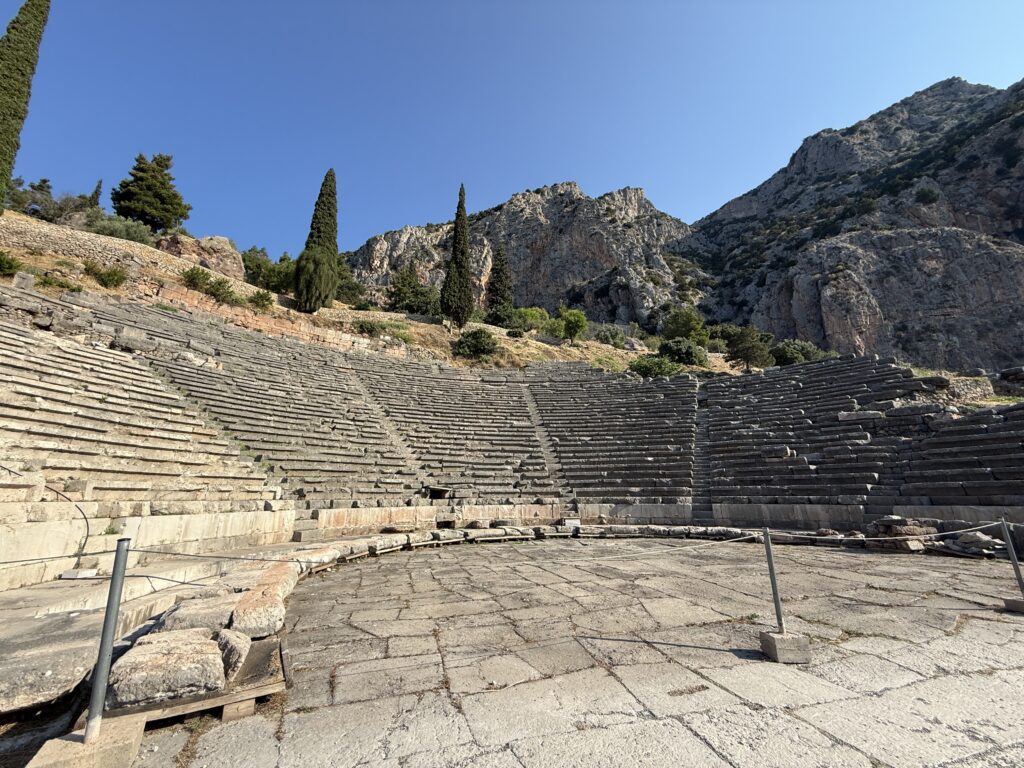
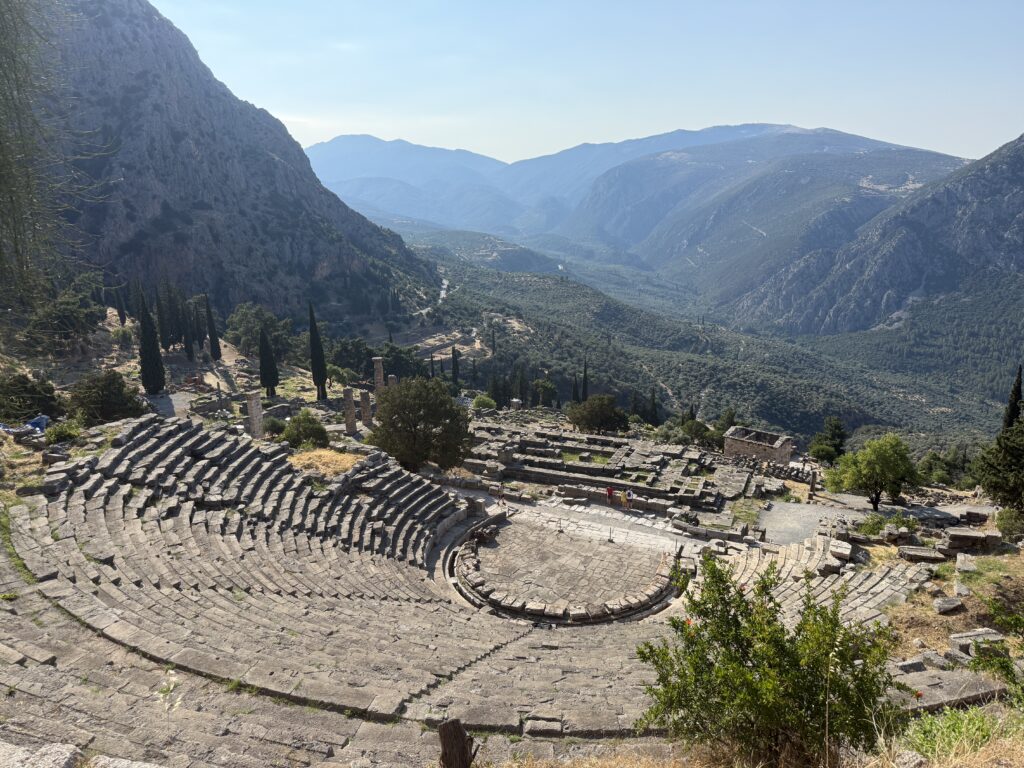
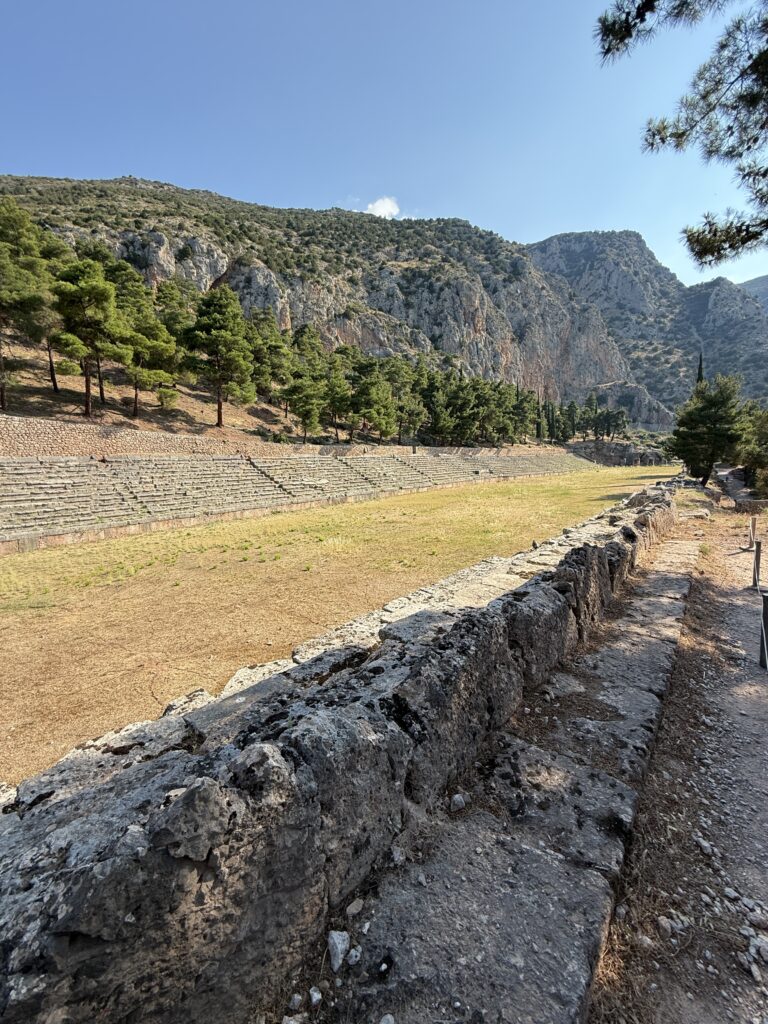
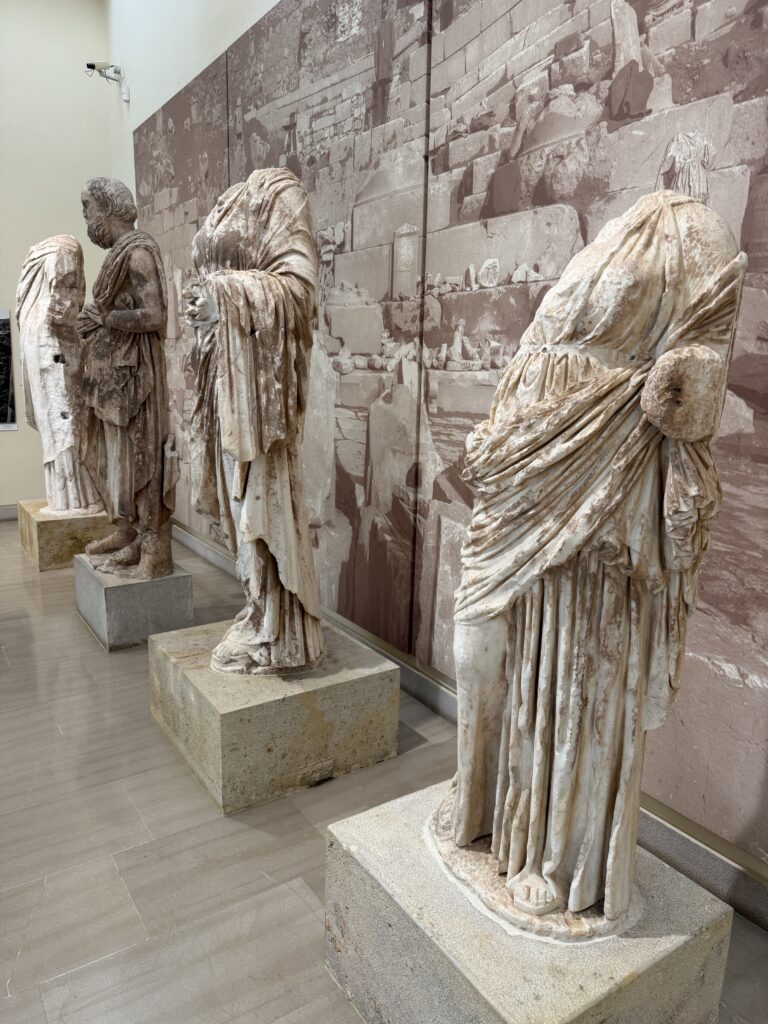
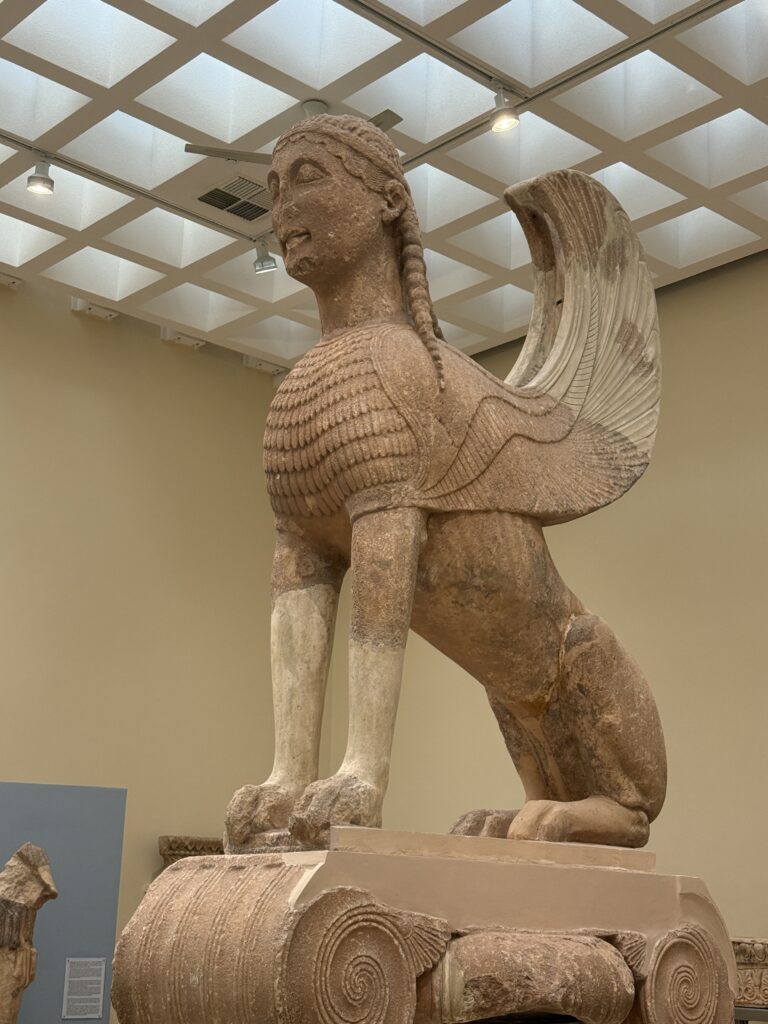
One of the highlights of the visit was the archaeological museum, which houses many of the site’s most important artifacts and statues. We were particularly impressed by the incredible craftsmanship and detail in the pieces more than two thousand years old. Among the most striking was the magnificent Sphinx of Naxos, a mythical creature with the body of a lion, wings of an eagle, and the head of a woman, originally perched atop a towering column overlooking the sanctuary.
Tomorrow we continue east to the staging area for our transit of the Corinth Canal. If you’re not familiar with it, look it up! It’s going to be quite an experience!!!