After a string of lively ports and coastal stretches, we set our sights on something a little more serene. Elba Island, the largest island in the Tuscan Archipelago, nestled in the Tyrrhenian Sea between mainland Italy and Corsica.
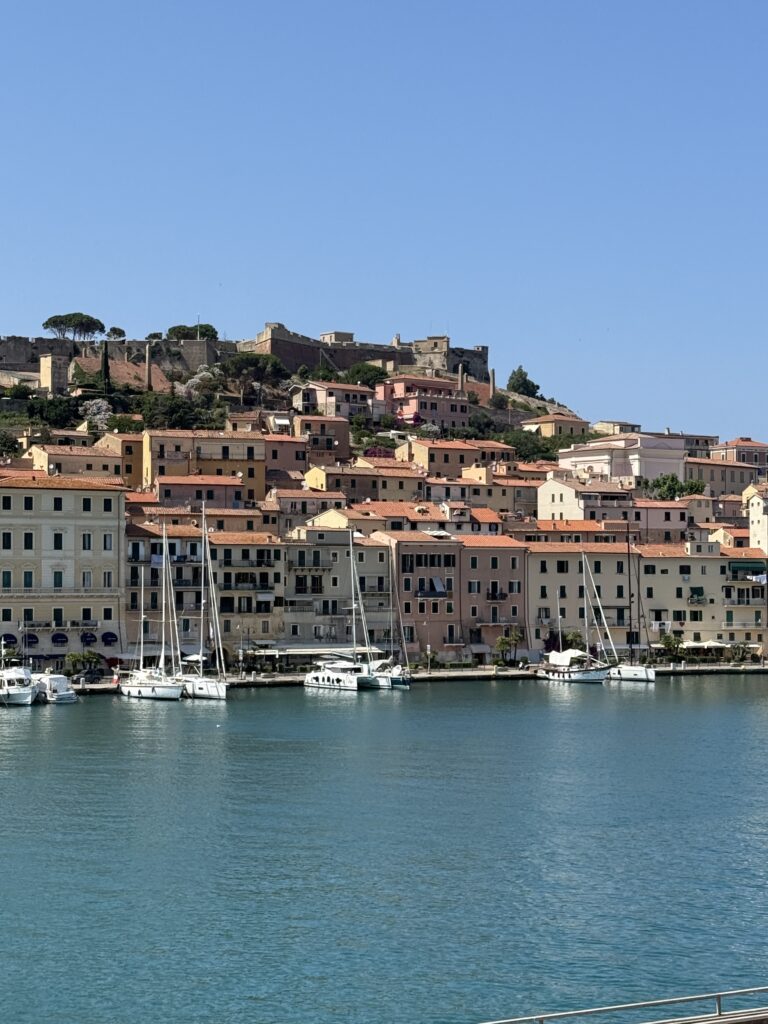
We arrived in Portoferraio, the main port and historical heart of Elba Island, expecting to be overwhelmed by streets crowded by tourists and inflated prices. What we found instead was an unexpected gem: a port that breathes beauty and serenity at every turn. Despite the rhythm of ferries arriving throughout the day, the crowds are light, the pace unhurried. This town doesn’t hustle to impress – it simply does.
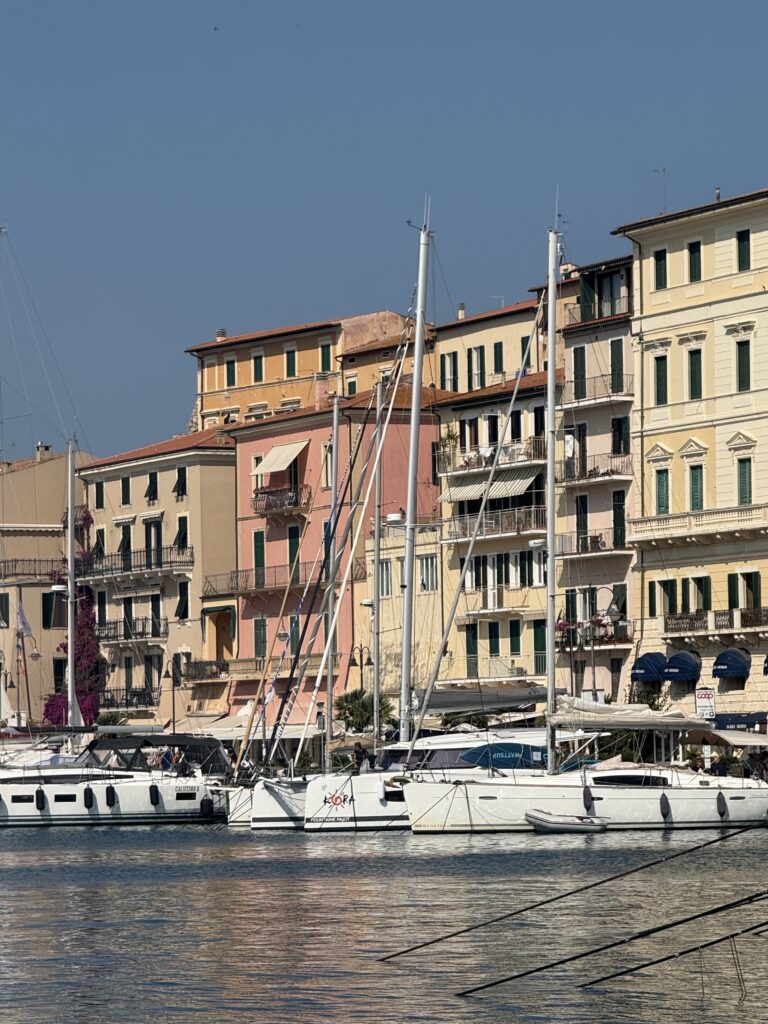
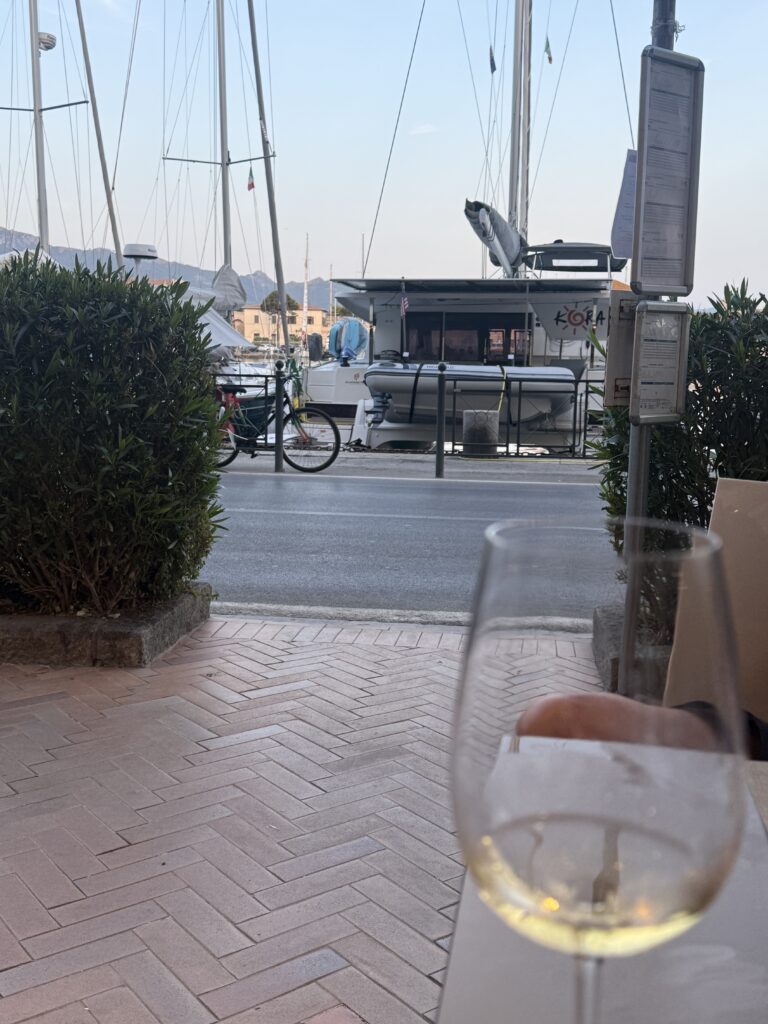
Docking Kora right in the heart of the action, we were greeted warmly by the marineros and settled into a prime spot just steps from inviting restaurants, cafes, local shops, and wine bars. That evening, as golden hour lit up the sun-washed Mediterranean palette of buildings across the harbor, we shared a bottle of wine with a Belgian couple docked next to us and watched the lights twinkle to life across the marina. Portoferraio had already won us over.
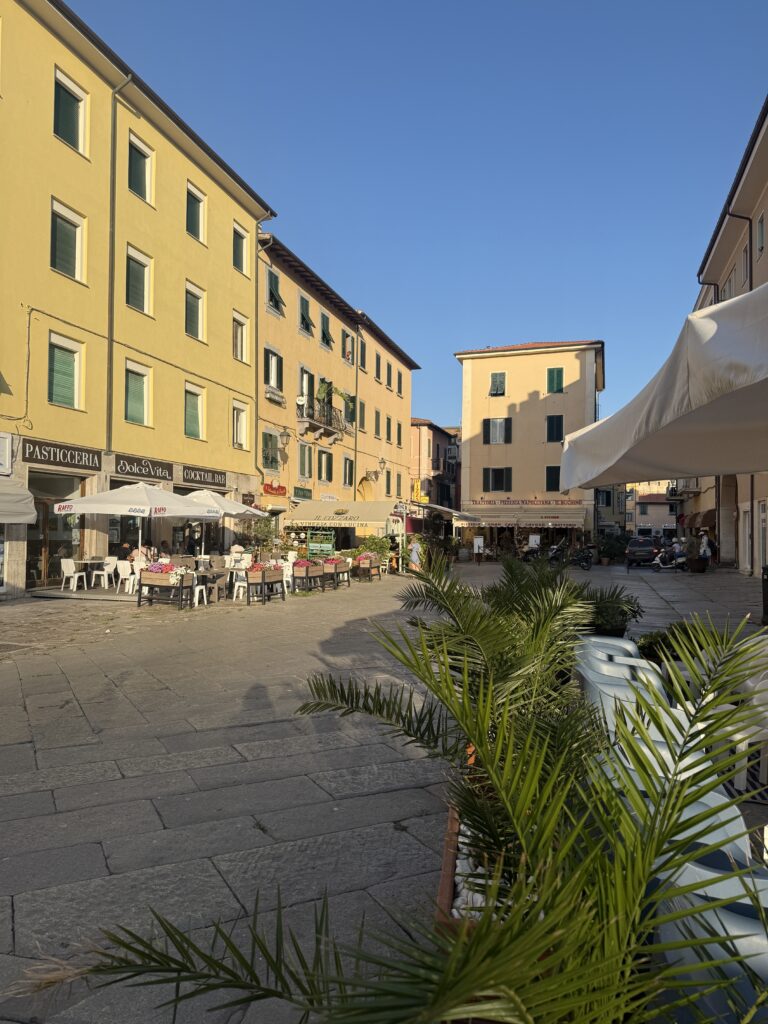
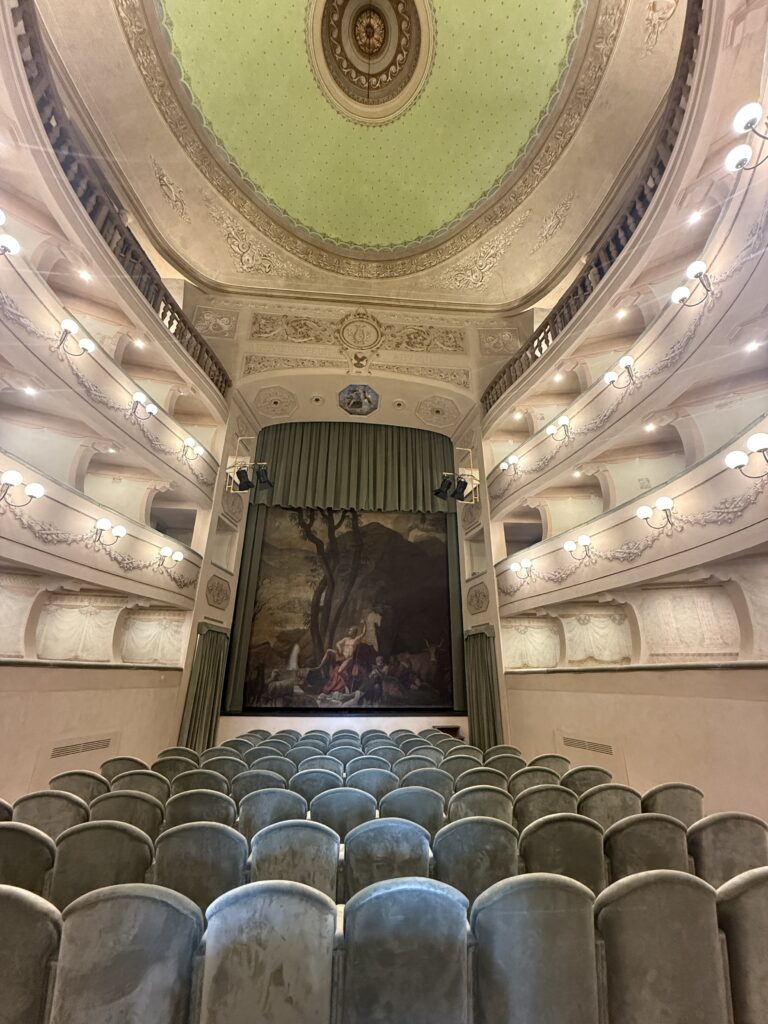
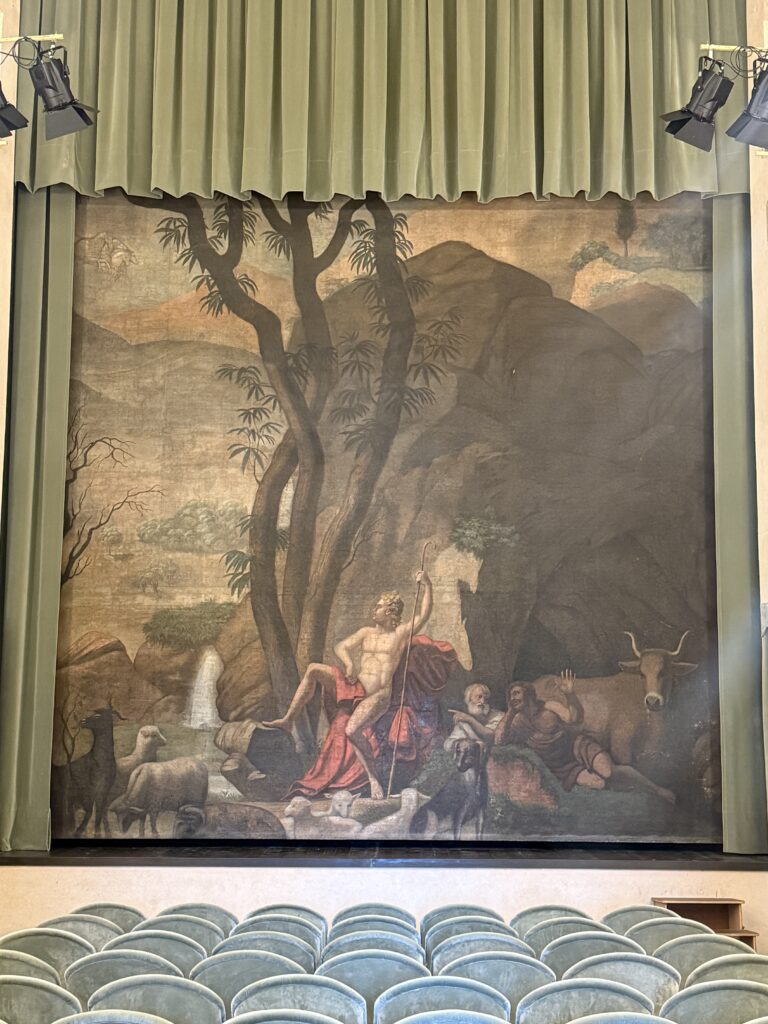
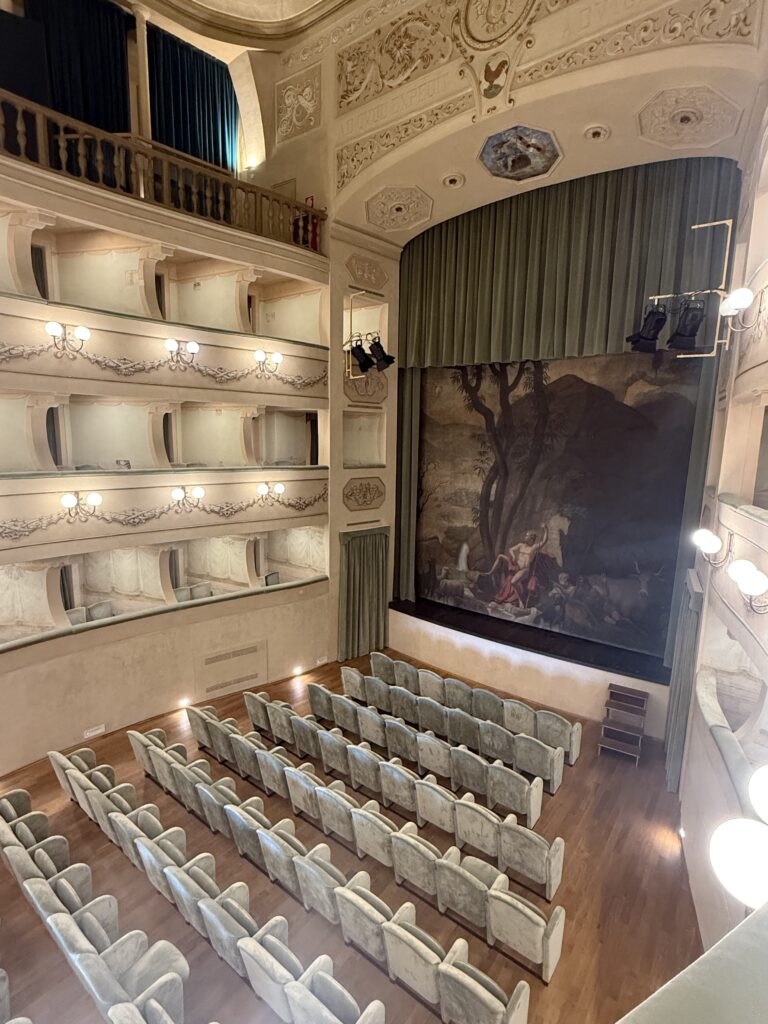
The next morning, we set out early to explore the city’s rich layers. First stop: Teatro dei Vigilanti “Renato Cioni”, once a 17th-century chapel turned Napoleonic theater. Napoleon reportedly found it too narrow and only used it once, but today it is still active – a poetic blend of history and culture preserved.
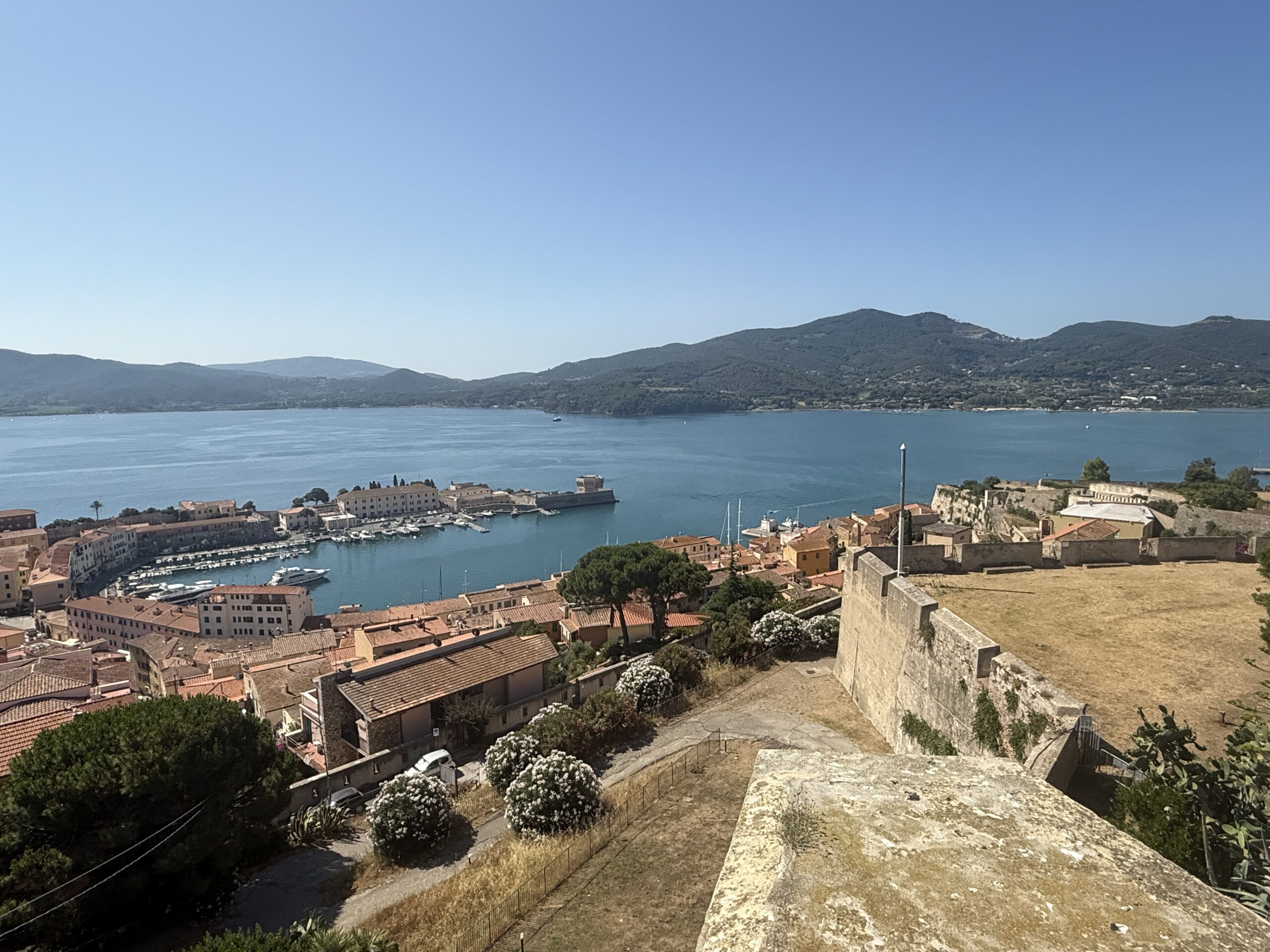
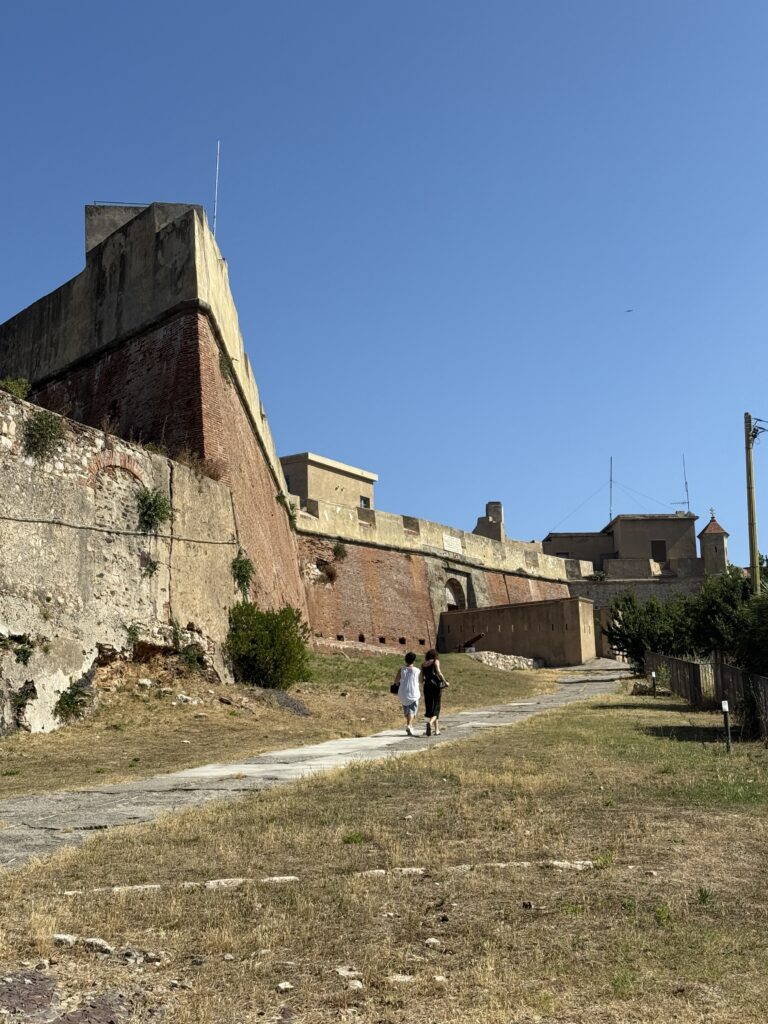
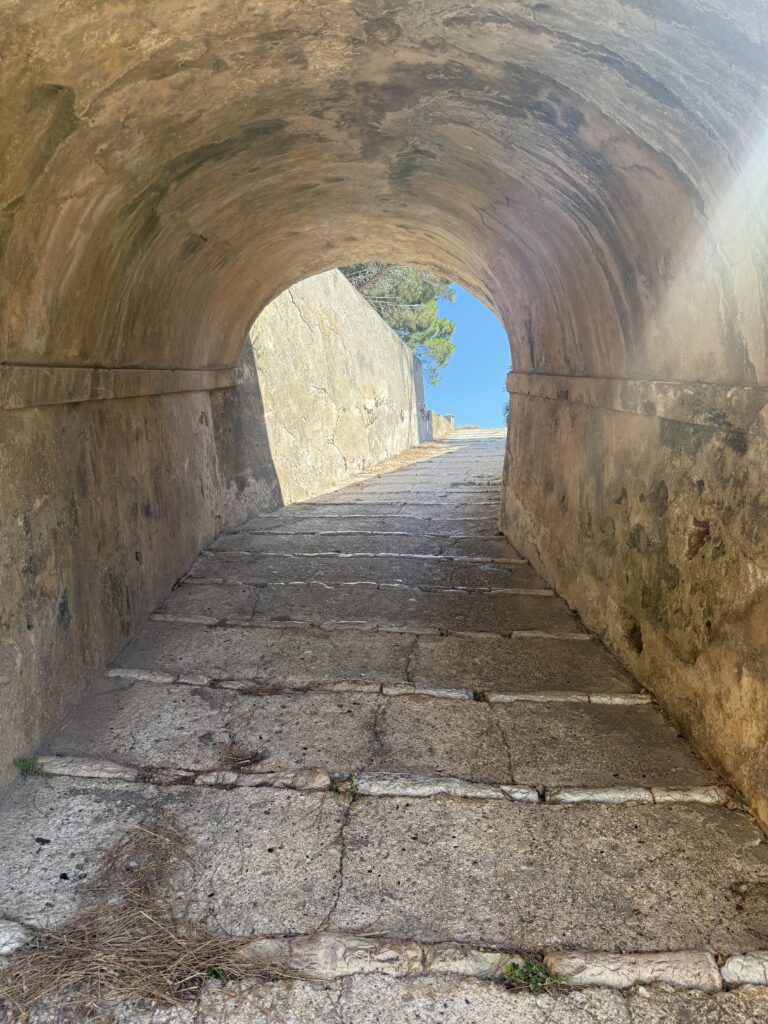
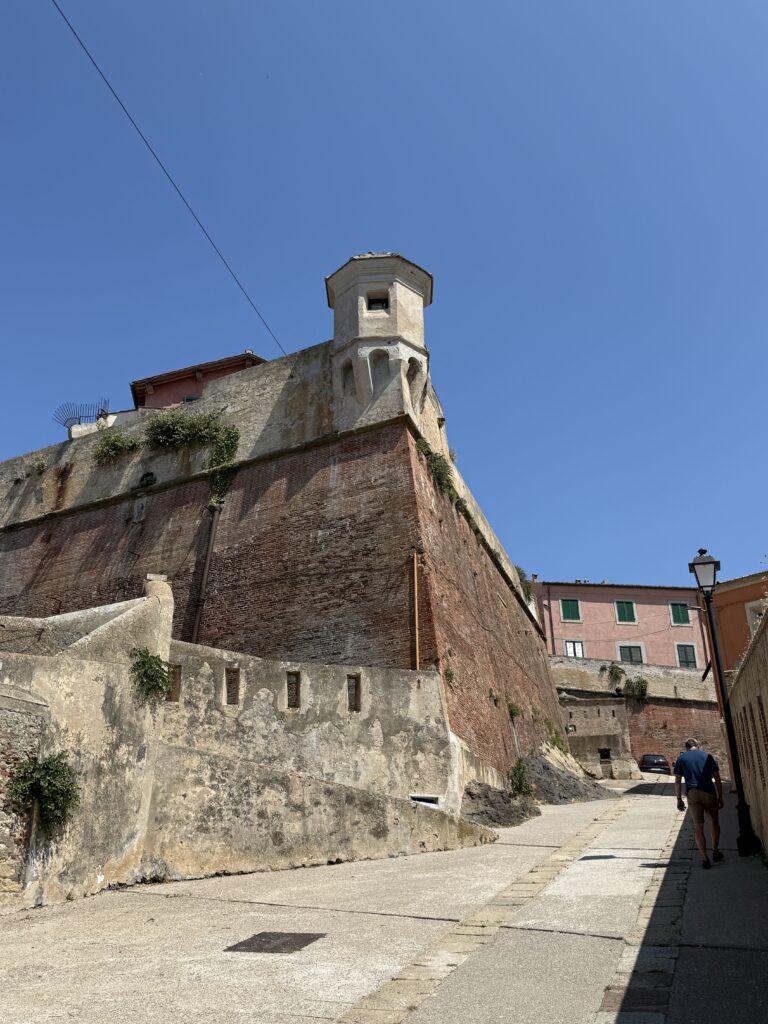
We climbed to Forte Falcone to explore then wandered the sprawling Fortezze Medicee. The fortresses were commissioned by Cosimo de’ Medici in the mid-16th century, and form an impregnable outpost built to defend Portoferraio and the wider Mediterranean. The forts seemed reminiscent of the moorish forts we have previously seen in Spain, each a dizzying maze of concentric fortifications, ingeniously designed to hold even if one line of defense fell. Centuries later, the town would become famous as the place of Napoleon Bonaparte’s exile in 1814, adding yet another layer to its storied past. The heat was intense, but the views more than rewarded each step. Every turn held another perfect photo, so much so we’d stop to capture a moment, only to find a better one five steps later.
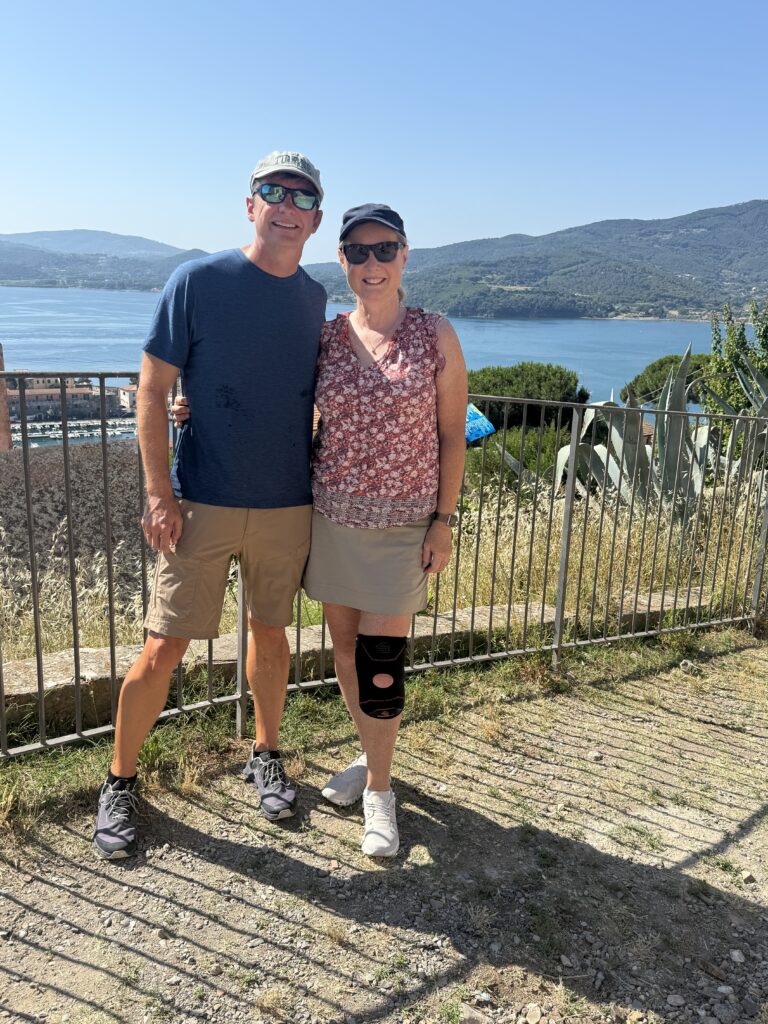
knee brace needed today,
but at least hip doing well 🙂
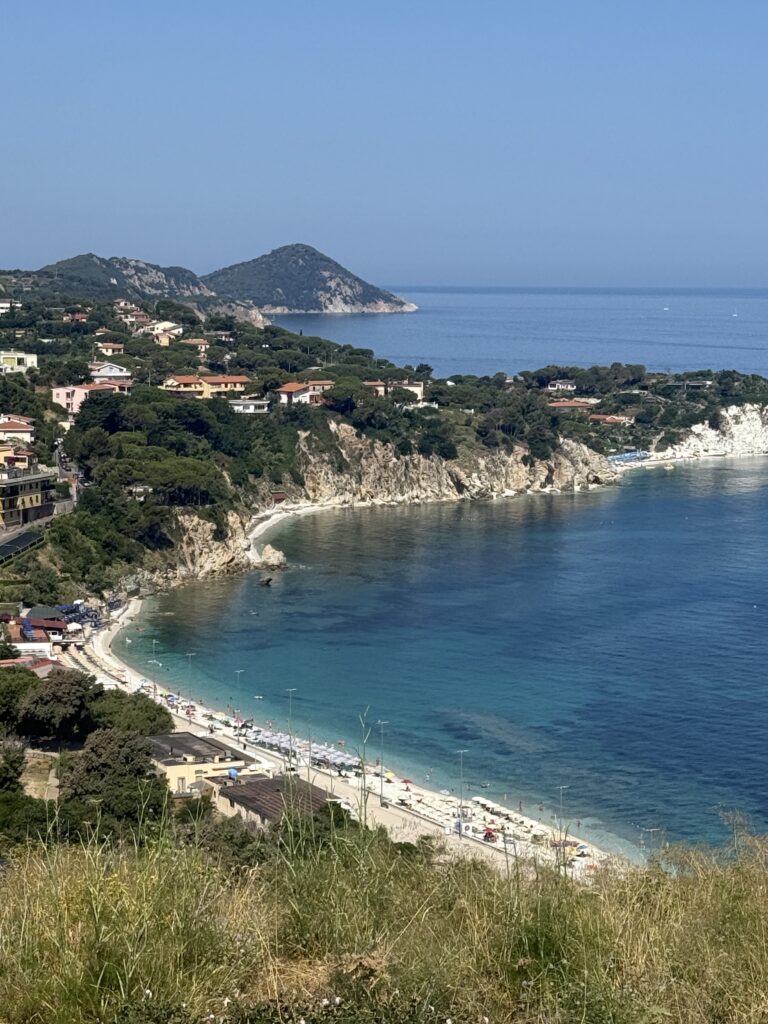
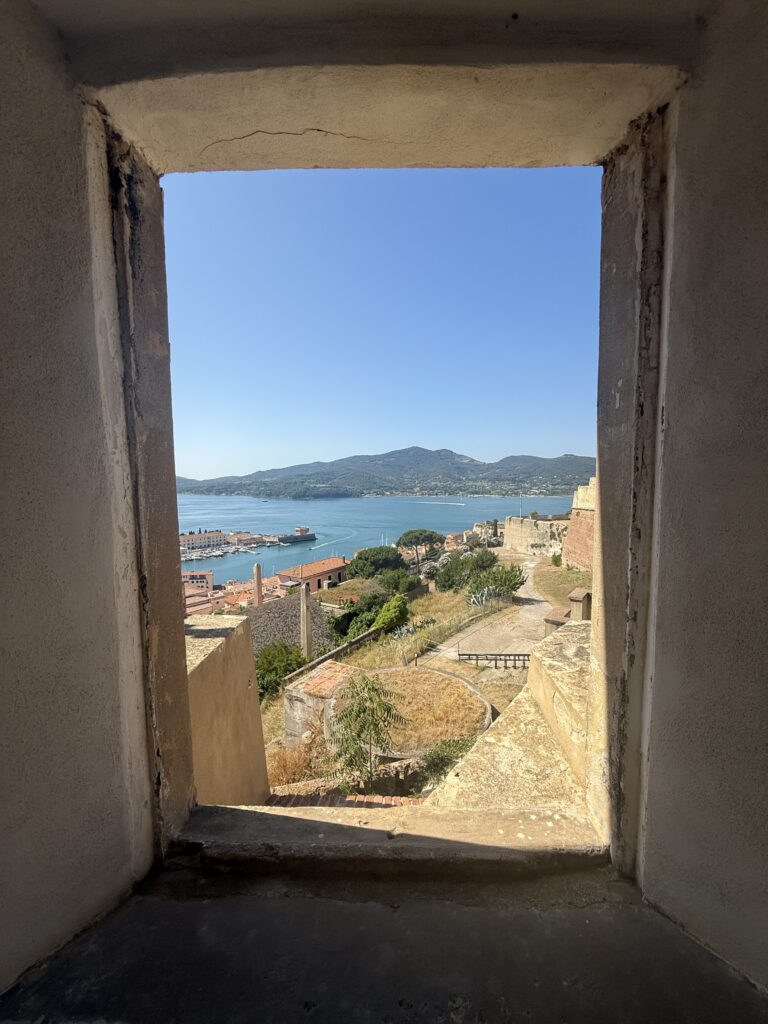
from Fortezze Medicee
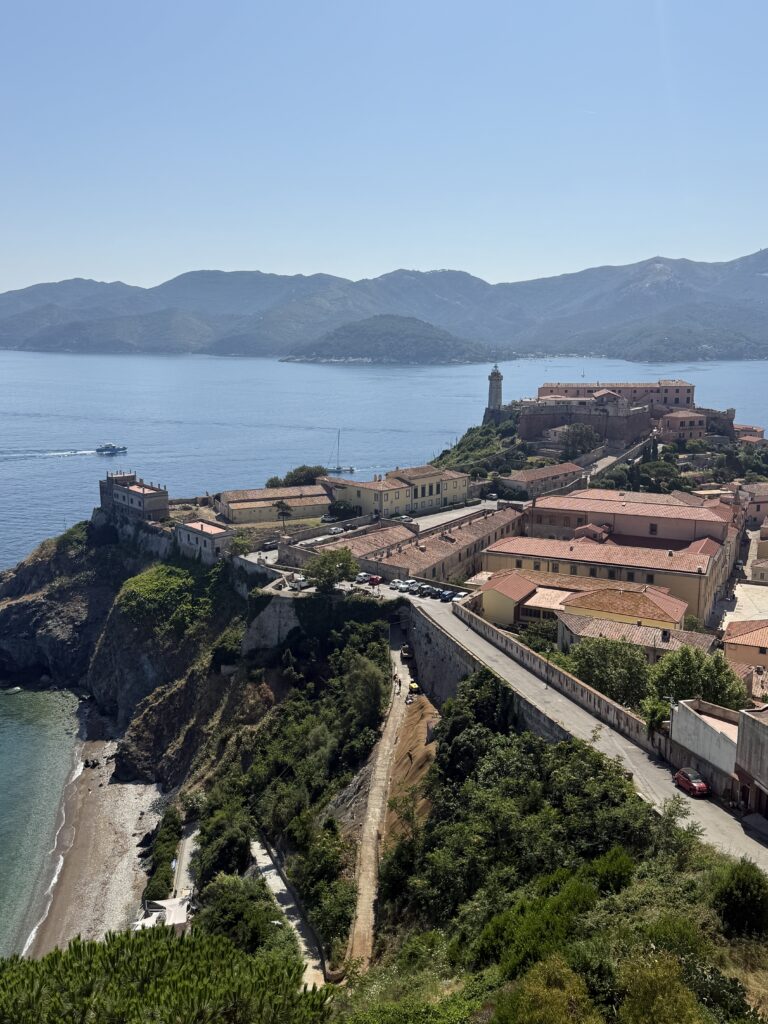
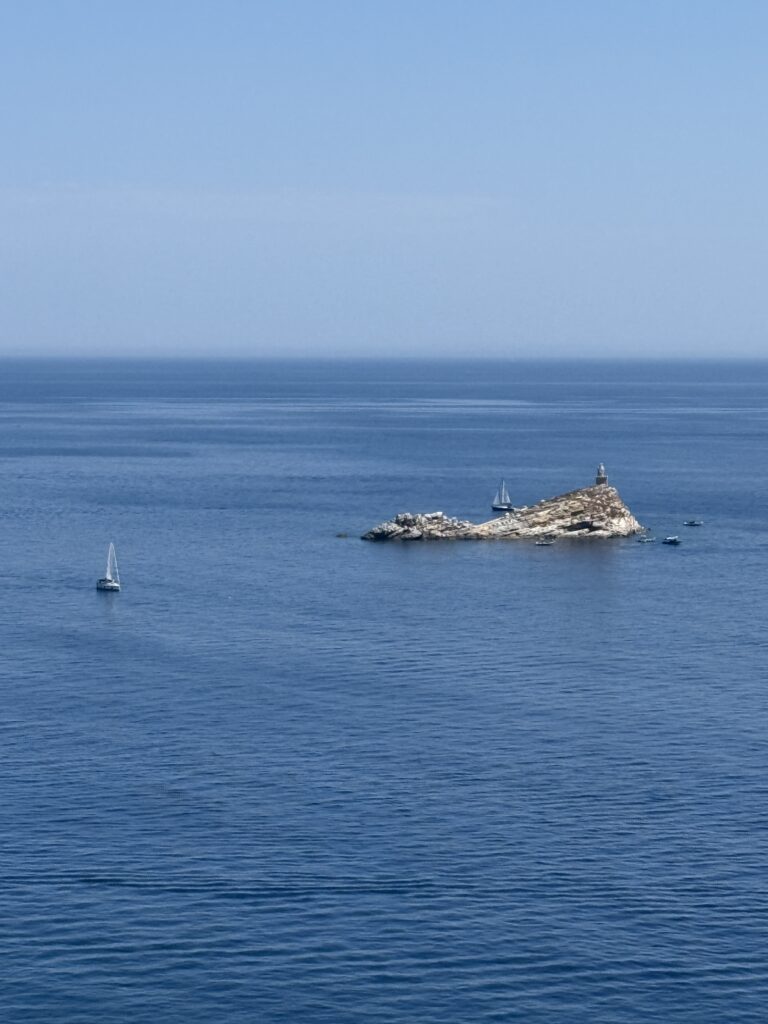
around Elba (sail boats for scale)
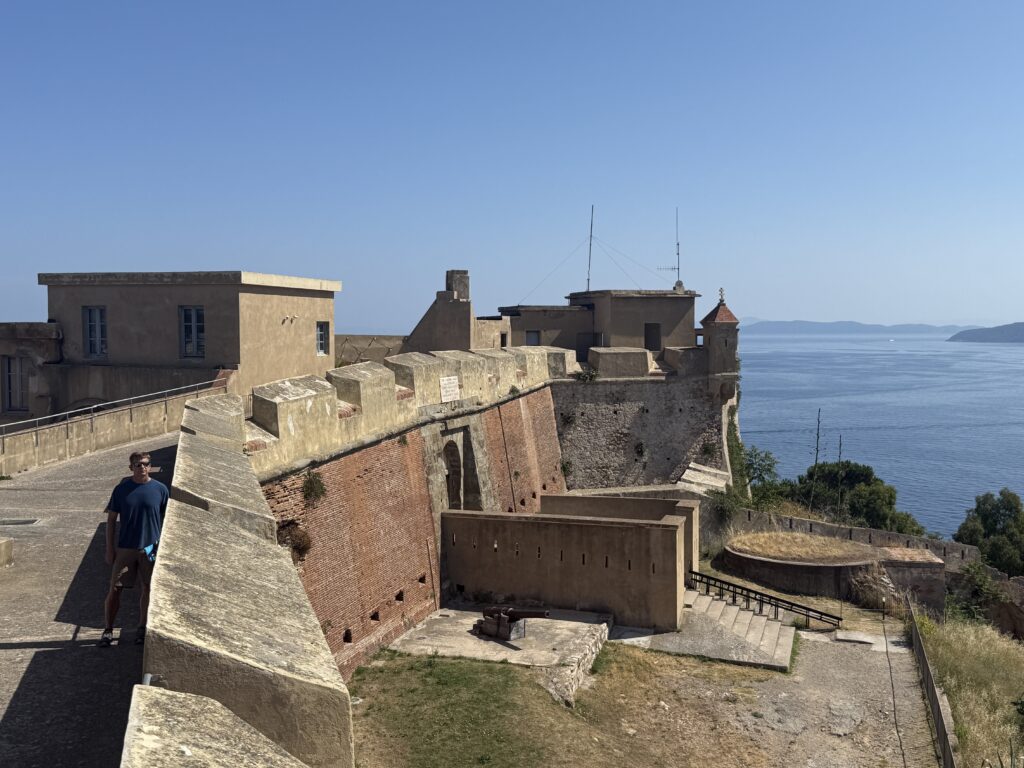
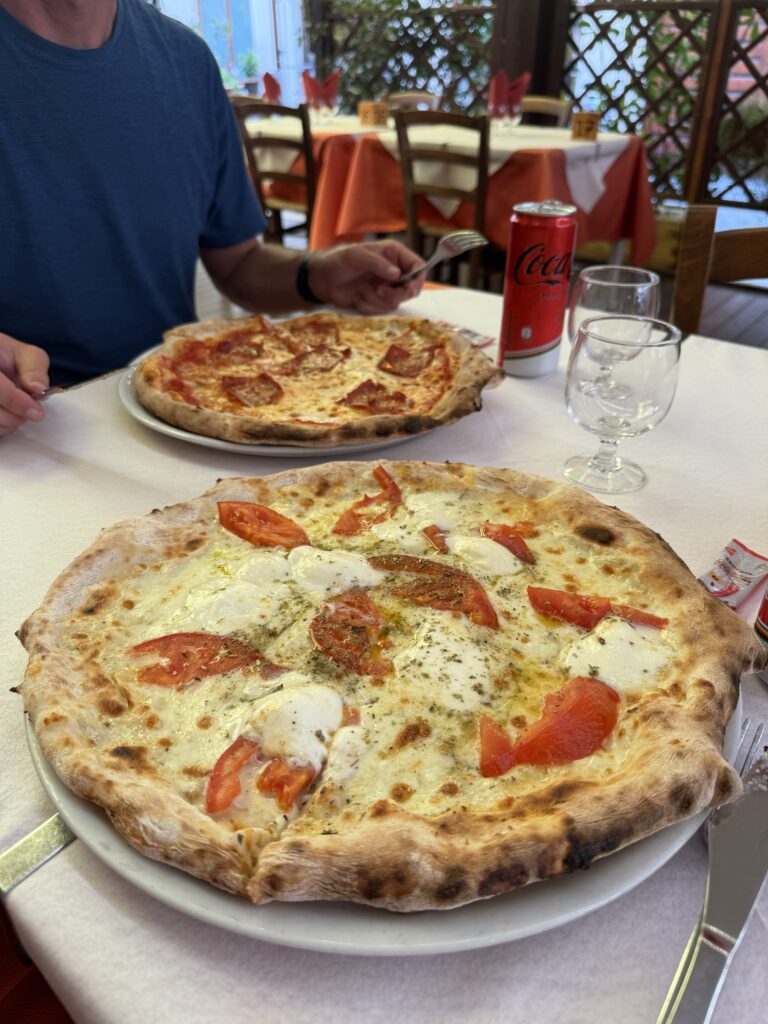
After a relaxing pizza lunch in the village, we made our way to Villa dei Mulini, Napoleon’s elegant former residence, still preserved with his personal effects and a breathtaking library perched over the sea. Unfortunately, the house was closed so we didn’t get a peak inside, but we did catch some spectacular views of the residence from our next stop, Forte Stella, that stood proudly on the opposite hill.
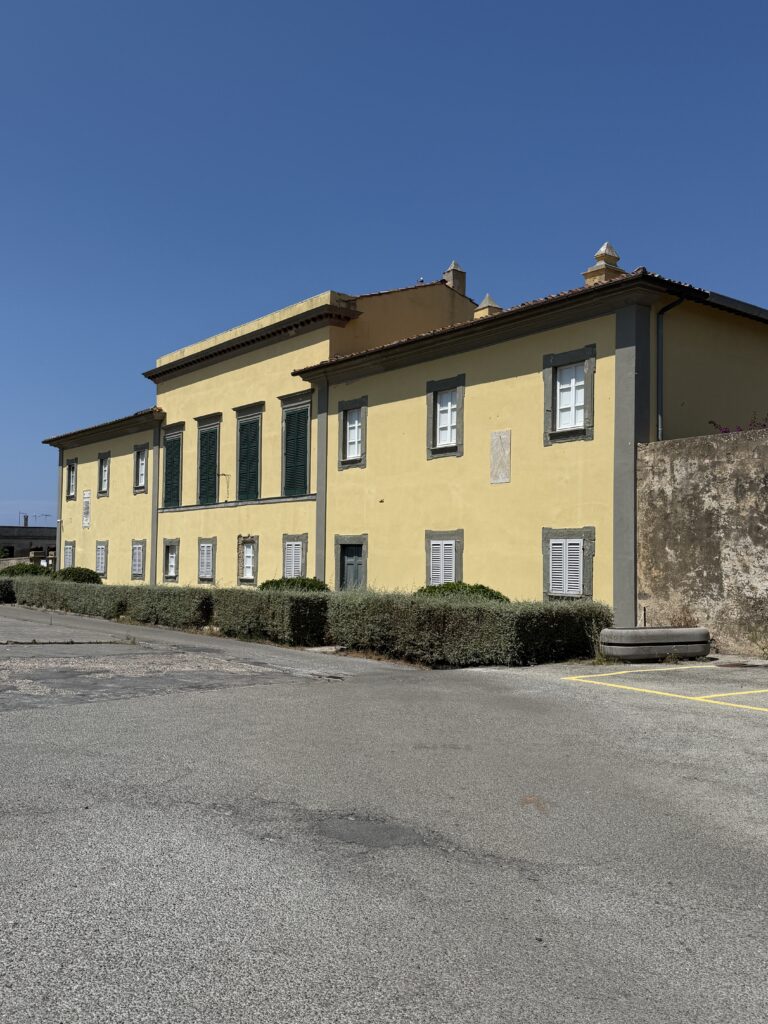
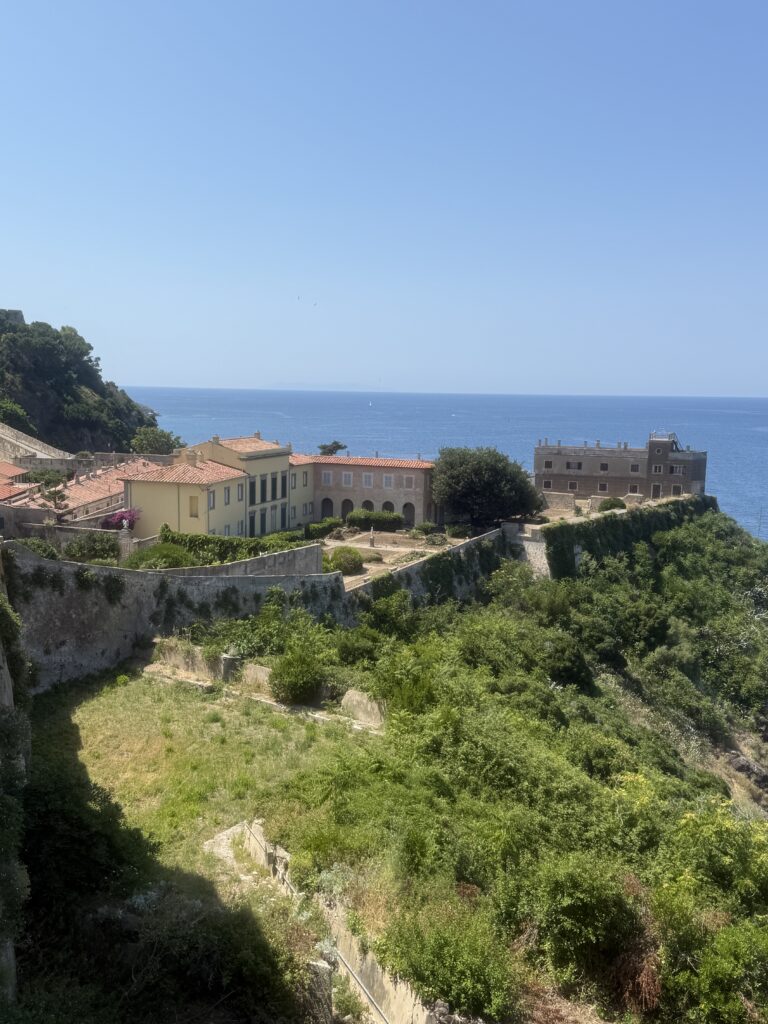
Forte Stella – Napoleon’s
grand residence!
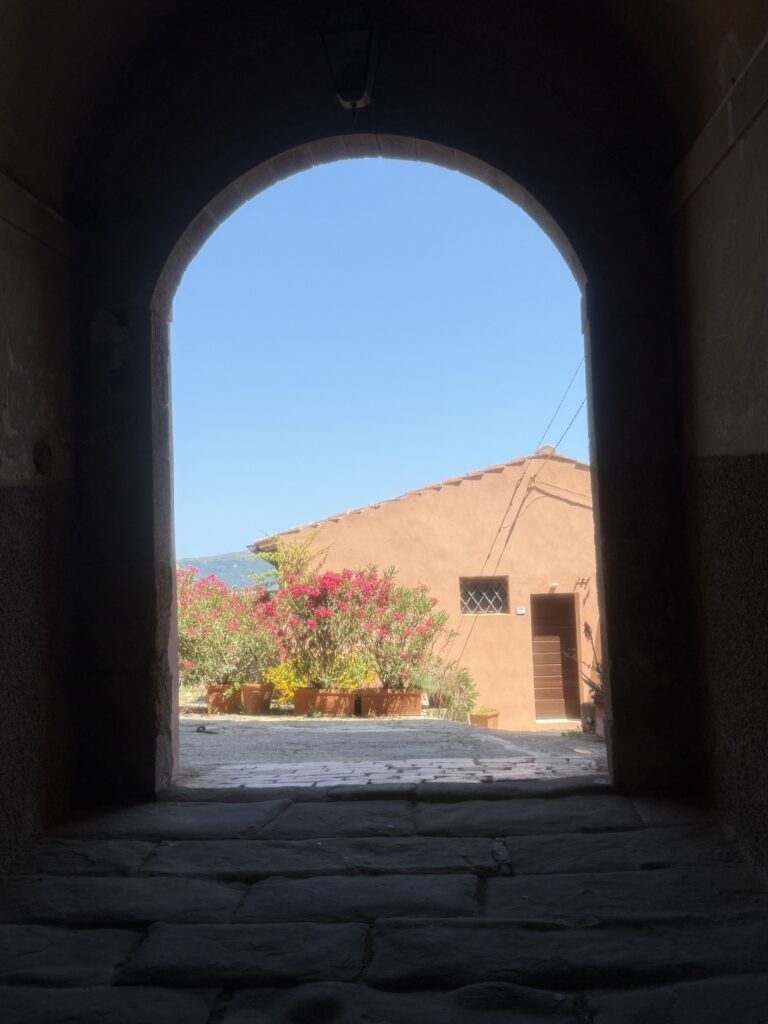
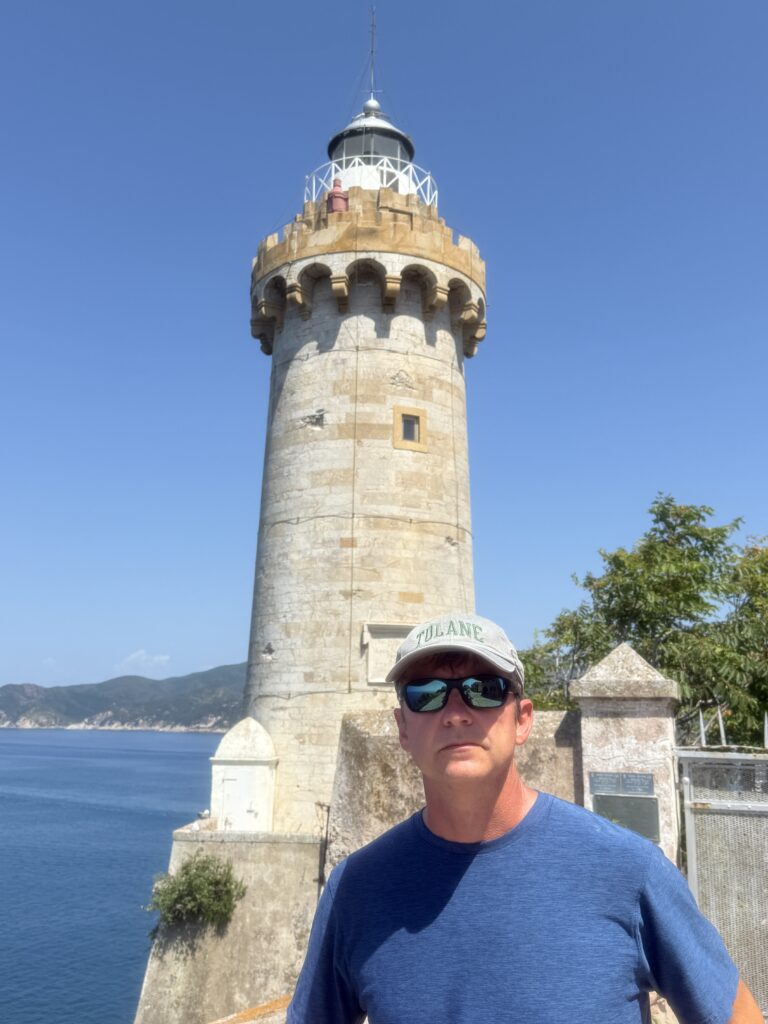
Next up, Museo Archeologico della Linguella near the Torre del Martello offered glimpses into Elba’s ancient Roman past. Some of the structures found at this site were once part of a large Roman bath that was utilized from the 1st Century BCE to the 3rd Century CE.
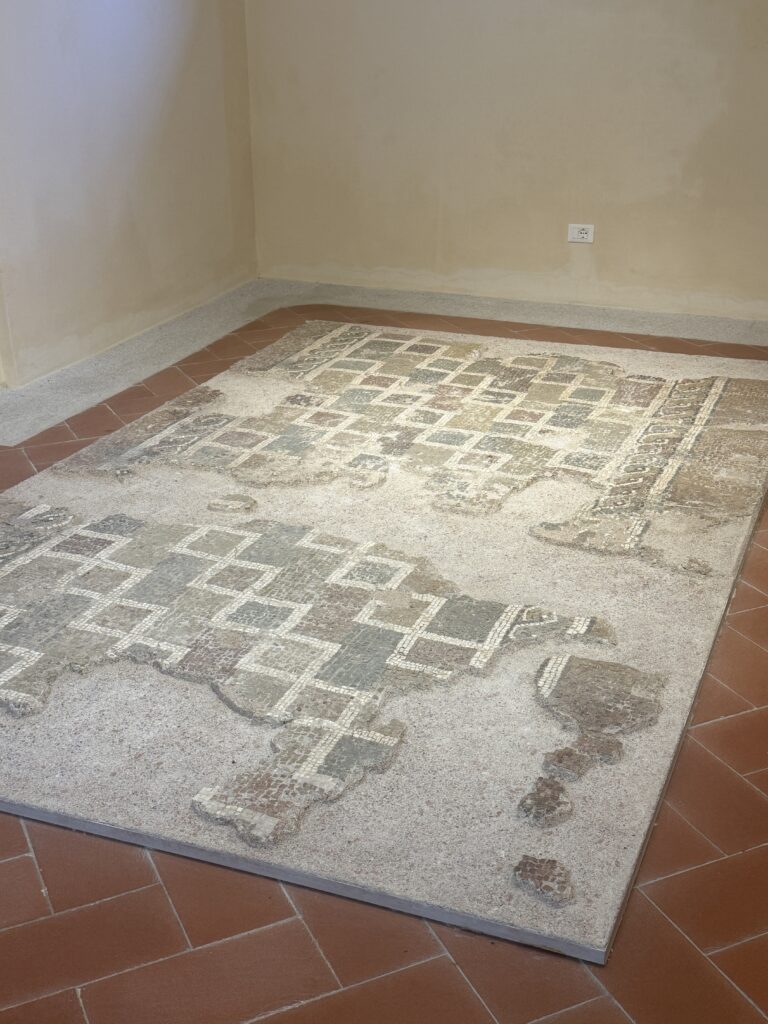
the old Roman baths

the top of Torre del Marte
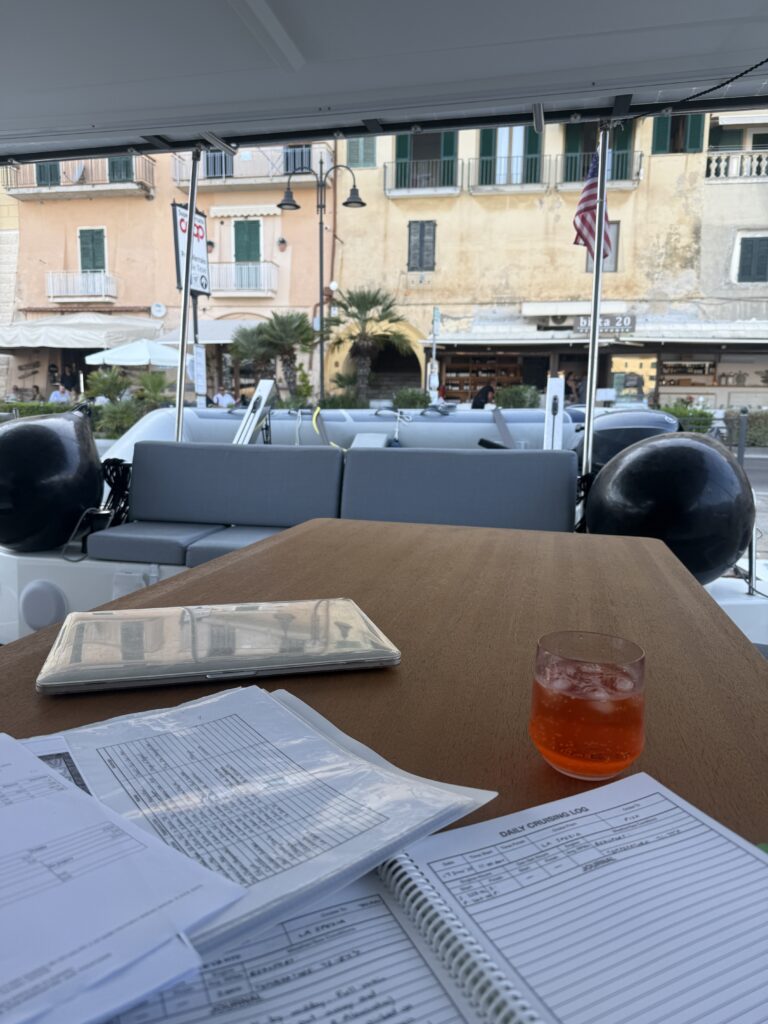
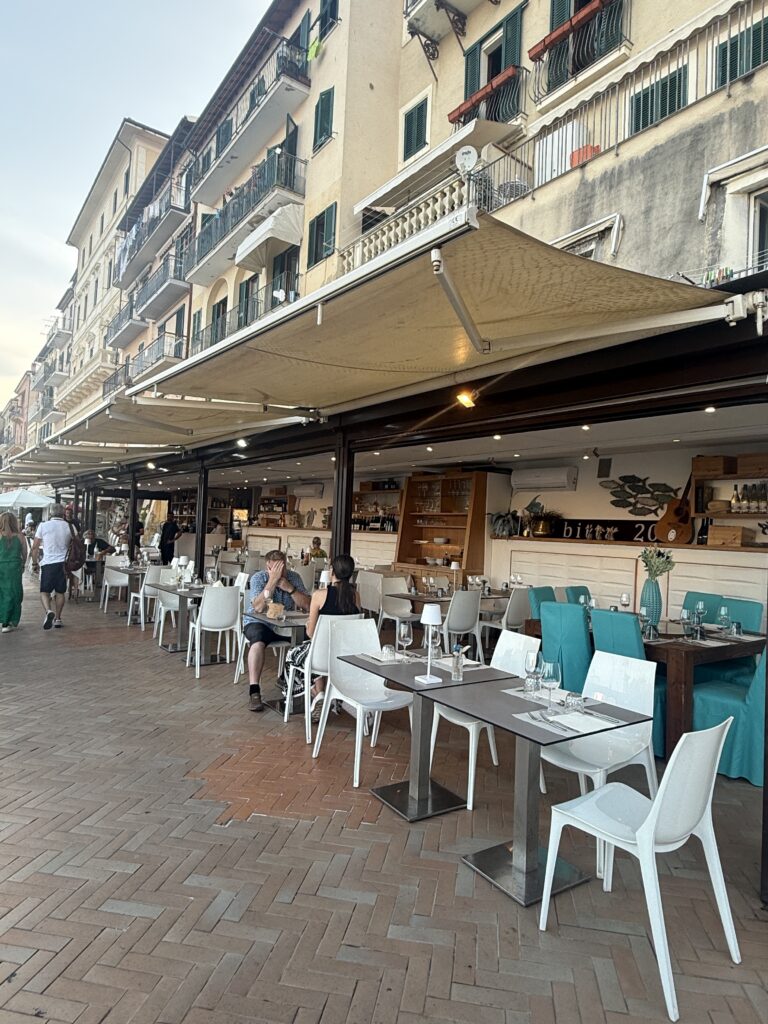
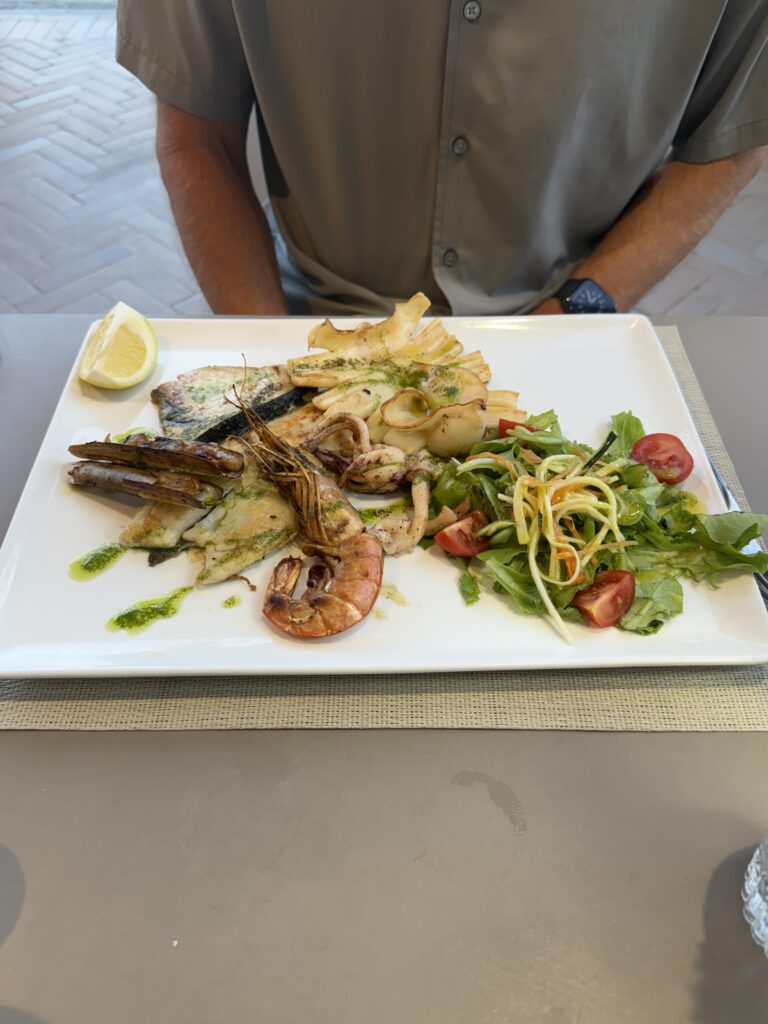
We returned to Kora for a peaceful late afternoon, catching up on the books (cruising journal & transit log), an Aperol Spritz, and the hush of the harbor. And then dinner at Bitta 20, a seafood feast that, hands down, has been the best meal of our entire journey.
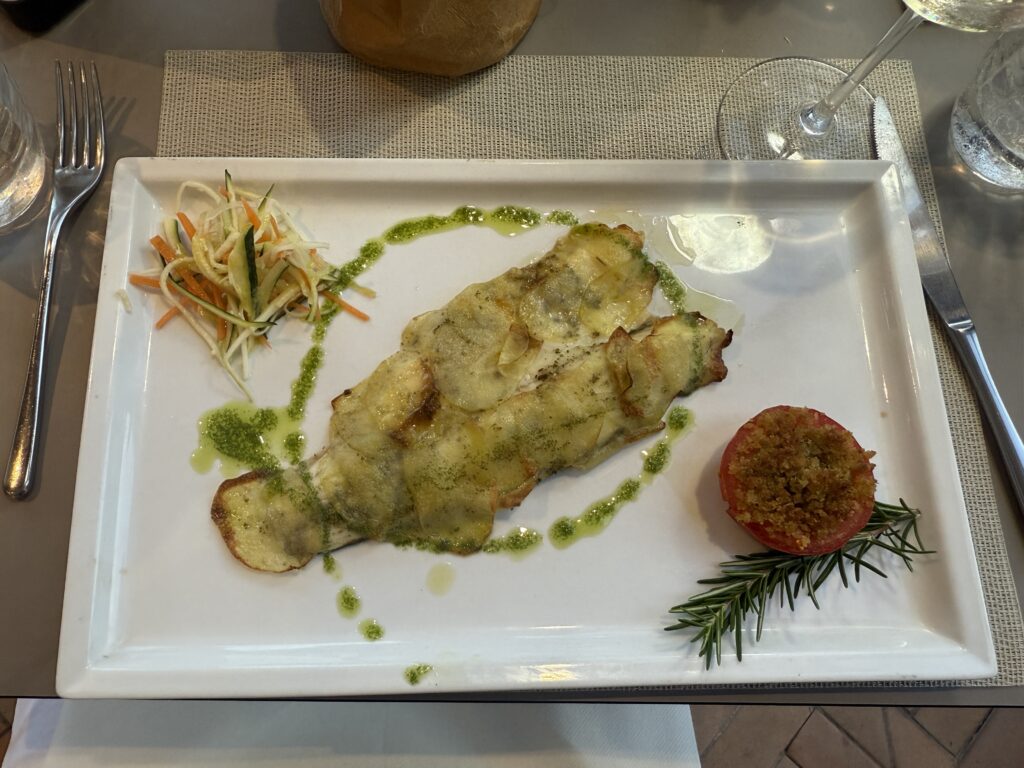
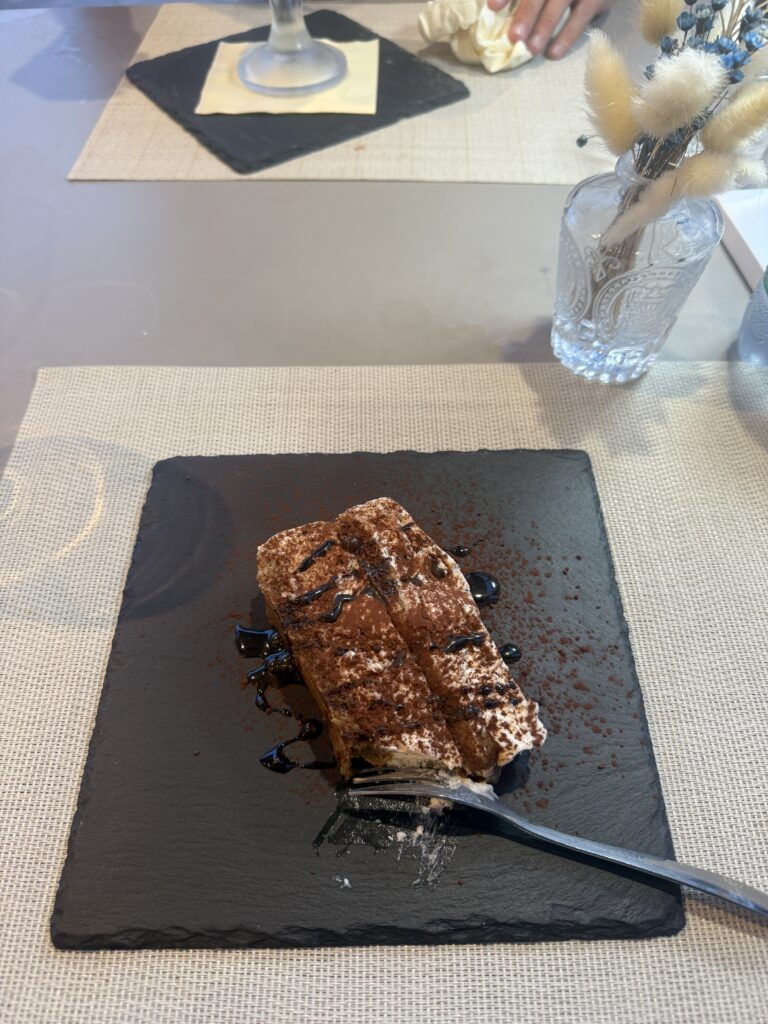
Portoferraio isn’t just a stop on a map – it’s a storybook of empires, exiles, and elegance, wrapped in sunlight and salt air. We left in awe. After such a remarkable stop, we made the easy decision to skip Corsica and linger on Elba a little longer – letting this island’s charm unfold at a slower, more graceful pace, as we ventured on to explore other areas along its coast.