Some places amaze you because of their beauty. Others because of human ingenuity. The Corinth Canal falls firmly into the second category.
After being closed for months while engineers carried out major slope stabilization and rockfall repairs, the canal unexpectedly reopened just days before our arrival, giving KORA the opportunity to transit one of the world’s most remarkable man-made waterways.
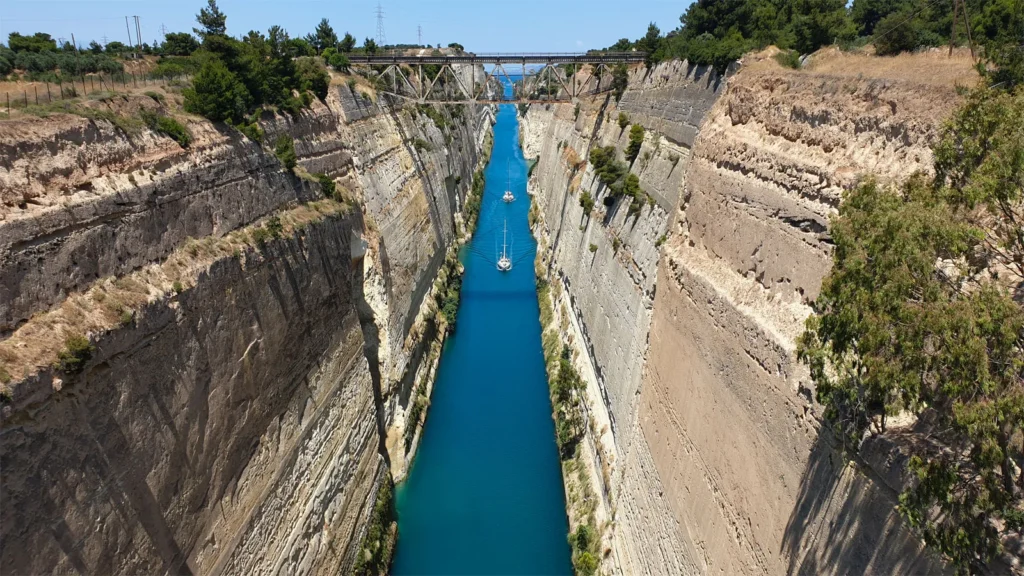
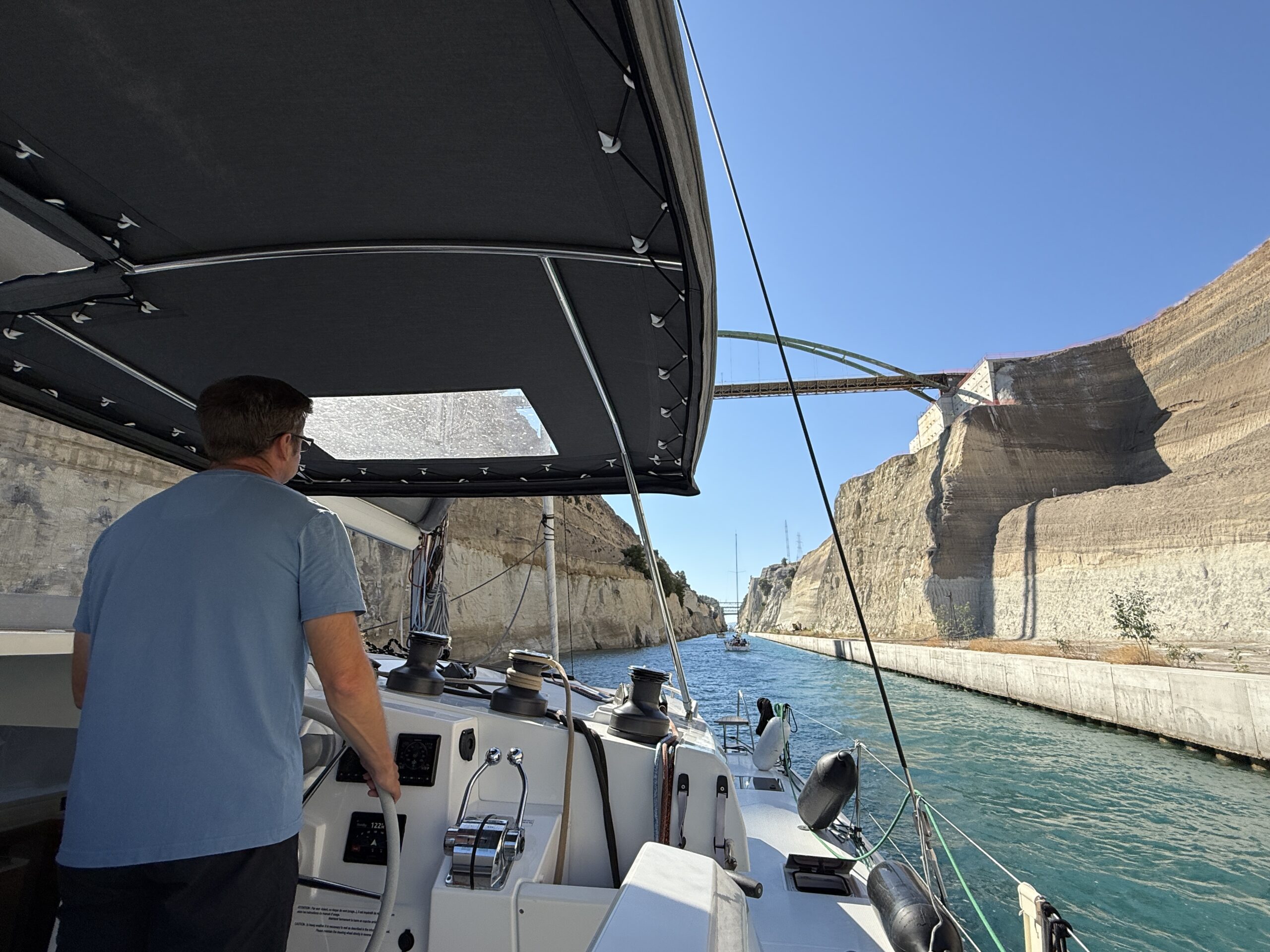
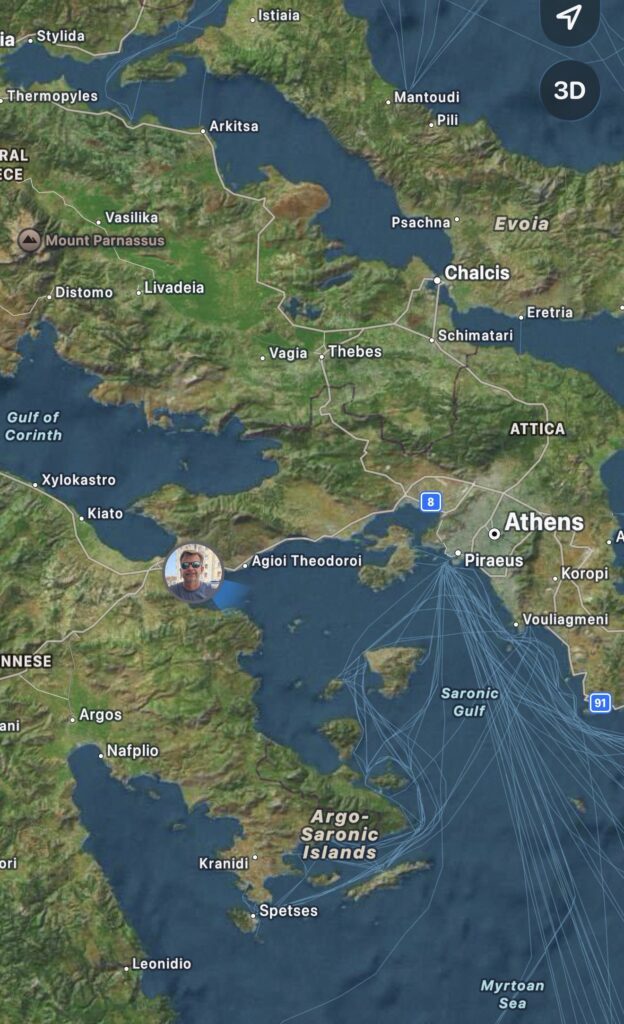
Completed in 1893 after centuries of failed attempts, the Corinth Canal cuts 4.0 miles (6.3 km) through the Isthmus of Corinth, connecting the Ionian Sea with the Aegean Sea. At just 80 feet (24.6 m) wide, it is far too narrow for modern cruise ships and most commercial cargo vessels, but remains a popular shortcut for yachts, fishing boats, tour vessels, and smaller commercial ships, saving nearly 185 nautical miles by avoiding the long journey around the Peloponnese.
With a scheduled passage booked for 9:00 am on Friday, June 26, we anchored outside the western entrance the night before, excited to experience this remarkable shortcut connecting the Ionian Sea with the Aegean.
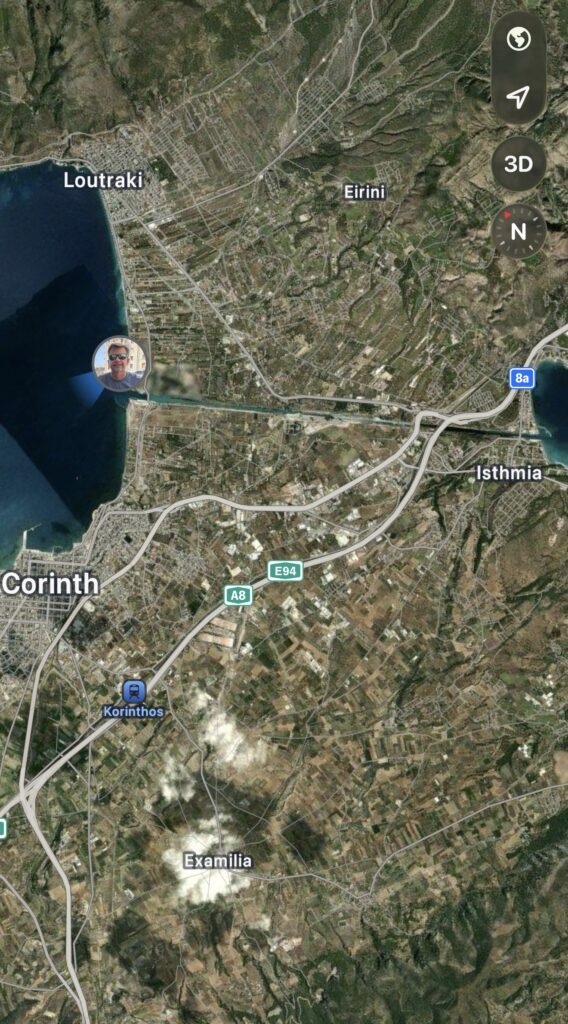
Before weighing anchor, we made one small adjustment. Down came the gennaker. For the non-sailors following along, a gennaker is the large, lightweight sail we often fly on calmer days to squeeze extra speed from lighter winds. It’s fantastic… until the wind unexpectedly builds. Last summer in Montenegro we learned that lesson the hard way when an unexpected squall, complete with hail, lightning storm, and strong winds, caused the top of the sail to unfurl making for a rather memorable, and slightly panicked, exercise. With winds inside the canal unknown, and knowing that we couldn’t afford to lose control of the boat in such tight quarters, we decided to proactively take it down. Indeed, living aboard has taught us that a few extra minutes spent taking precautions can save many hours of headaches later!
Around 8 am the canal conductor instructed us to raise anchor and await further instructions. Boats slowly gathered around us, with France, Italy, Canada, and Greece all represented, each circling patiently outside the entrance while vessels travelling in the opposite direction completed their transit.
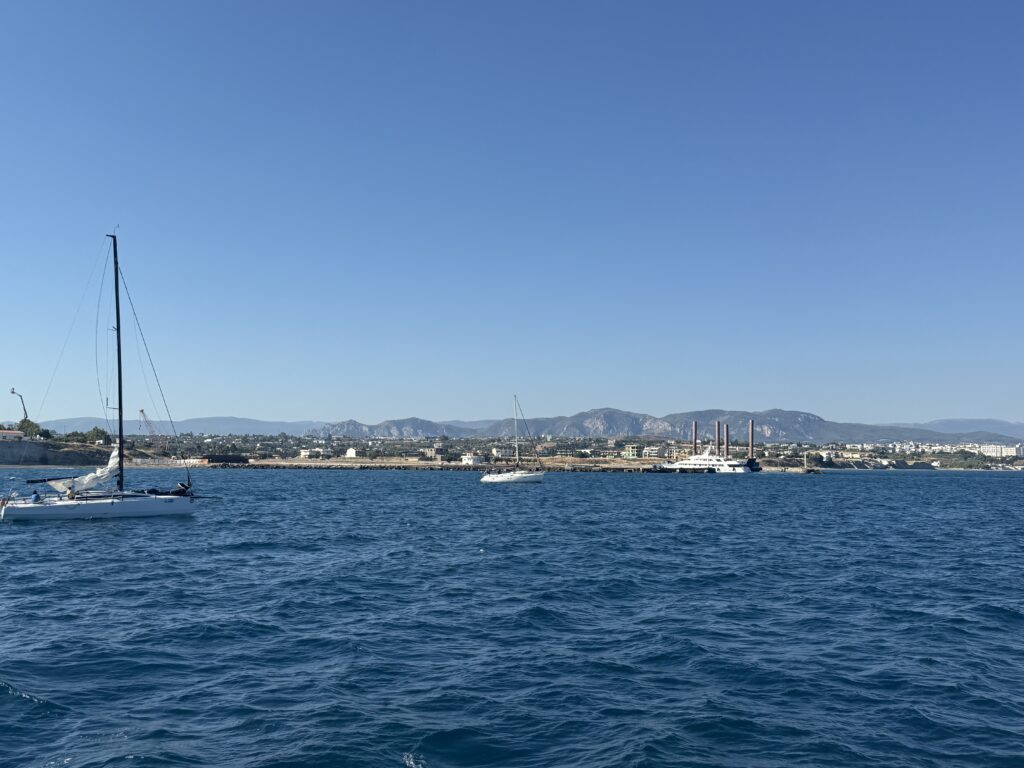
Finally, just before 9 am, we received our marching orders arrived. Two luxury motor yachts would lead the procession, followed by the French and Italian monohulls, then KORA, and finally the Canadian catamaran bringing up the rear. And then we were off!
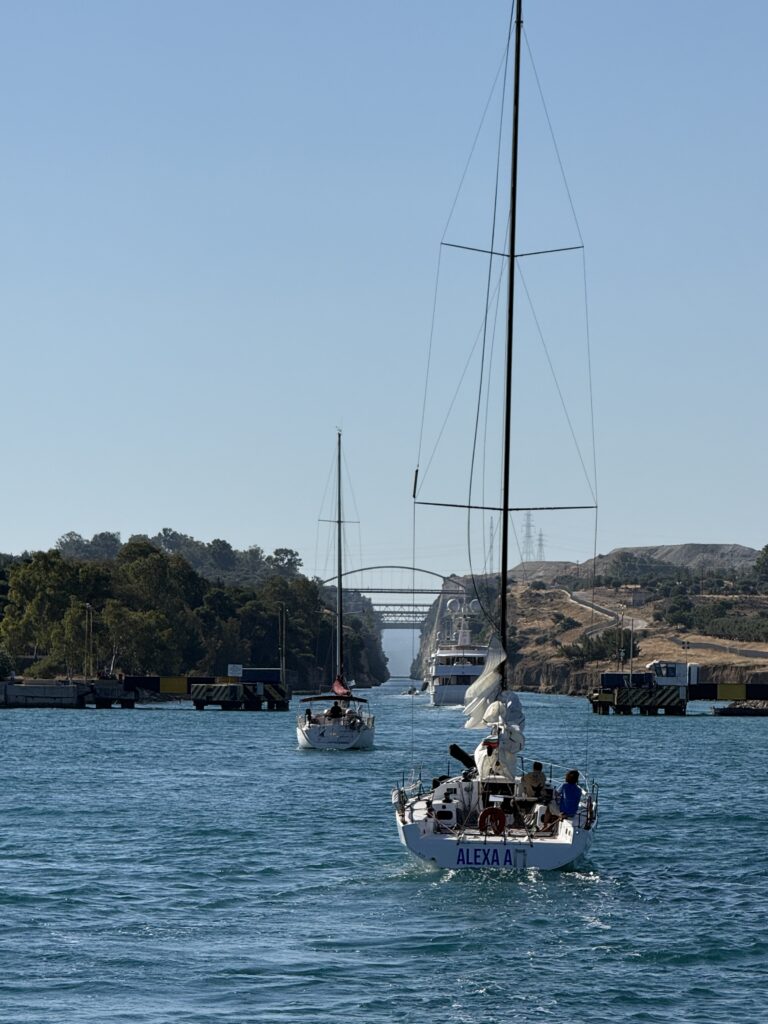
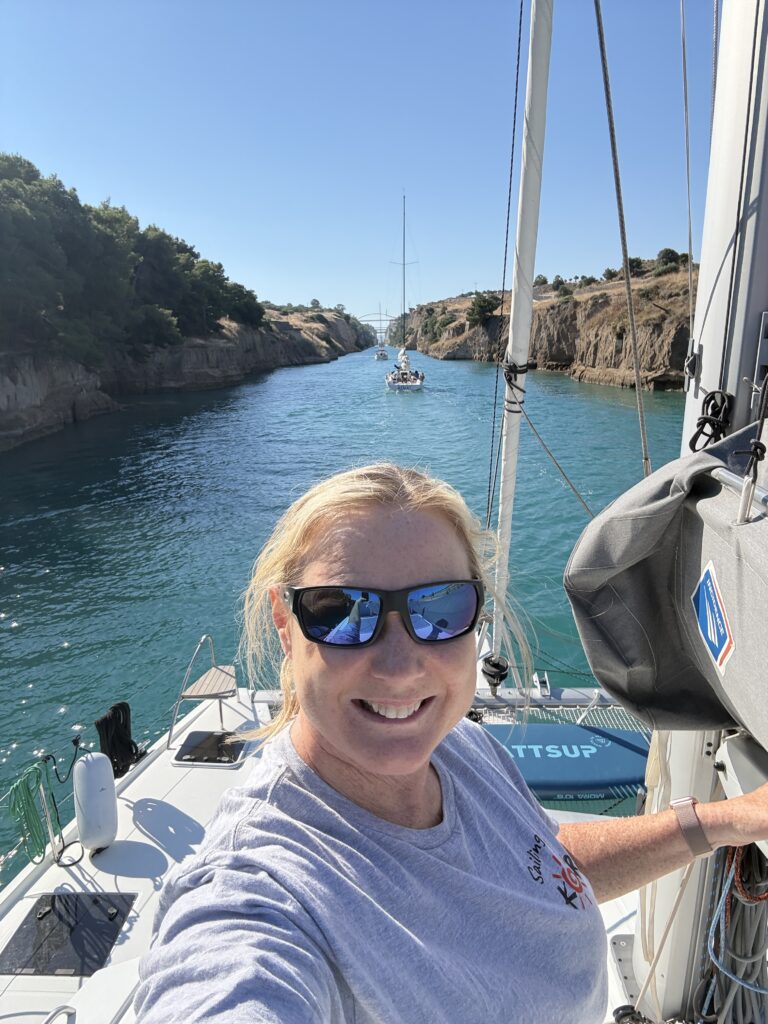
Towering limestone walls rose nearly vertical on either side, climbing almost 80 metres above the water. Looking closely, it became obvious why the canal had required months of reinforcement. In many places the walls appeared more like compacted earth than solid rock, making the recent stabilization work easy to appreciate.
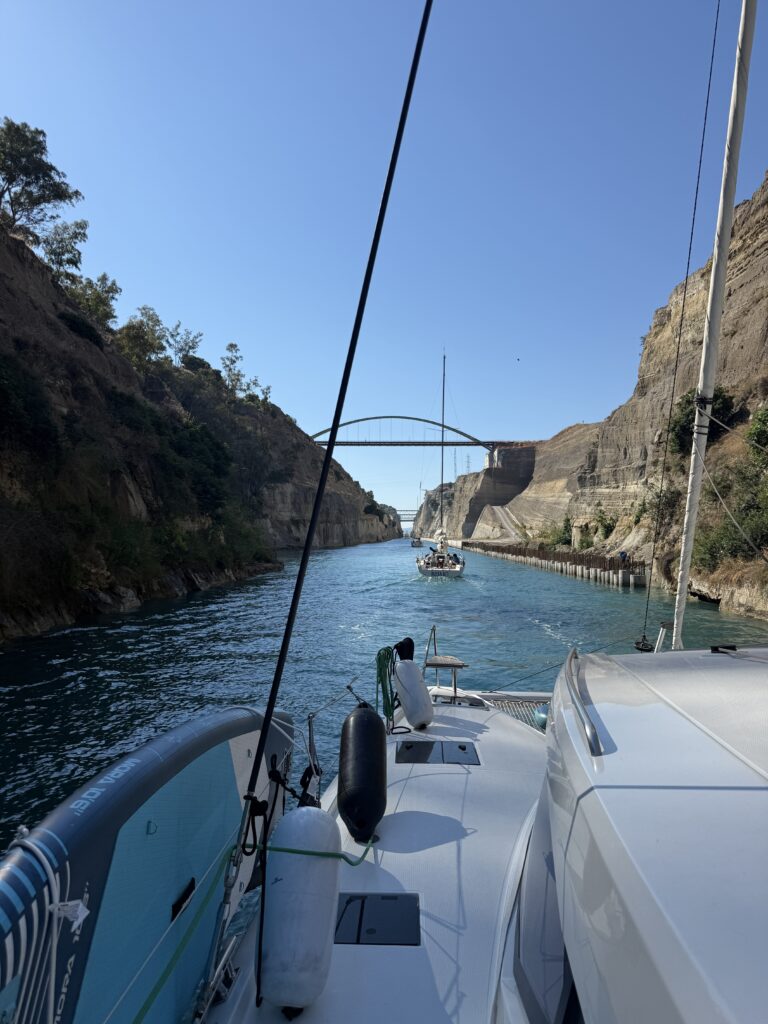
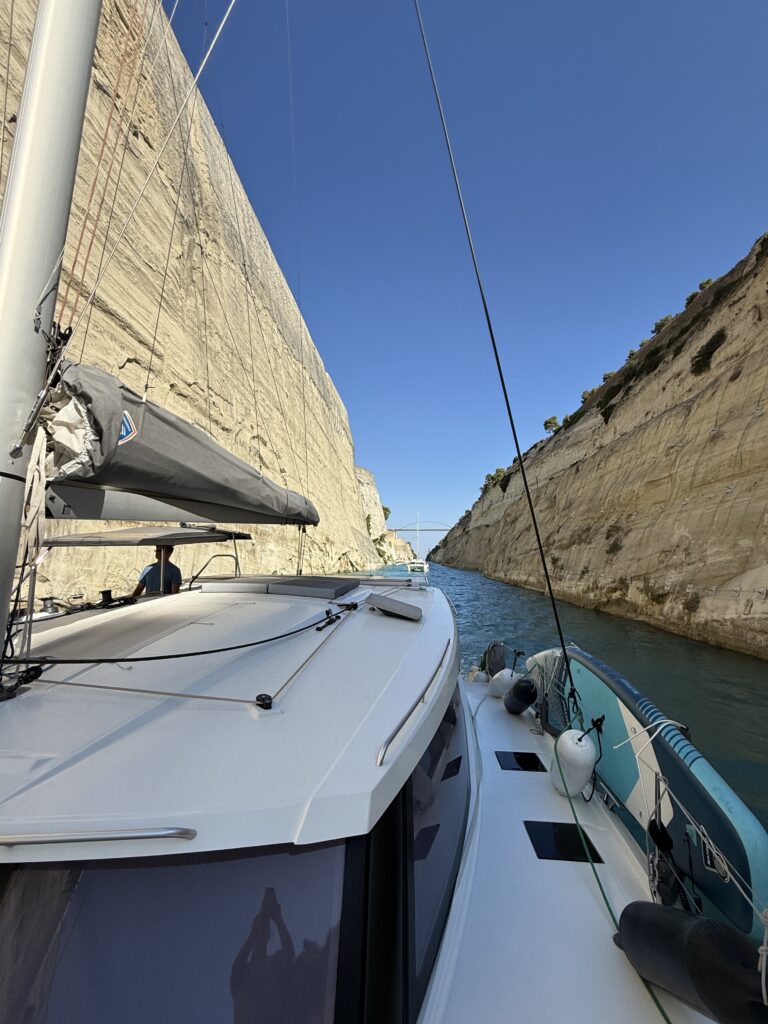
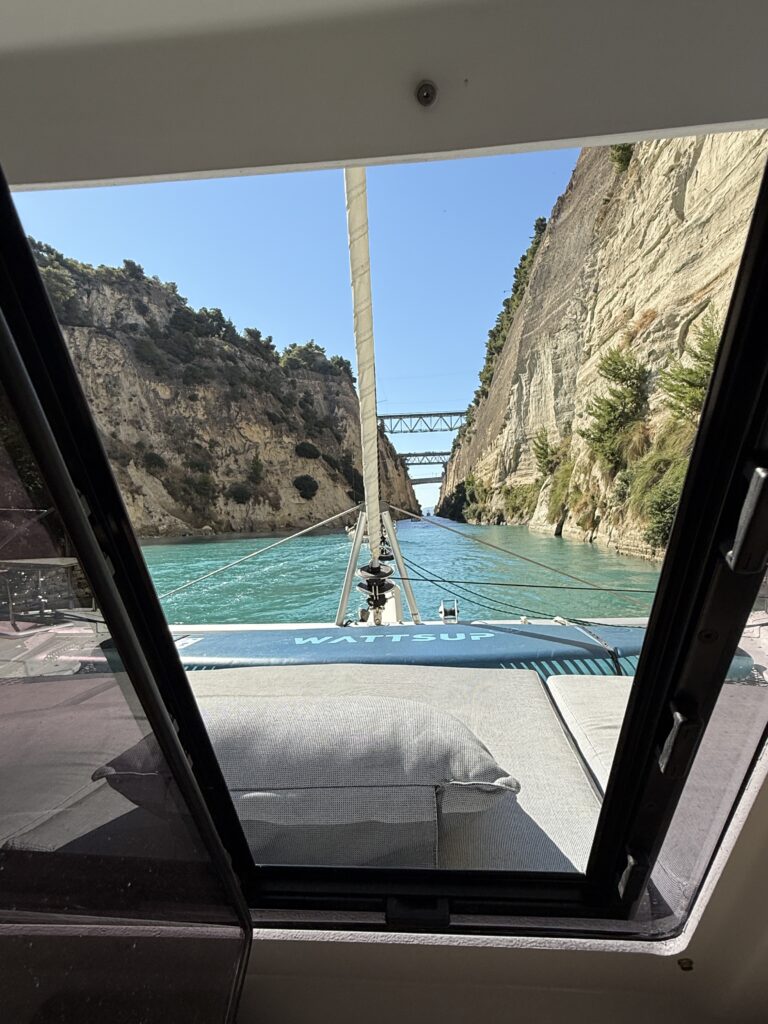
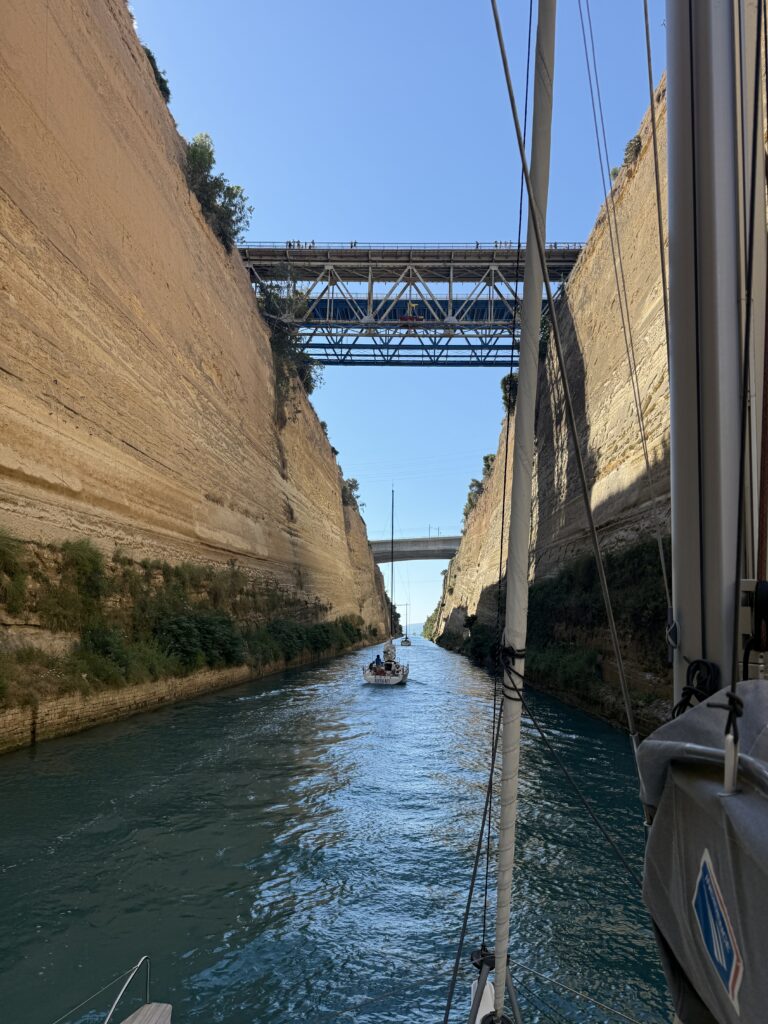
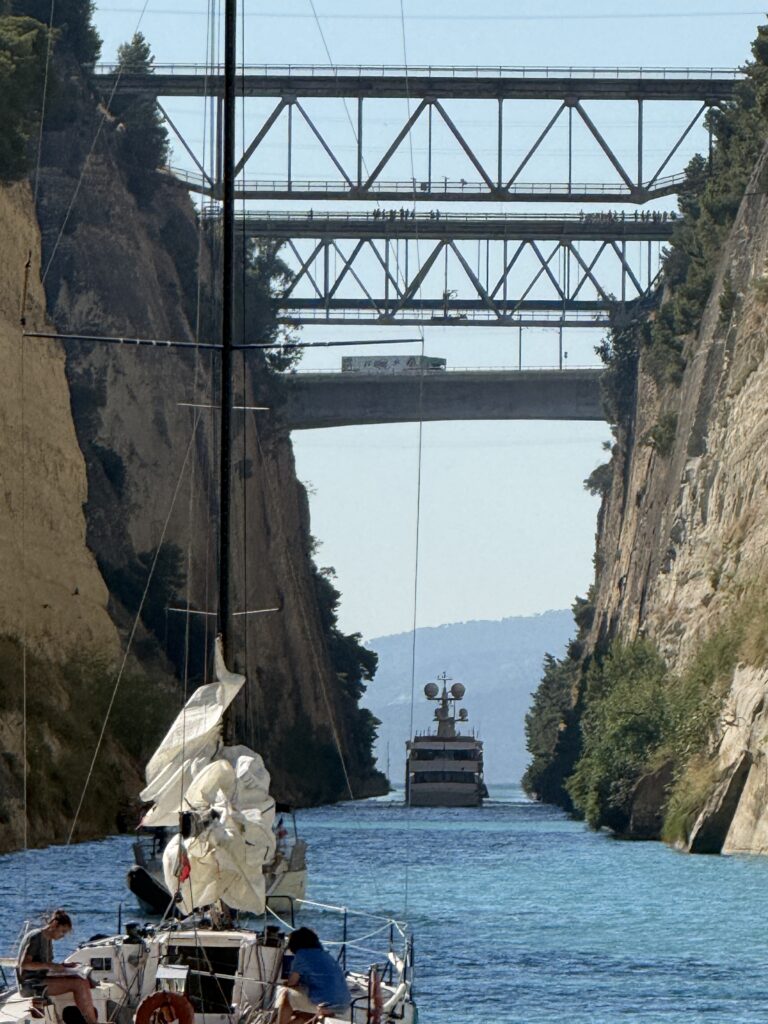
The transit itself was surprisingly peaceful. No dramatic currents. No difficult navigation. Just a long, narrow ribbon of water winding between towering cliffs while spectators gathered on the bridges above to wave at the passing boats. Naturally, we waved back.
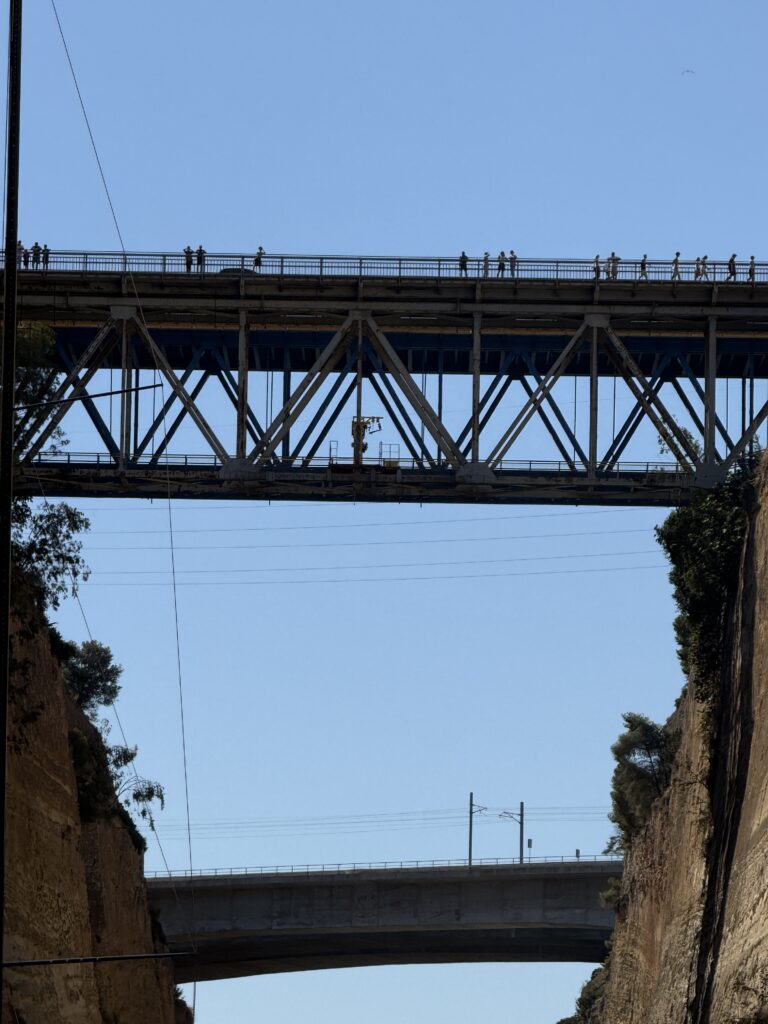
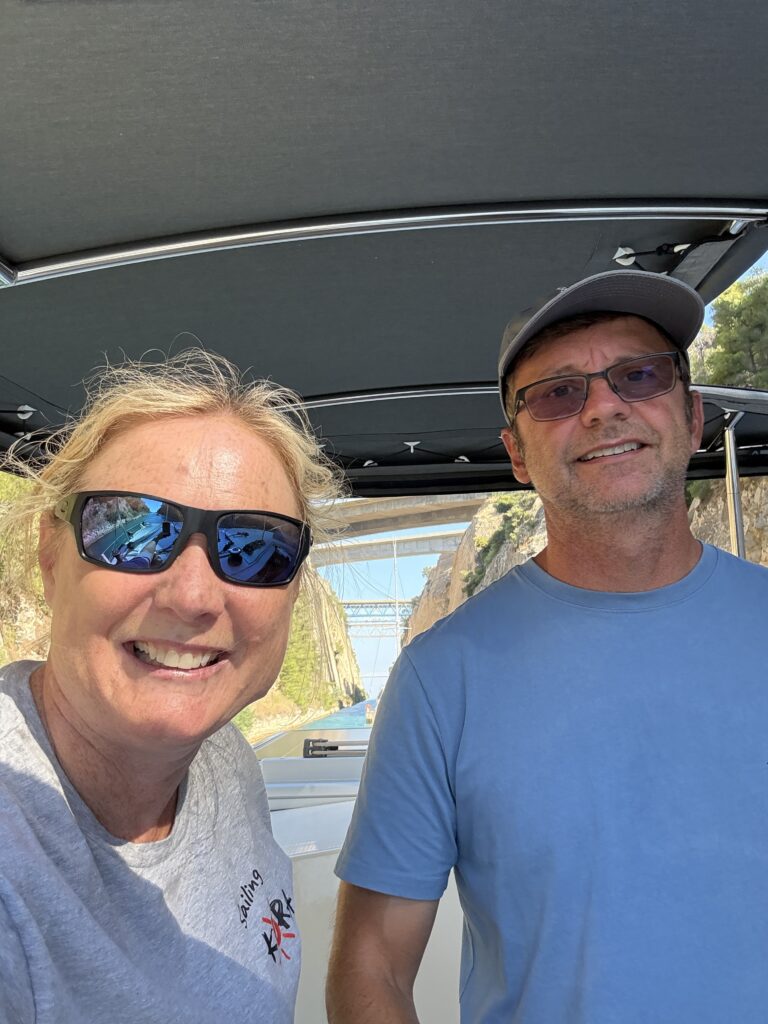
Perhaps it wasn’t the adrenaline-filled experience some might imagine, but there was something undeniably special about motoring through one of the world’s great engineering achievements.
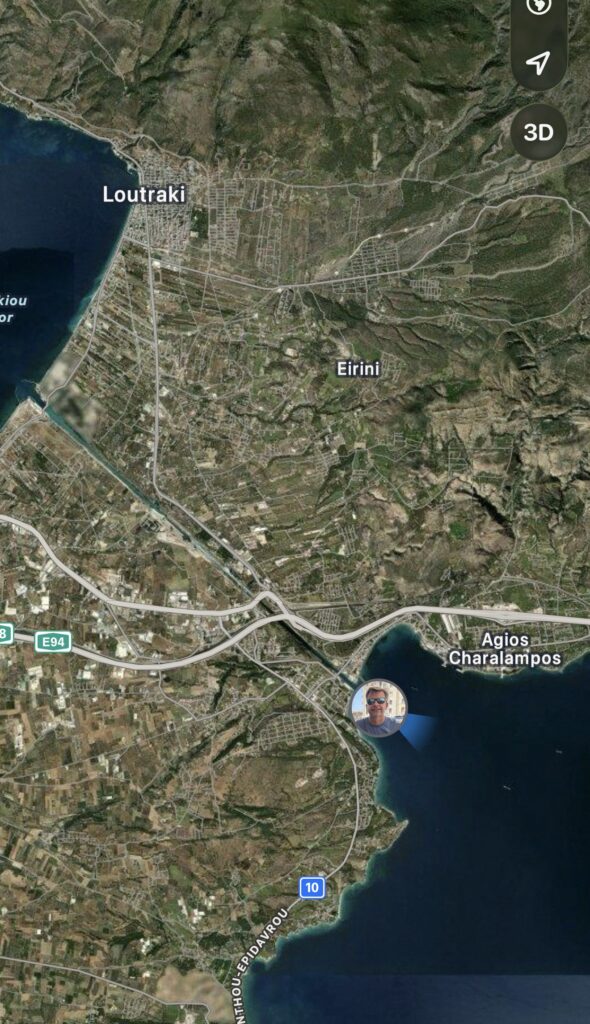
Aabout an hour later we emerged into the Saronic Gulf, where another collection of boats, along with several tankers, waited patiently for their turn to enter the canal from the opposite direction.
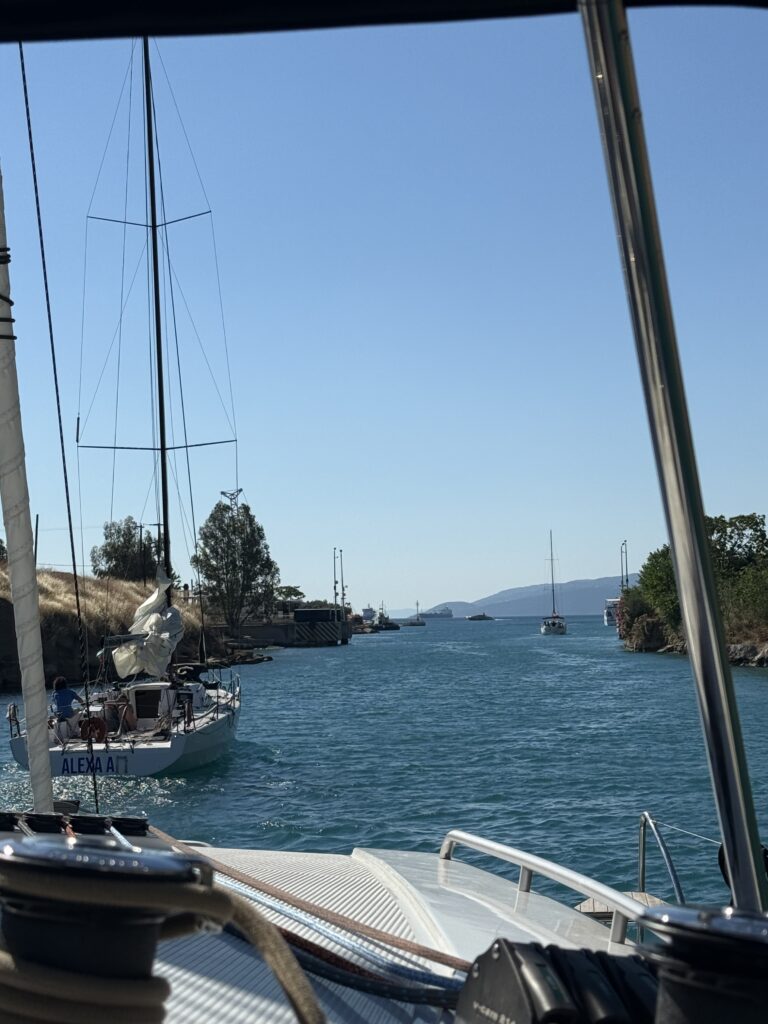
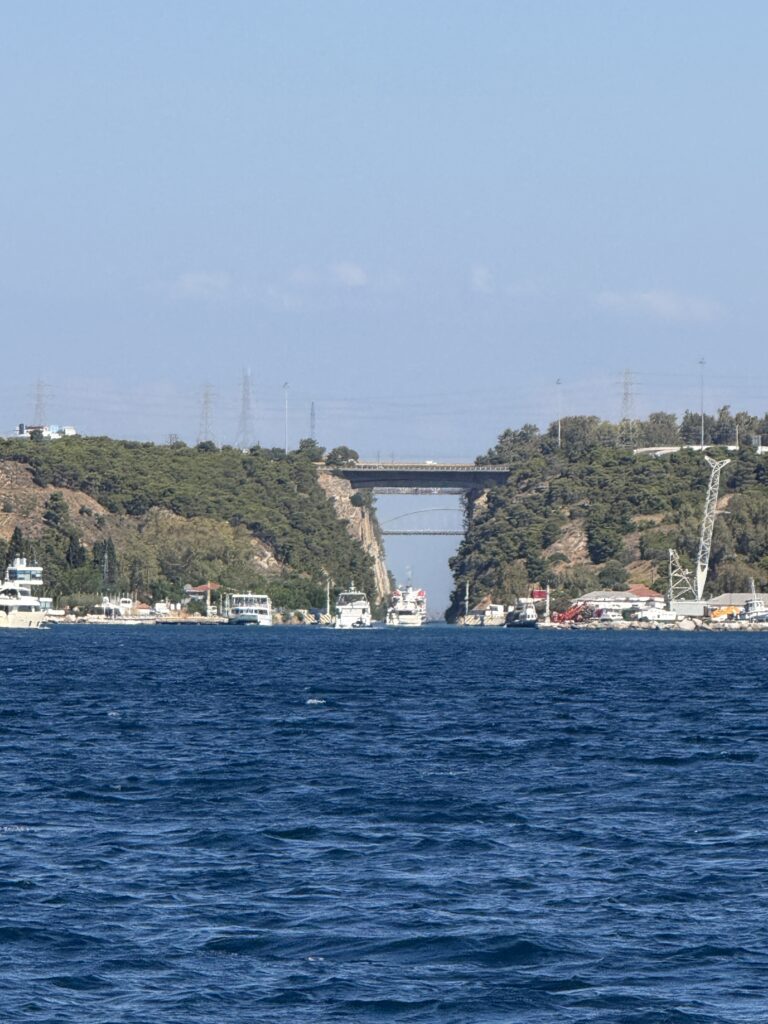
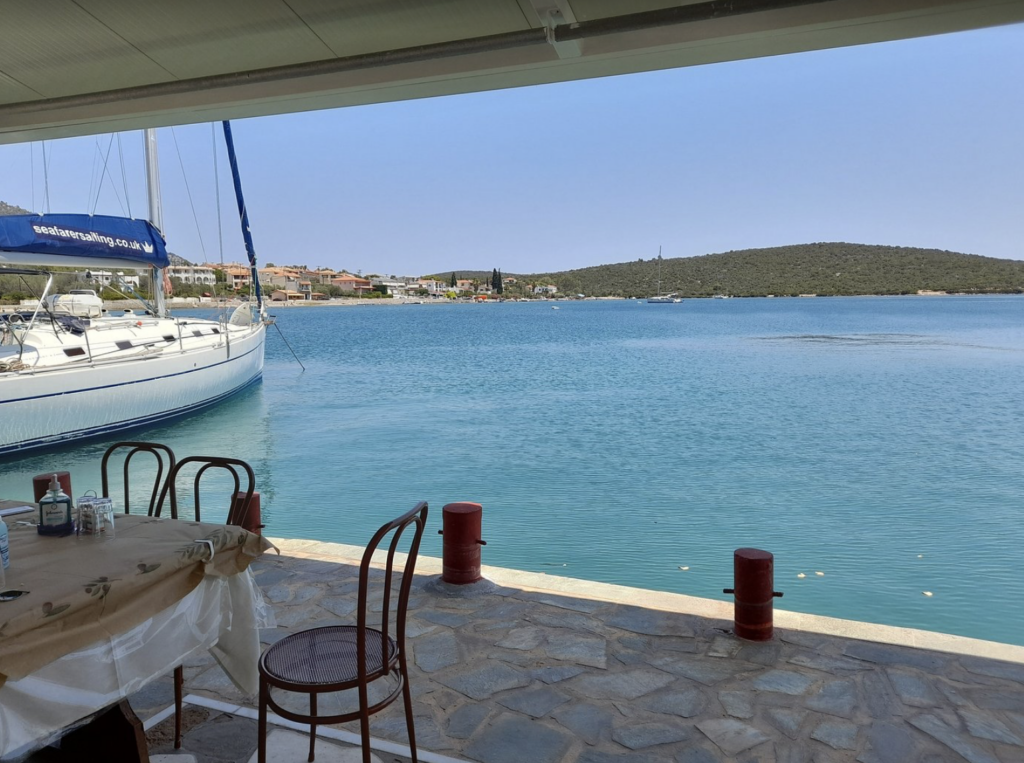
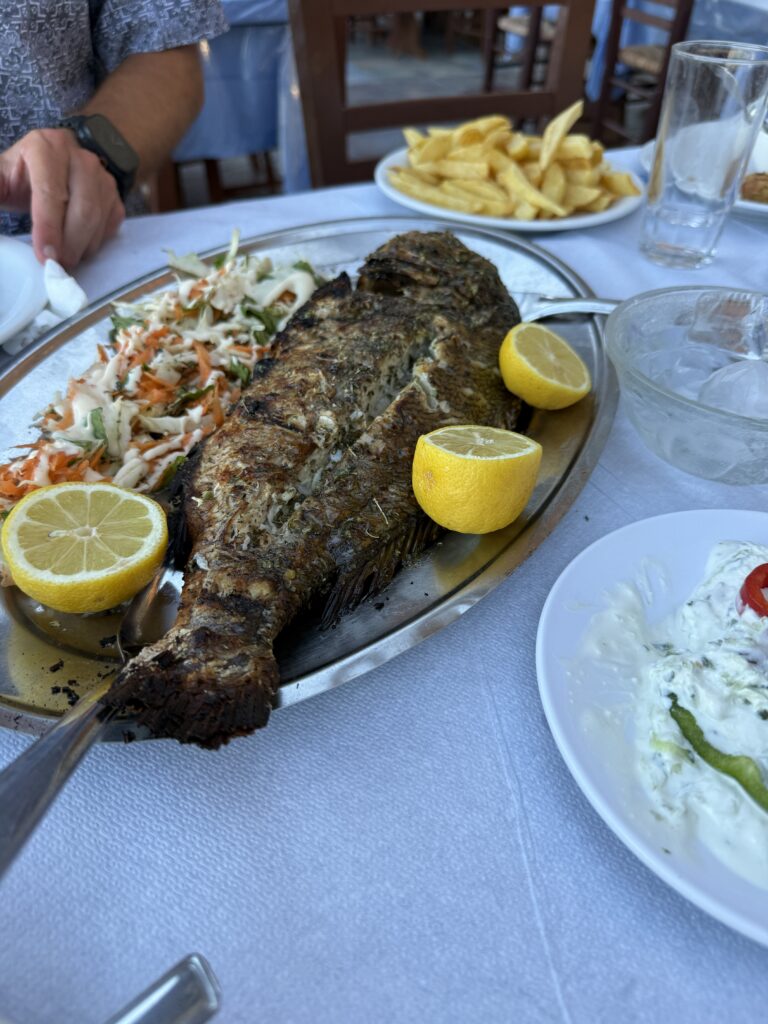
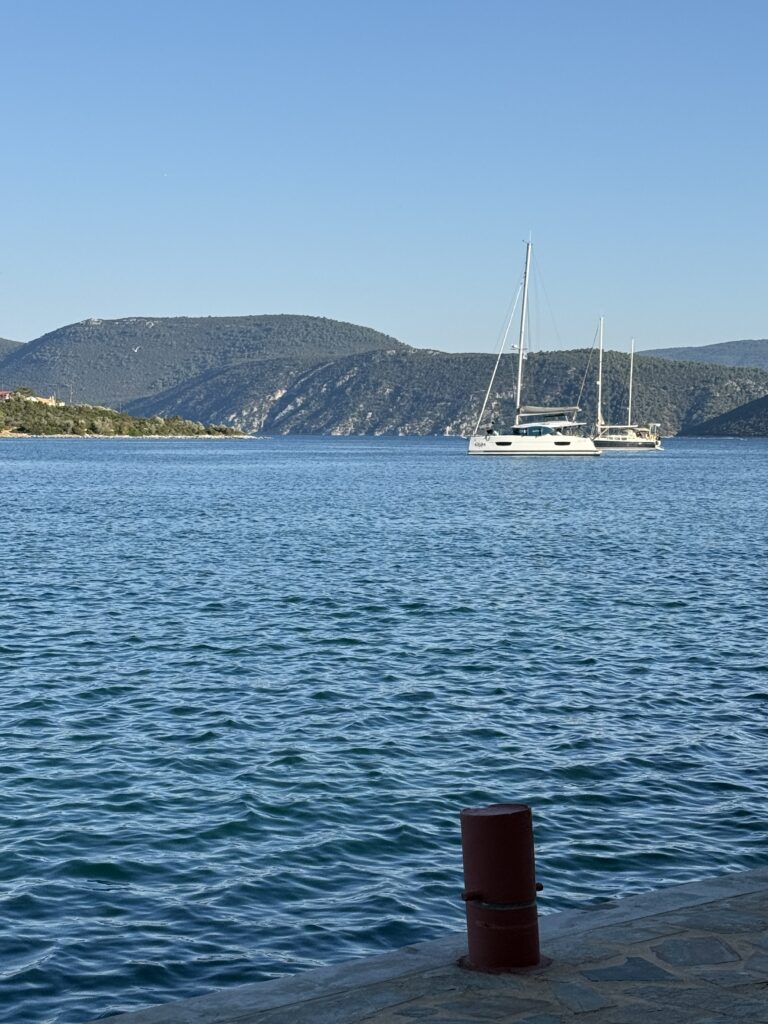
Our day ended far more quietly. A short sail brought us to the peaceful village of Korfos, where we dropped anchor before heading ashore by dinghy for a delicious dinner overlooking the waterfront. Fresh local red snapper, a beautiful sunset, and another memorable day aboard KORA.
Now to spend a few days exploring the Saronic Gulf before welcoming our next crew in Athens on July 1st.