After the drama of the storm, Dubrovnik felt like sunshine after rain – literally and figuratively. We caught an Uber to the Old Town, stepping through the gates into a place so unique it’s hard to believe it’s real.
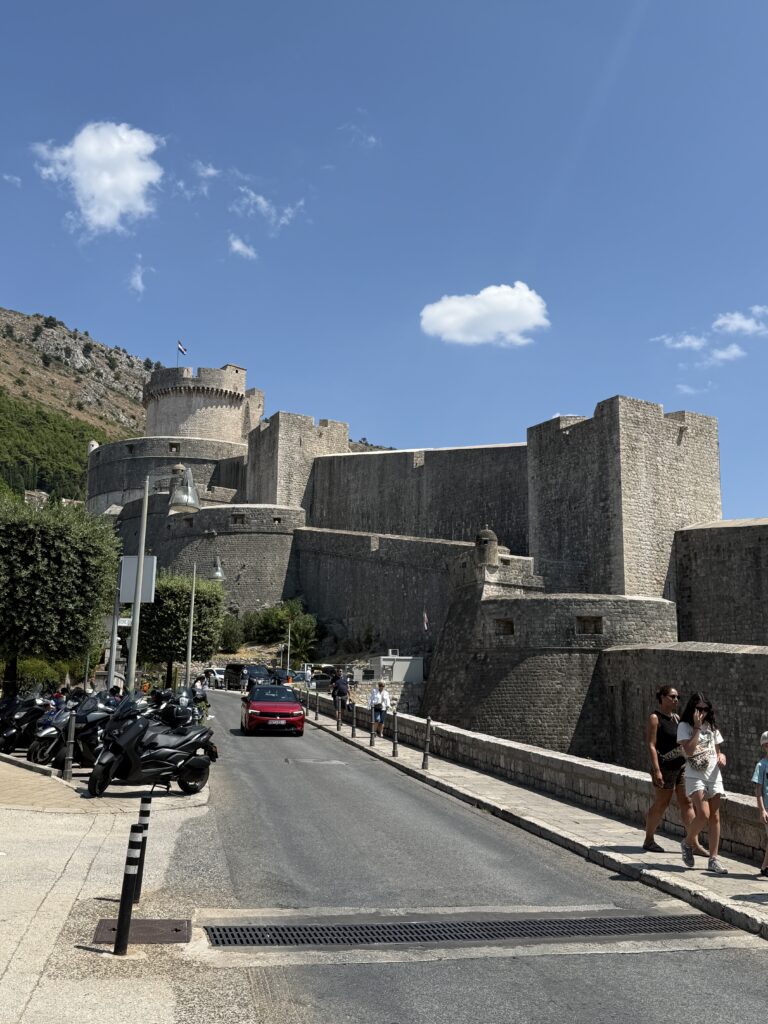
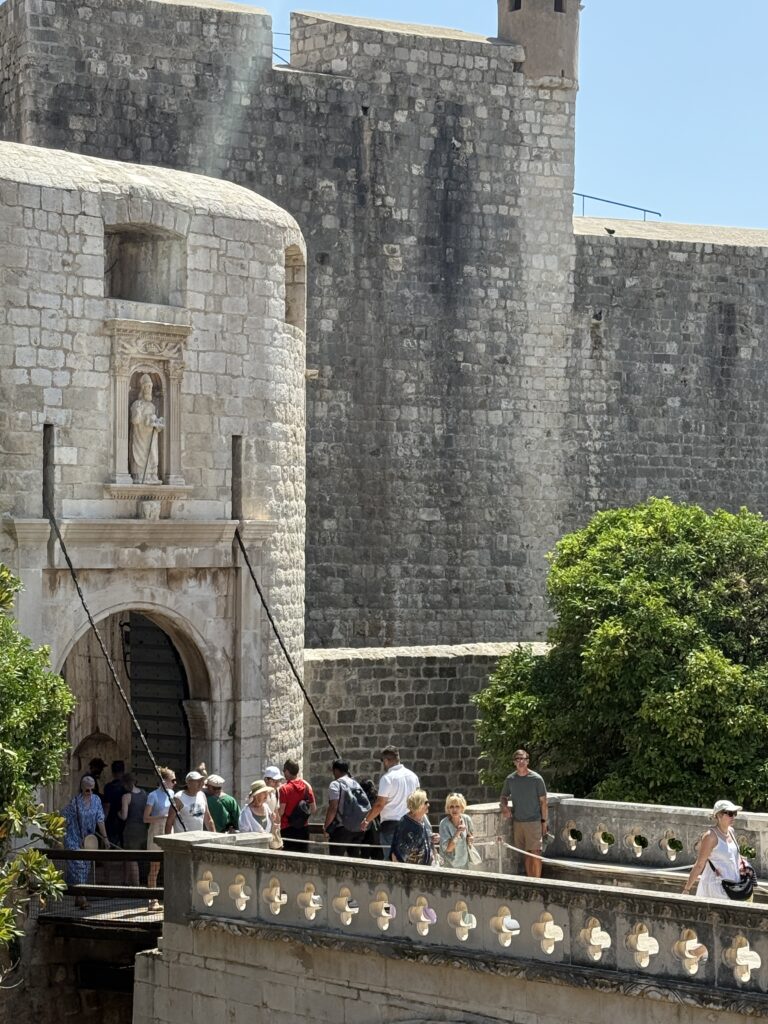
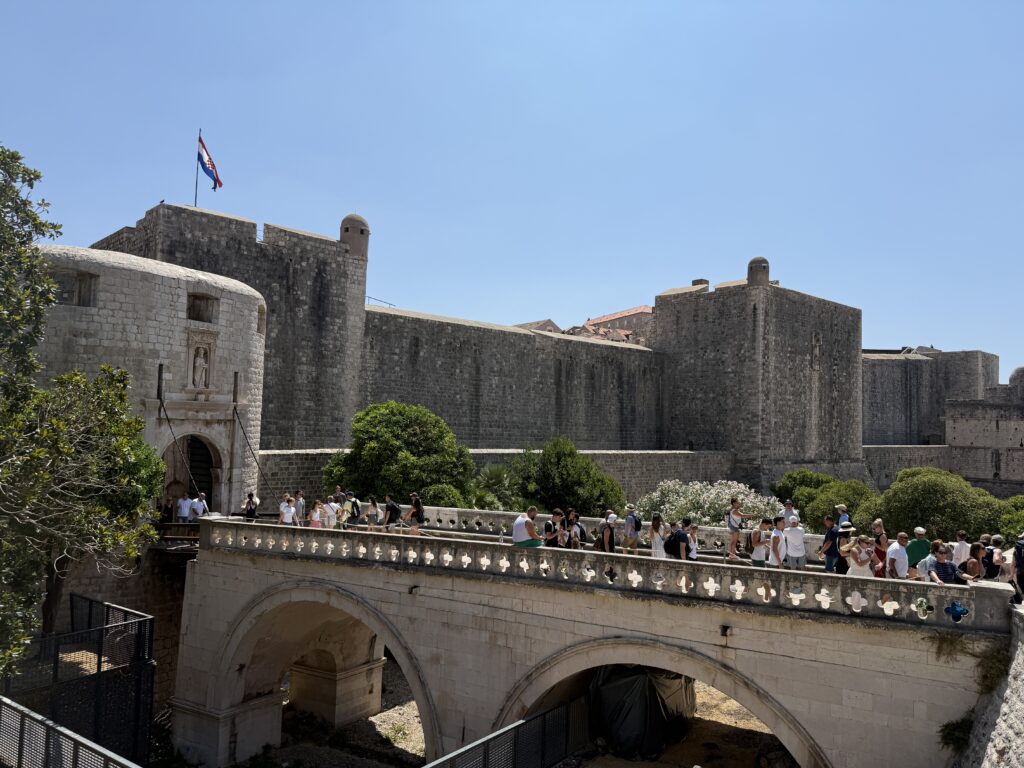
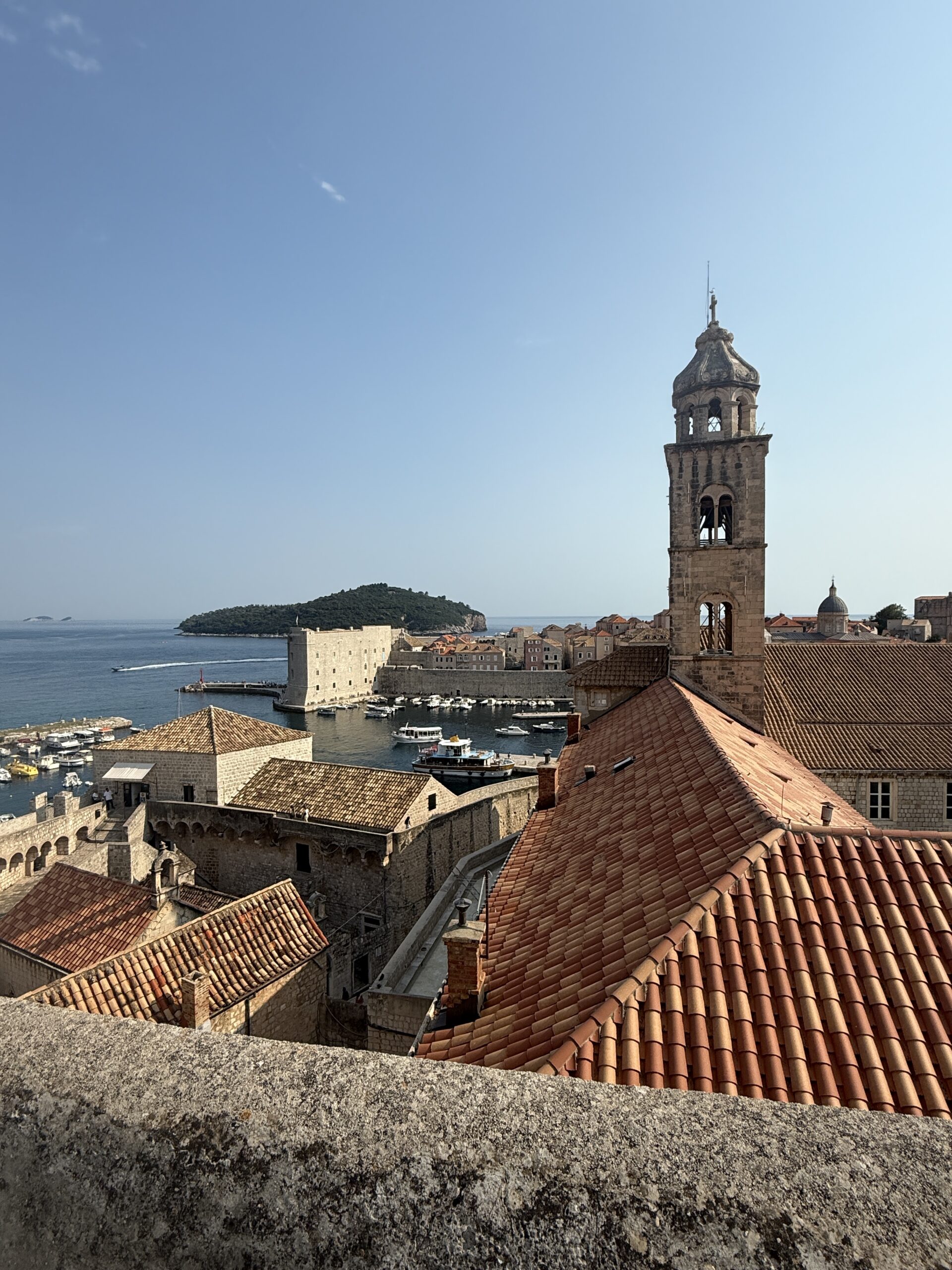
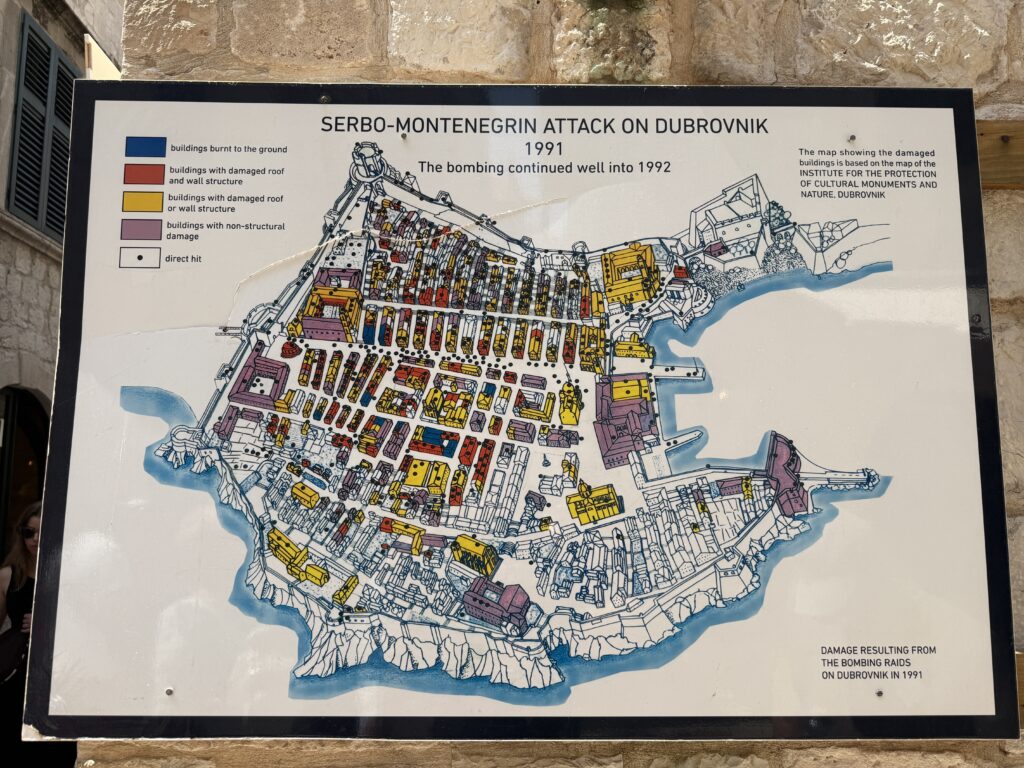
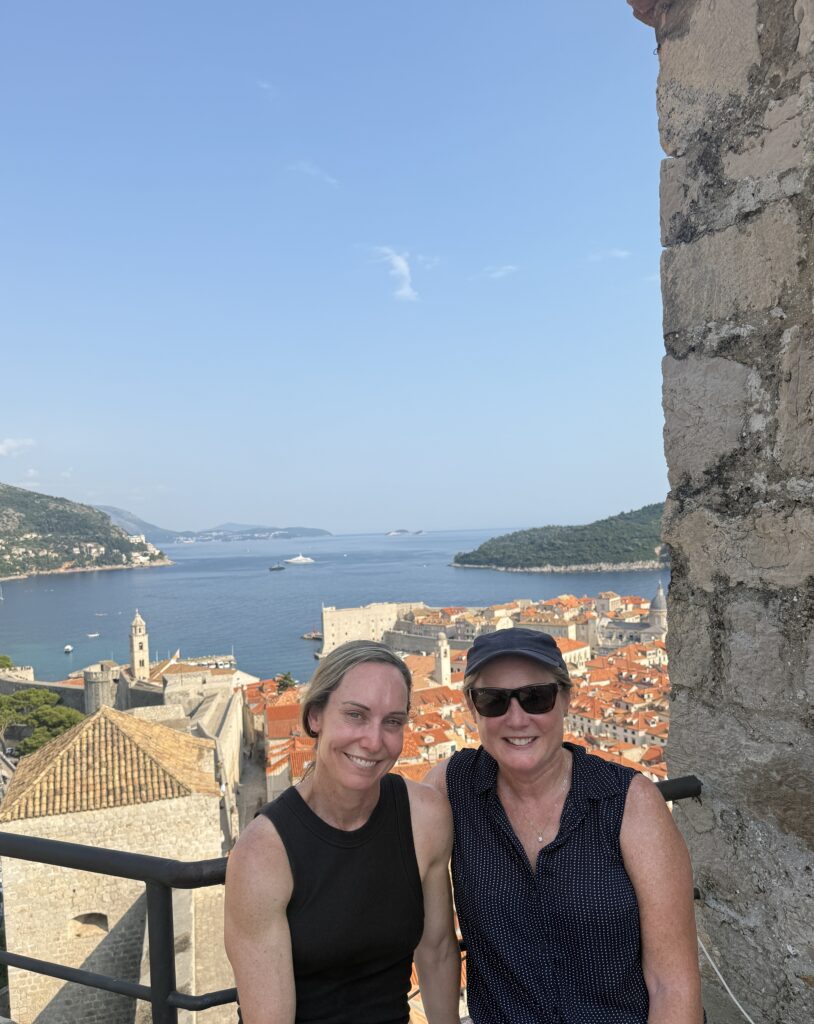
Known as the “Pearl of the Adriatic,” Dubrovnik has stood here since the 7th century, a fortified city that prospered as a maritime republic. Its famous stone walls – nearly 1.25 mi (2 km) long and up to 82 ft (25 m) high – have guarded it from pirates, invaders, and, more recently, the bombardments of the 1990s by forces of the Jugoslovenska Narodna Armija (JNA), that is, the Yugoslav People’s Army, which at that time was largely controlled by Serbia and Montenegro. Many of the terracotta roofs you see today are the result of painstaking post-war restoration, each tile a quiet testament to resilience.
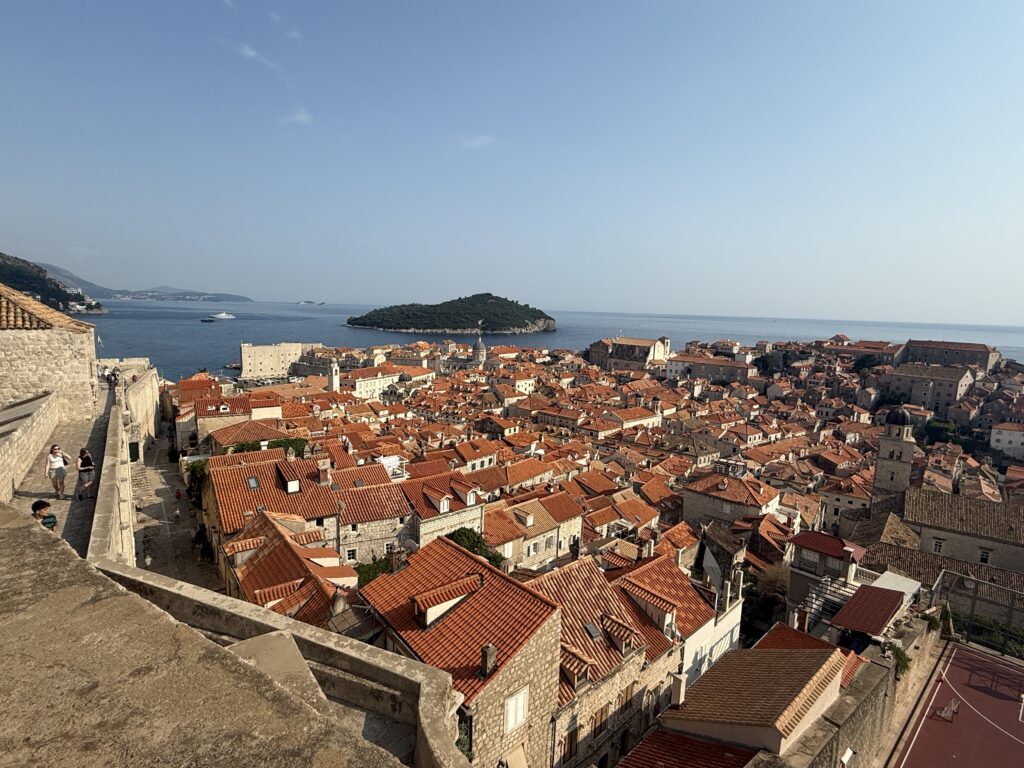
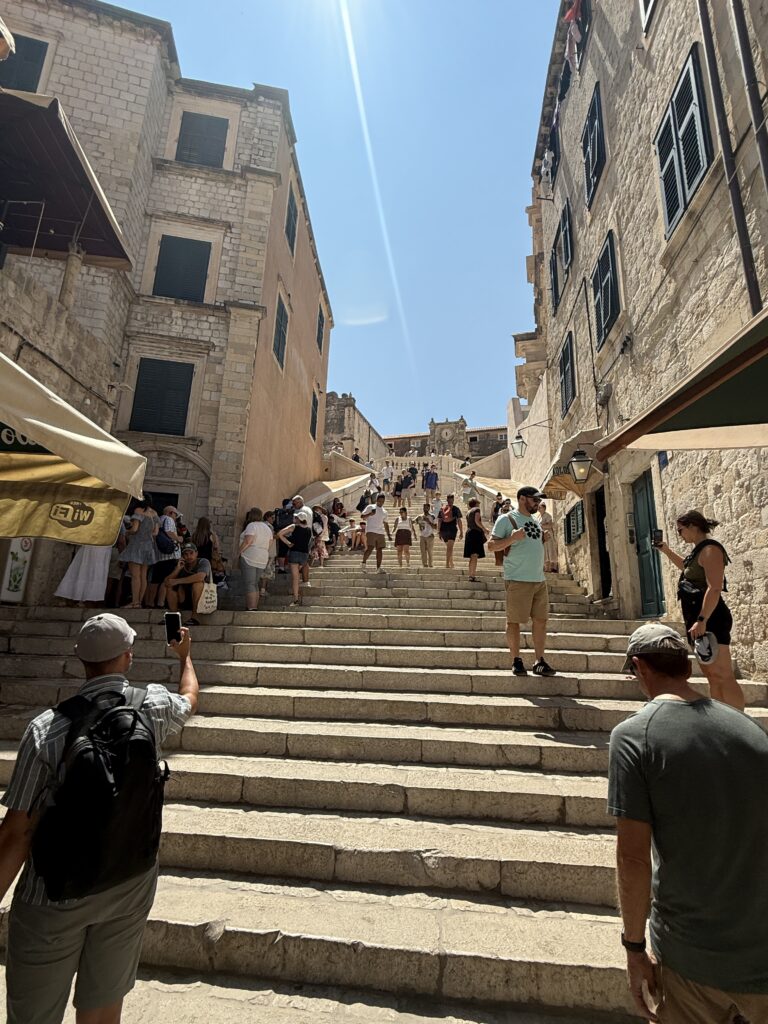
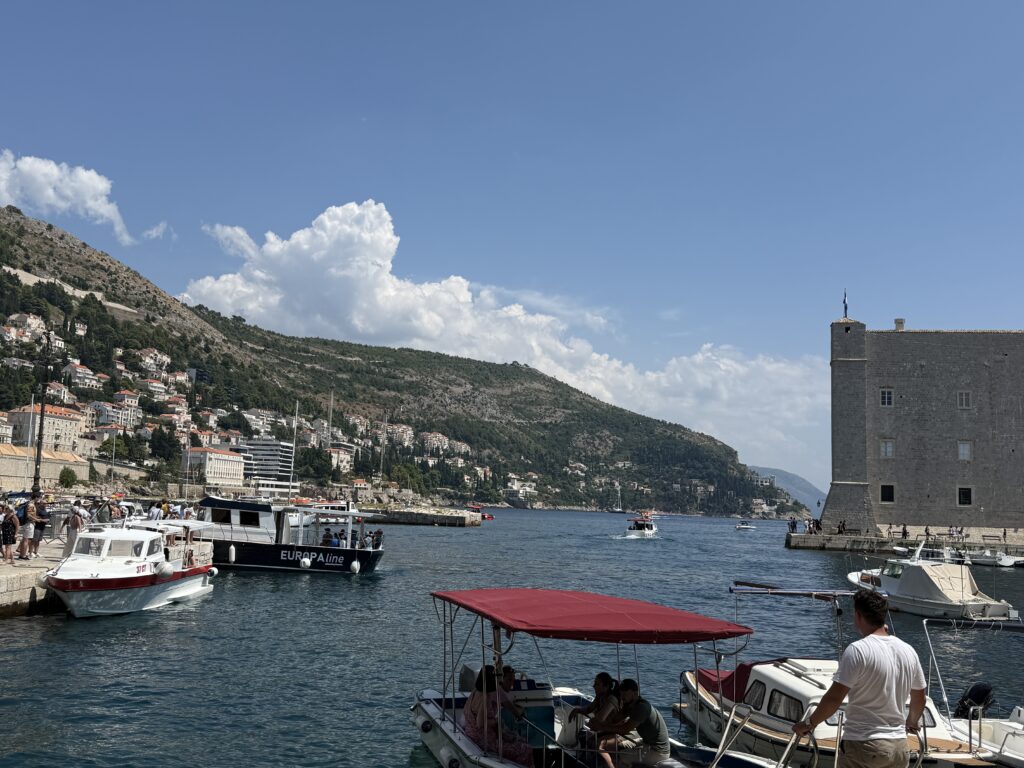
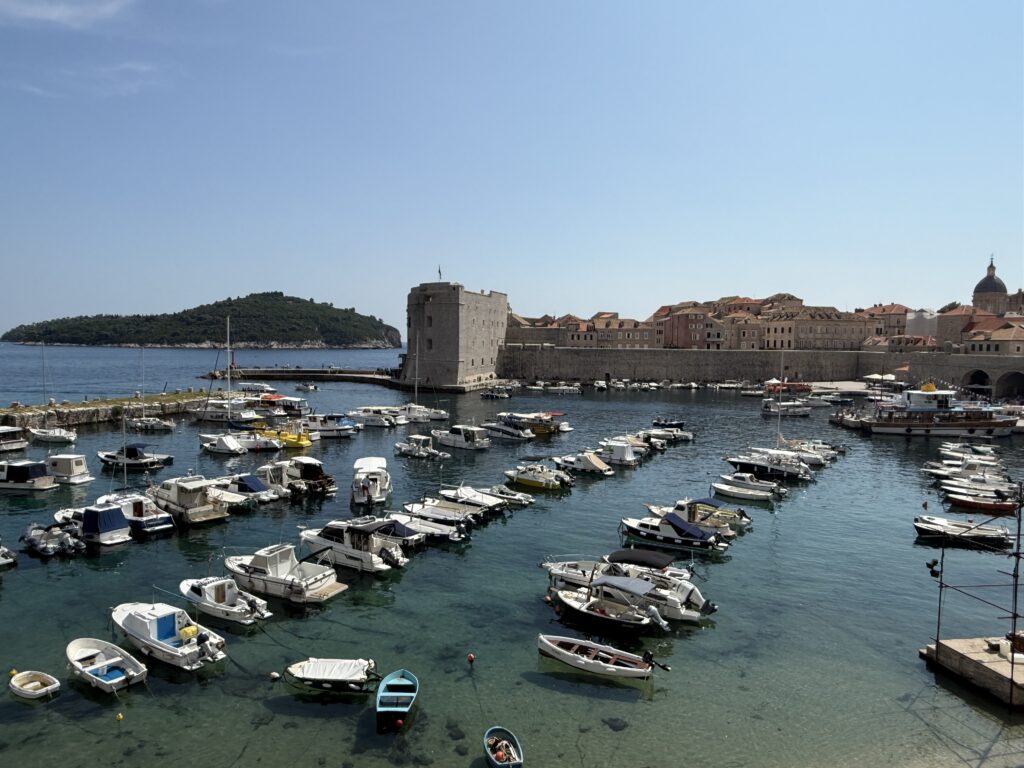
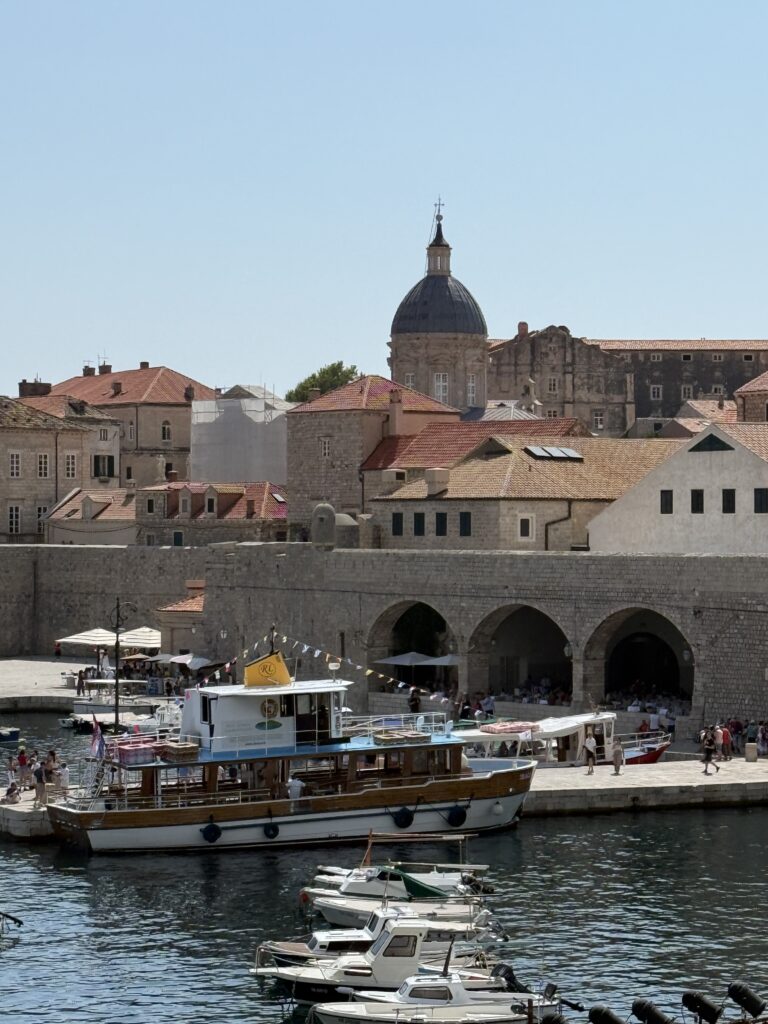
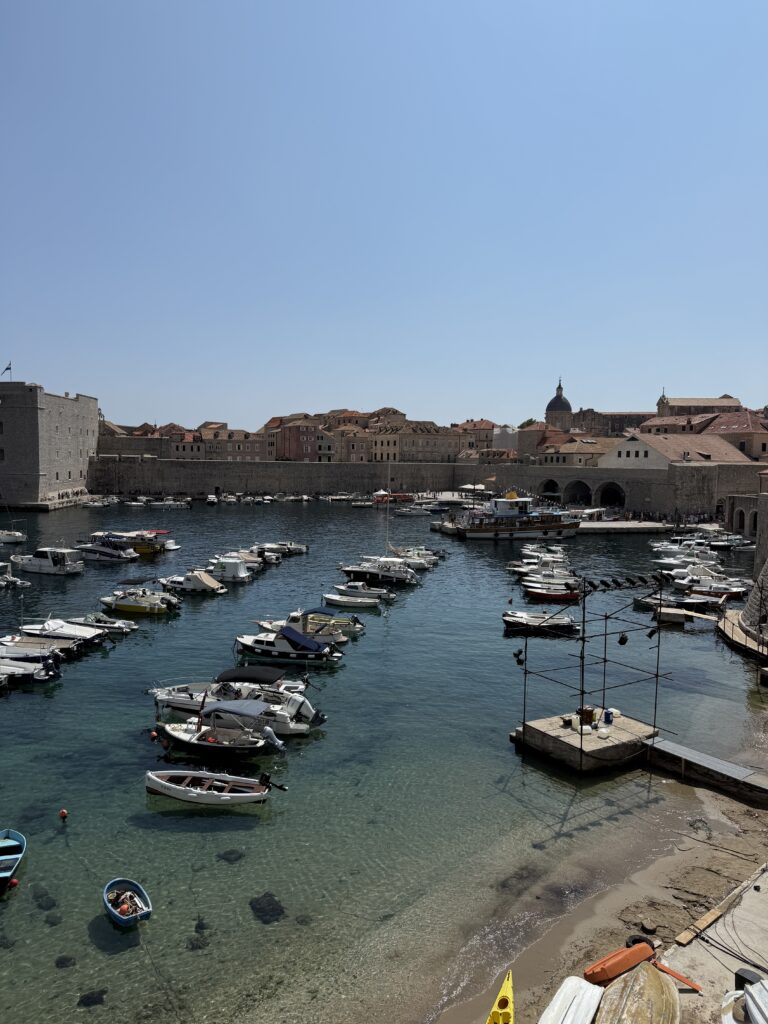
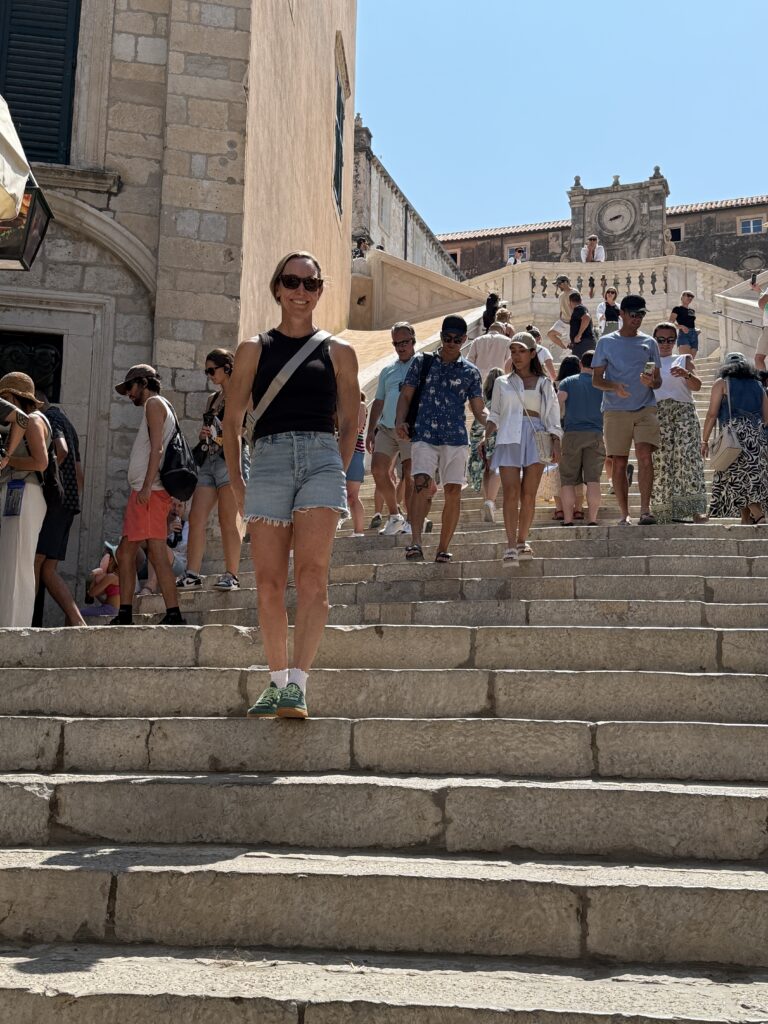
We strolled through marble-paved streets, past fountains, churches, and hidden alleys. We’d pulled up the GPS My City app and spotted a Game of Thrones walking route – perfect for wandering between filming locations and real-life history. We gazed through Pile Gate where countless King’s Landing scenes unfolded and stood on the Jesuit Staircase where Cersei began her infamous “walk of shame”. Our walk took us to the inner-city harbour, its stone walls wrapping protectively around water the colour of jade. We lingered over lunch at Gradska Kavana Arsenal, tucked beneath the arches and overlooking the harbour – the perfect front-row seat to watch tour boats, kayakers, and the gentle bustle of Dubrovnik unfold.
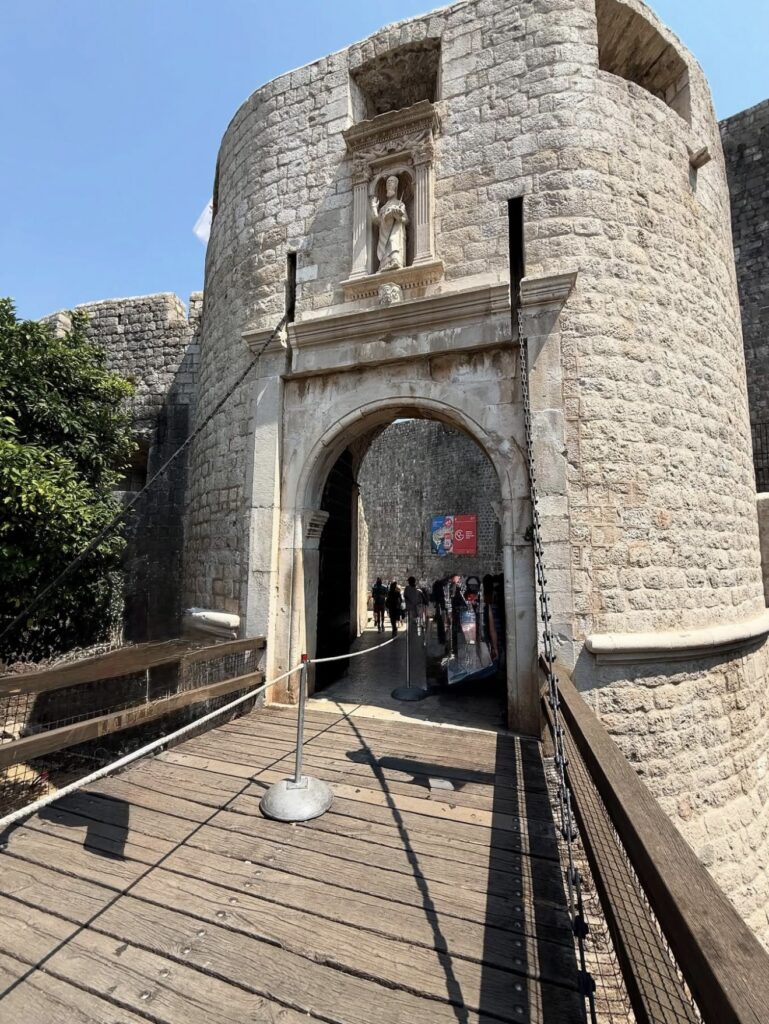
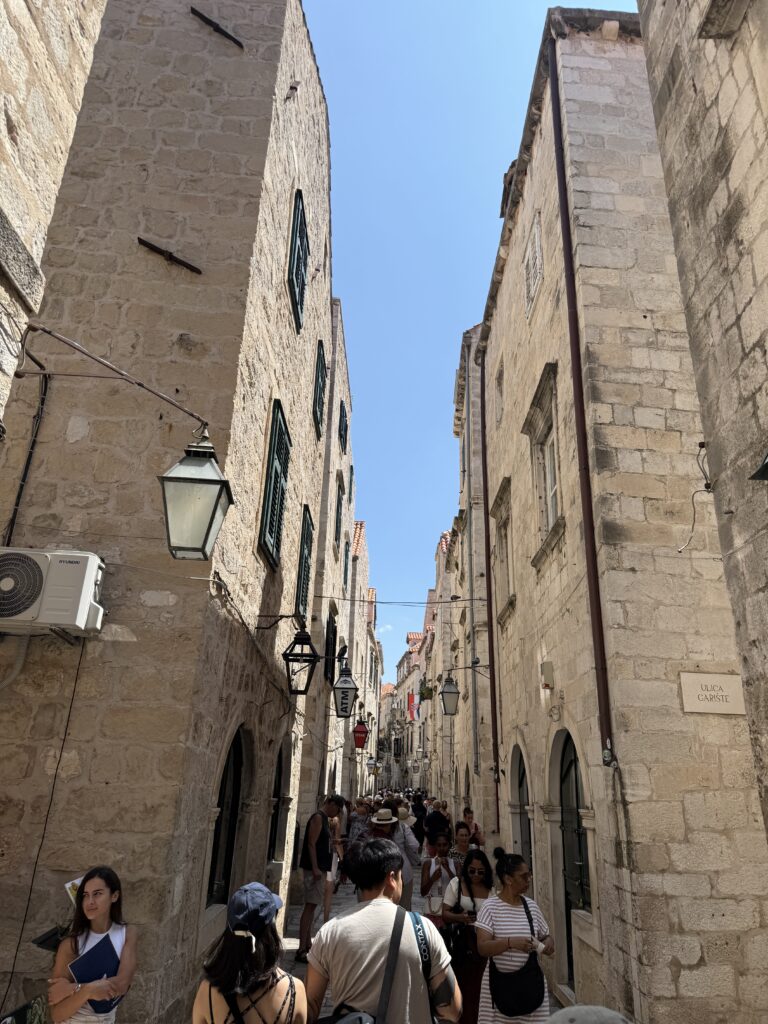
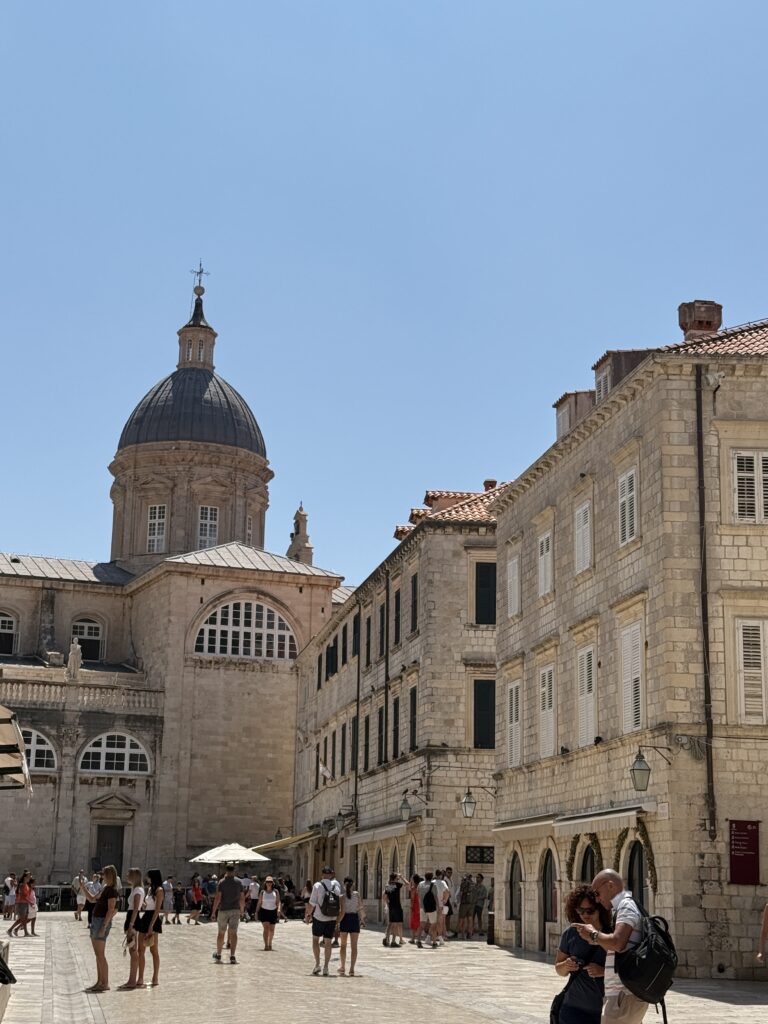
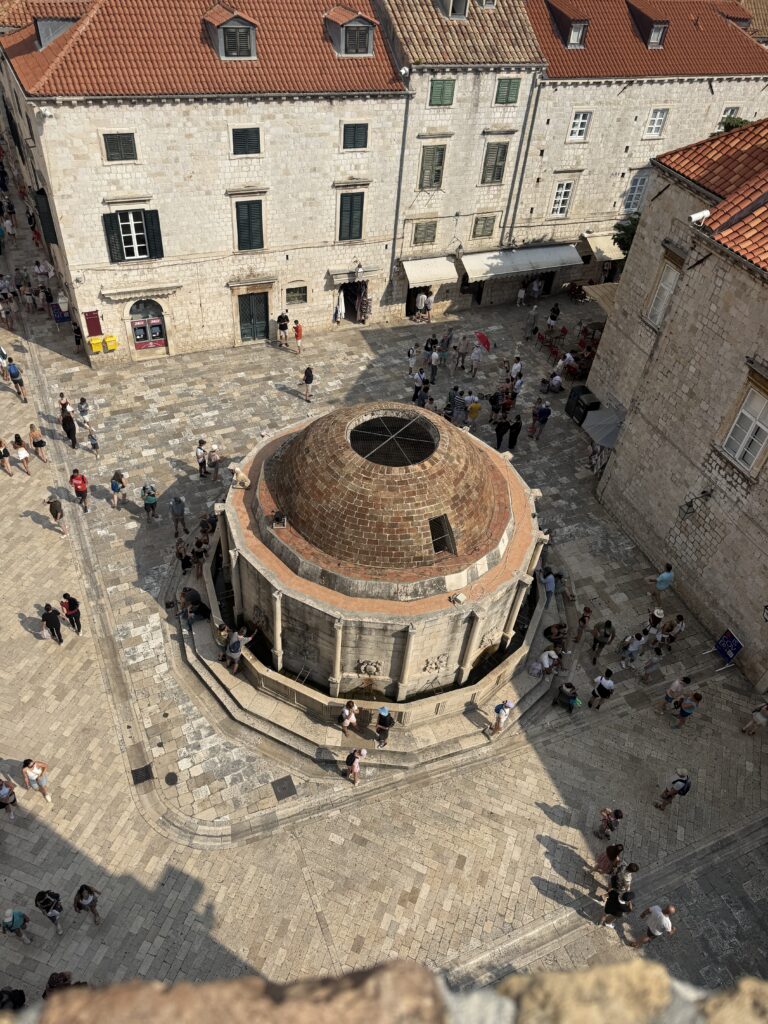
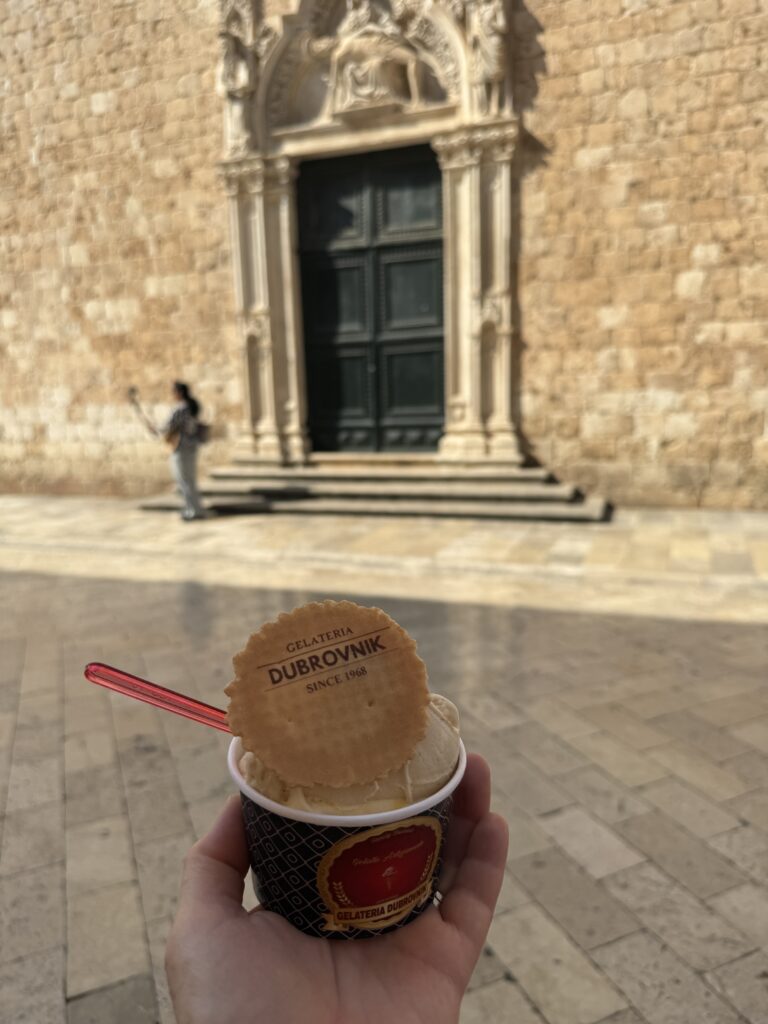
Doug braved the midday heat to walk the city wall (sans sunscreen, so I wisely opted to save my turn for the next day when Khali and Cam would join us). Instead, I found a shady perch by Onofrio’s fountain and cooled off with the best passionfruit gelato I’ve ever had – tangy, tropical, and dangerously moreish.
Walking back to the marina took just 40 minutes, giving us a fascinating view of where the modern city rubs shoulders with its ancient heart. Marina Frapa itself, as convenient as it is located to the Old Town and as lovely as it looks, is no gentle berth – tides and currents here keep the boats in a constant, restless dance.


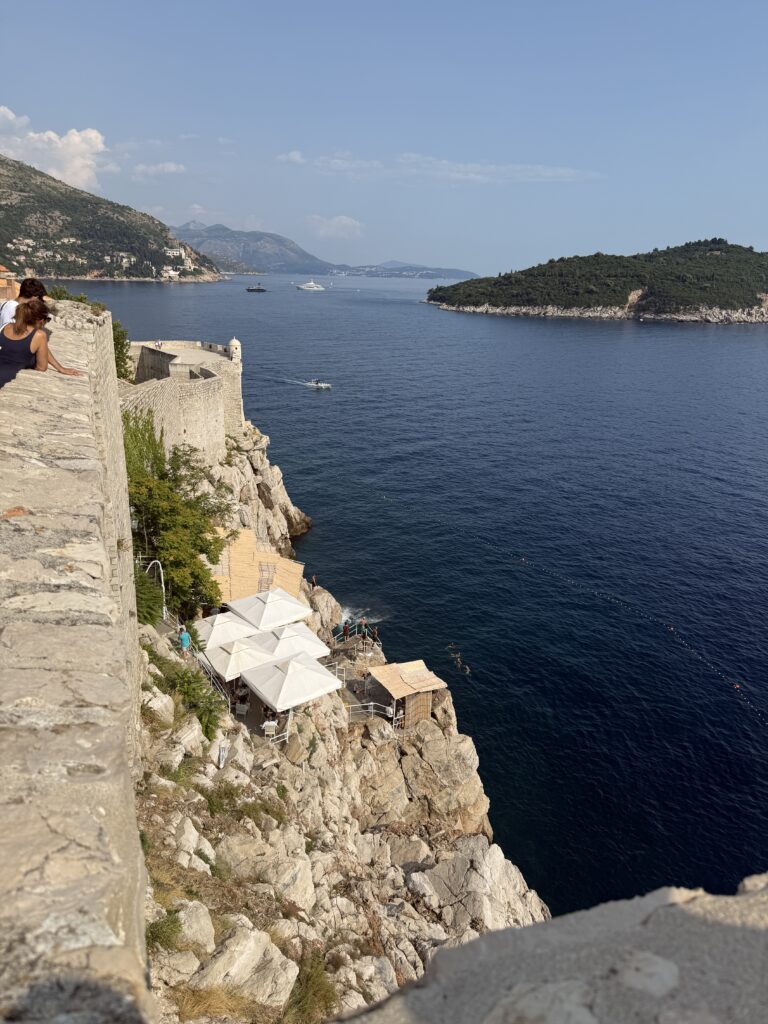
The next day, Khali and Cam arrived, buzzing with excitement to see Kora. We gave them a quick tour before heading back into the Old Town. We started by climbing up to Fort Lovrijenac, the city’s dramatic cliff-top fortress, and stood where Dubrovnik’s defenders once watched for invaders. From there, we looked out over the entire walled city, its stone ramparts snaking along the coastline in a complete loop – a medieval marvel.
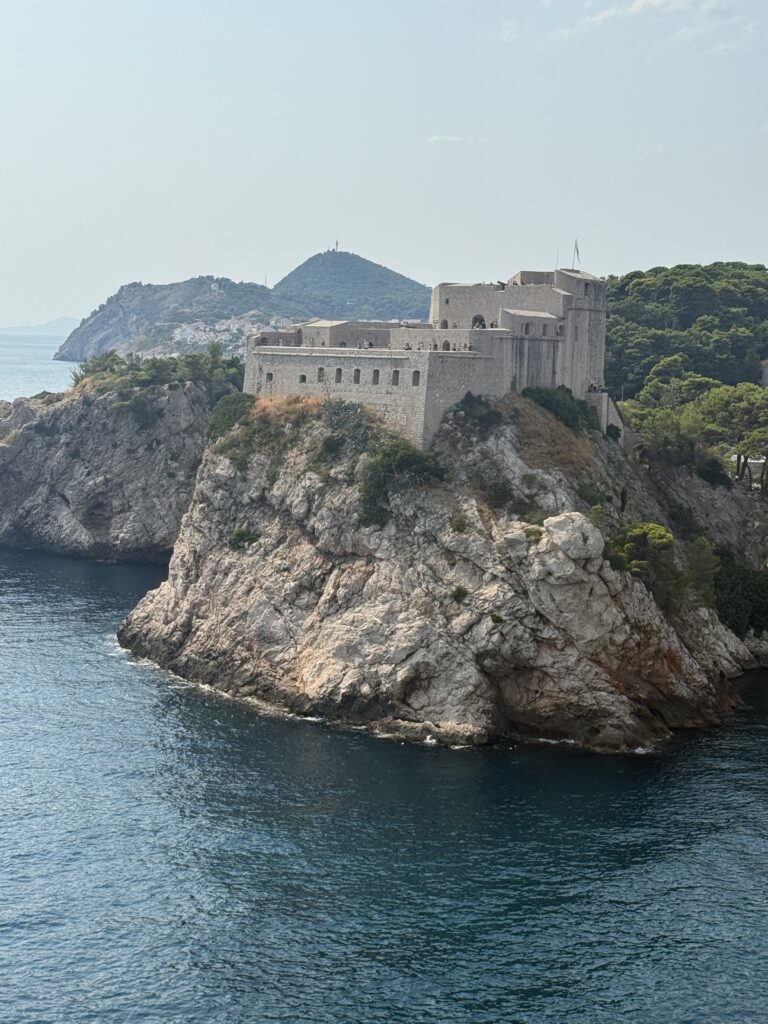
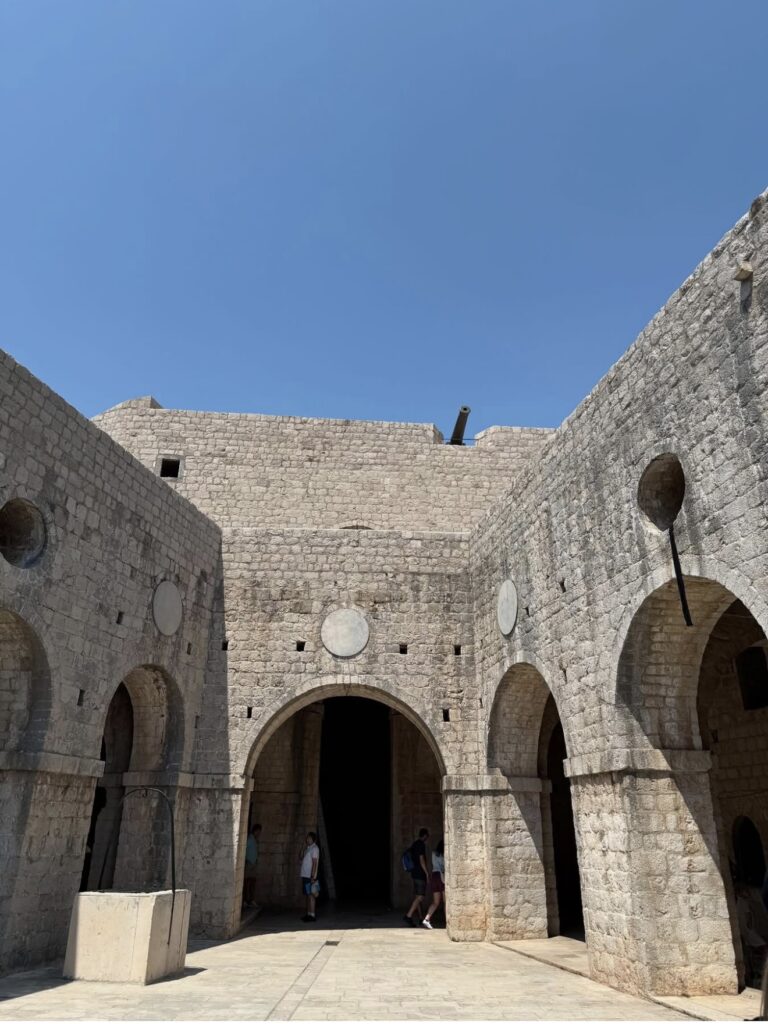
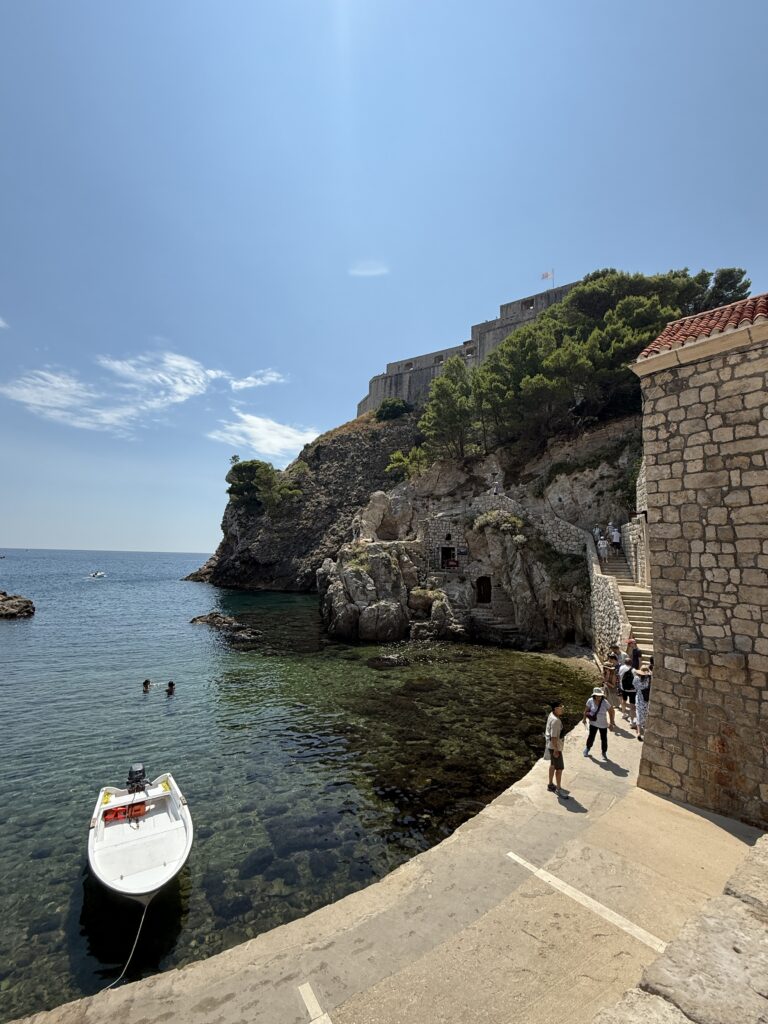
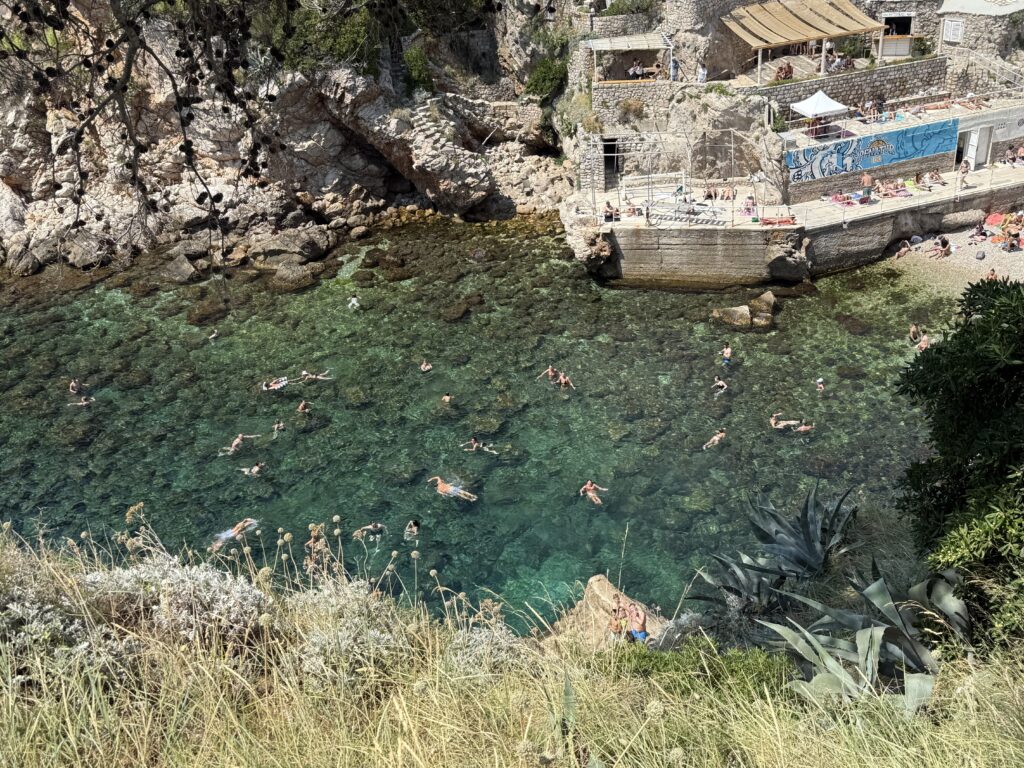
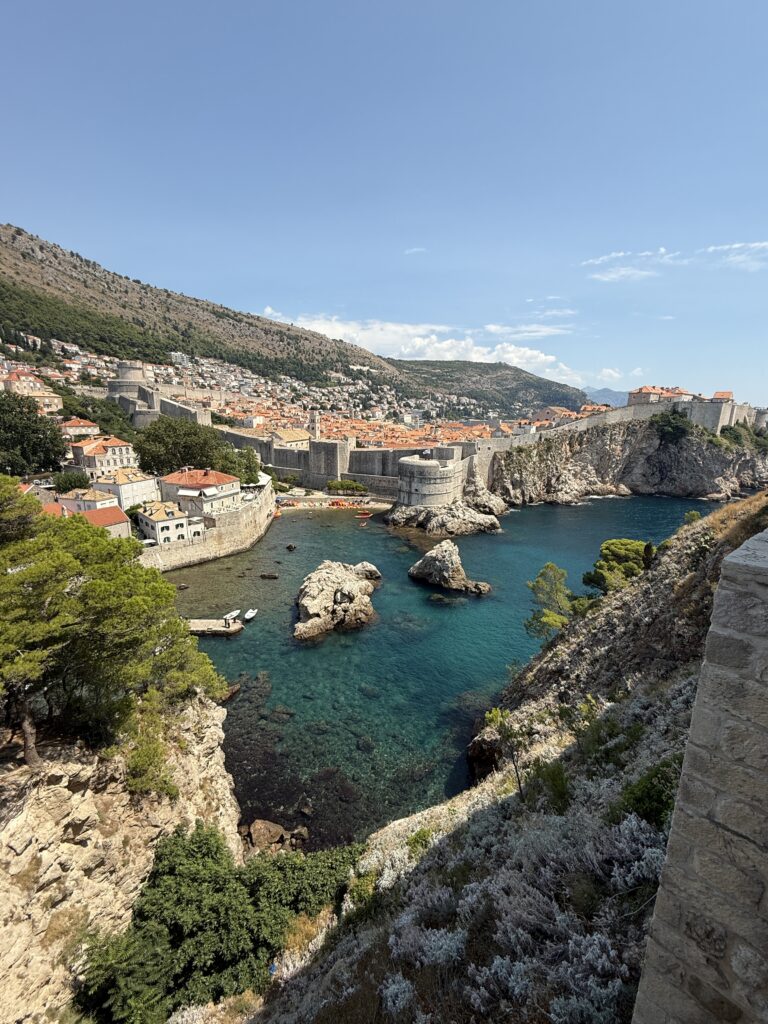
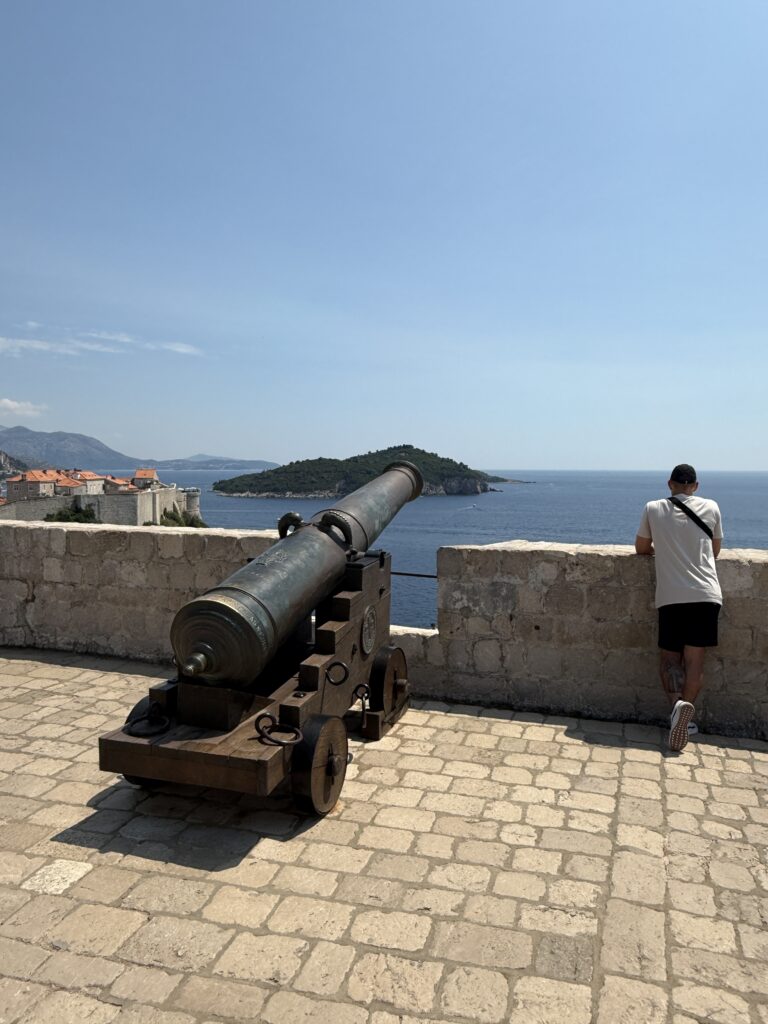
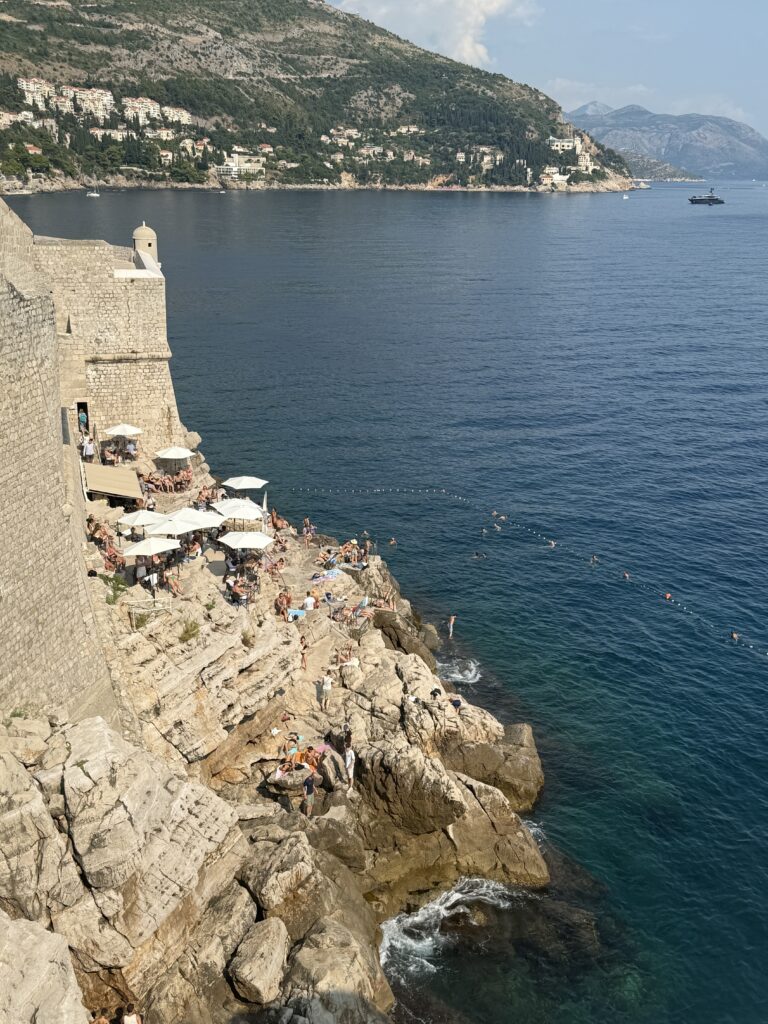
We wandered through city gates that opened straight onto rocky beach clubs clinging to the cliffside, refilled our bottles from the cool public fountain, and finally took to the wall walk ourselves.
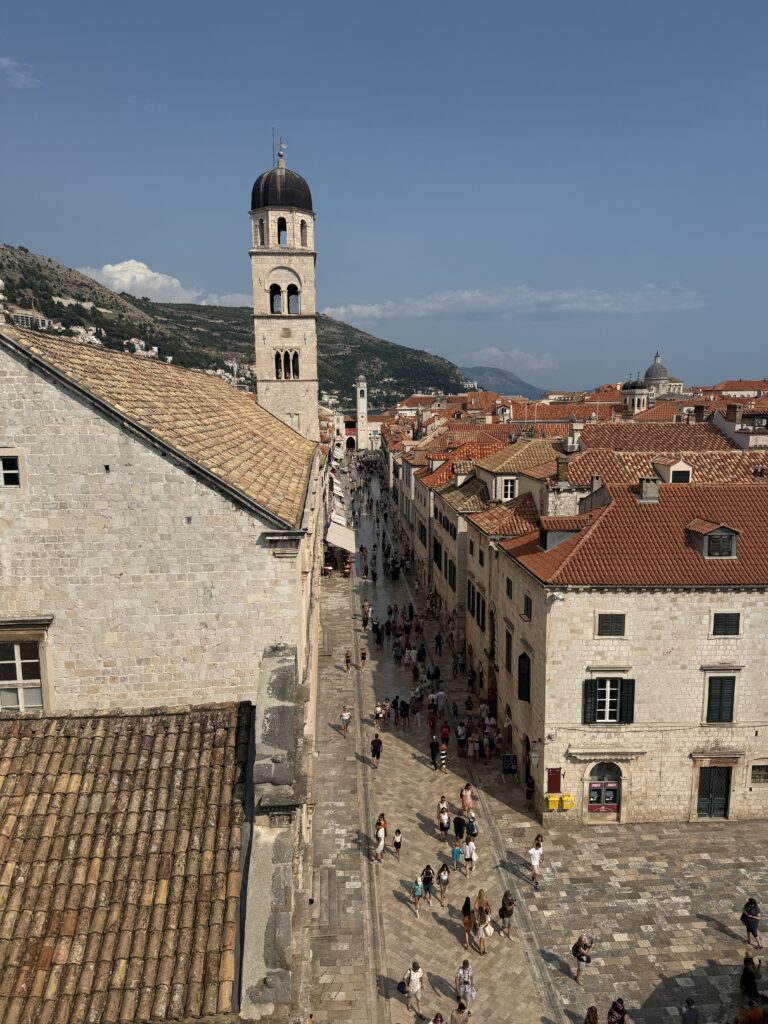
The views from the city wall, constructed mainly during the 13th-17th centuries, were breathtaking – red roofs tumbling down toward the turquoise Adriatic, the mountains behind, the horizon ahead.


A quick grocery stop on the way back reminded us of one of the quiet struggles of travel: figuring out how to meal plan when you can’t find half of what you’re used to buying at home. With Kora stocked for several days at anchor, Doug and Cam collected our freshly repaired gennaker (cue celebration!) while Khali and I unpacked. We wrapped up our stay with dinner at Peppers, a little Mexican/Asian fusion spot where the tacos and nachos were so good!!

Plans for the morning were set: a run through the waking streets for Khali & Cam, fresh bread from the bakery, and then… sails up. Dubrovnik had been a city of beauty and history, but it was time to trade stone walls for the wide-open sea once again.