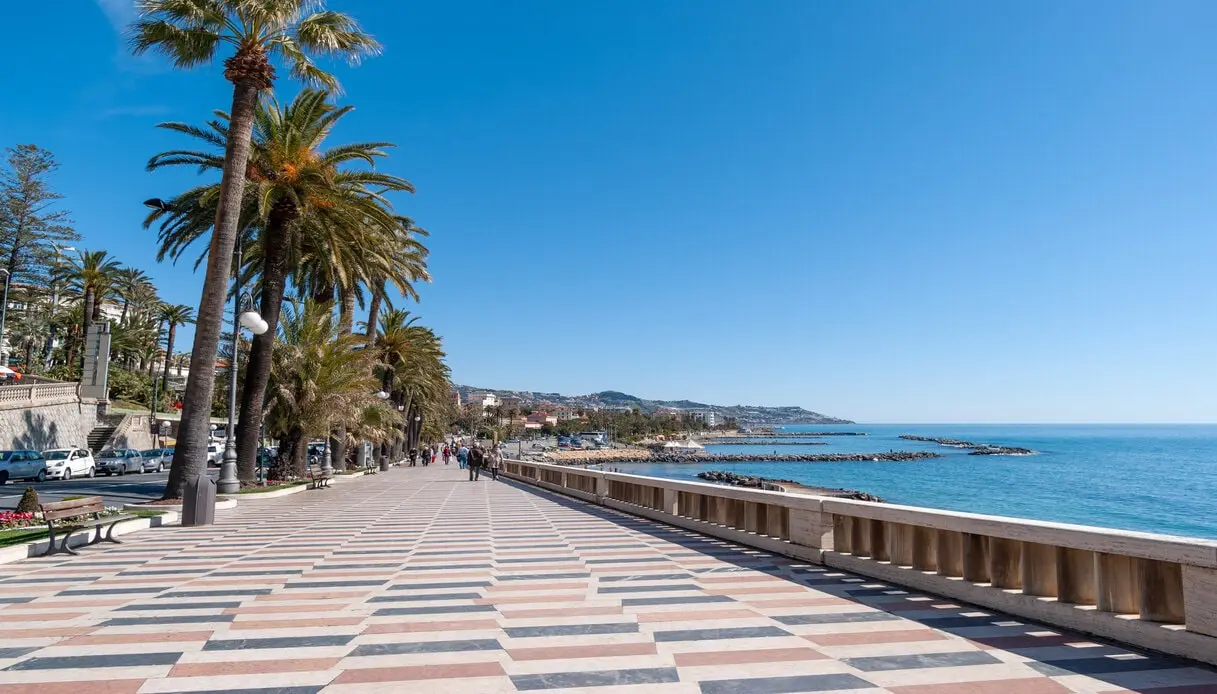
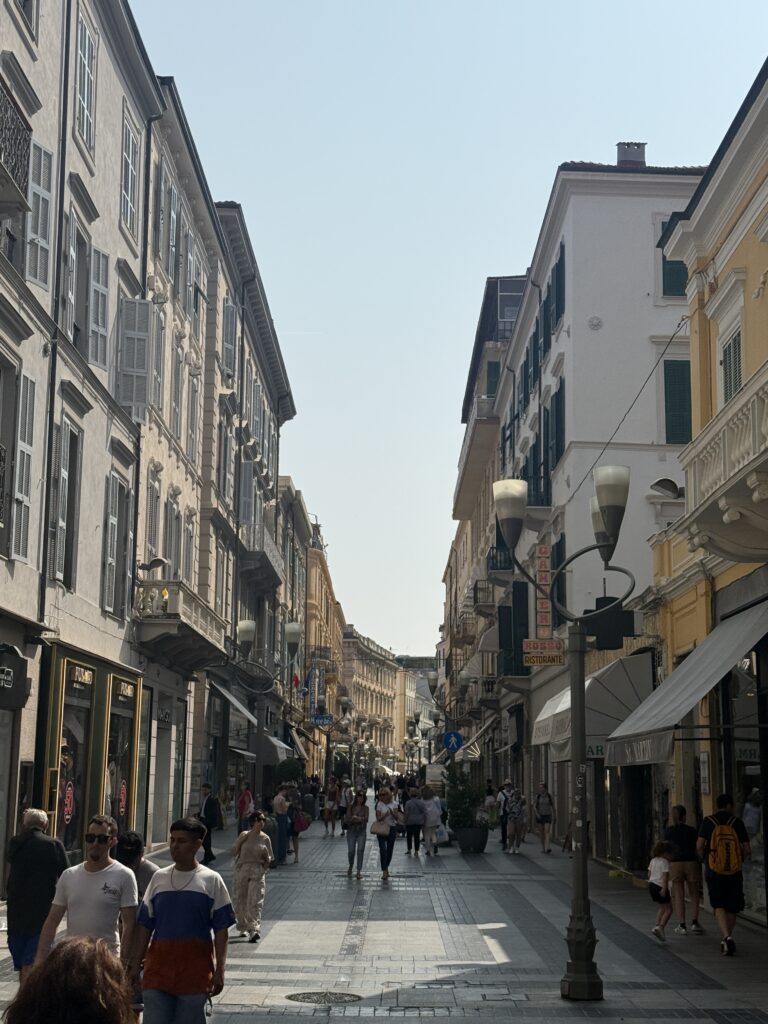
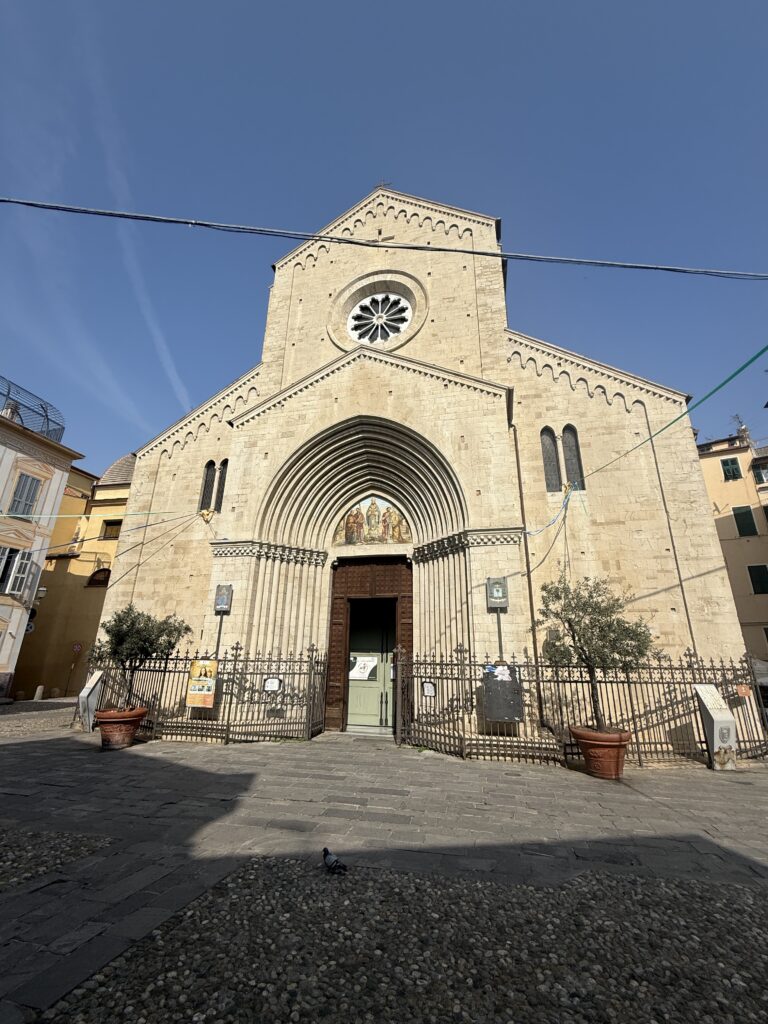
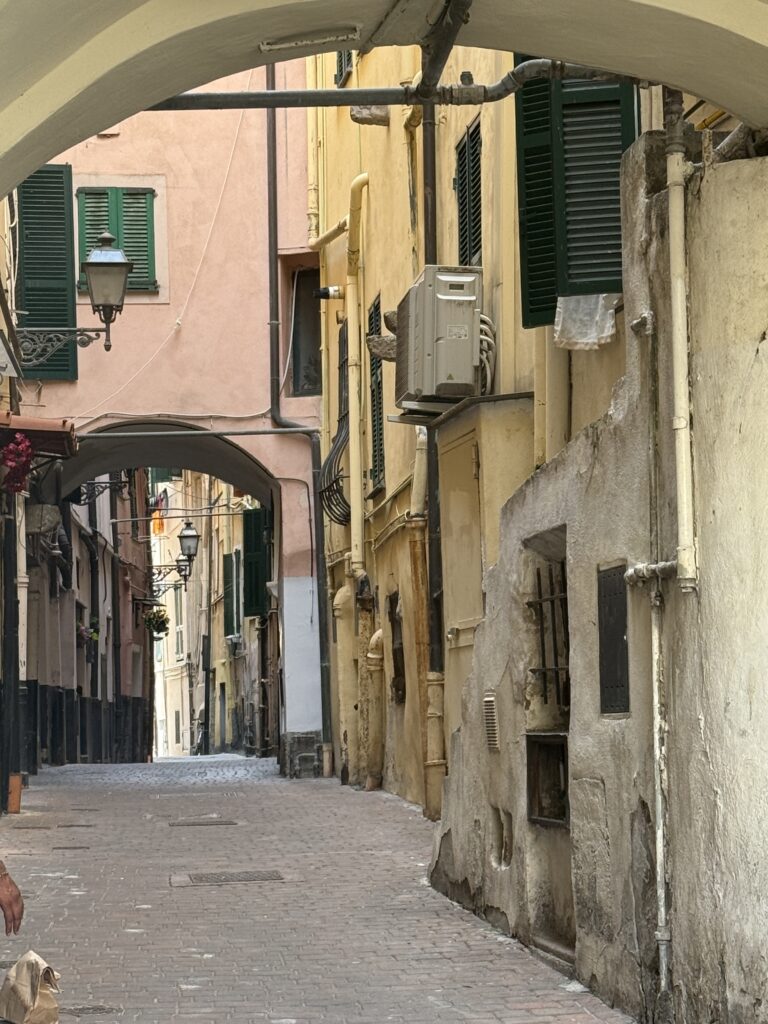
Traveling to Sanremo, the site of Karen’s very first trip to Europe back in 1997, when she attended SPIE Europe to present a talk on light-activated adhesives, was always going to stir some nostalgia. Our first day was lovely: we wandered the winding alleyways of La Pigna, the medieval old town perched above the sea. But something felt different. It didn’t quite match the 1920s/1930s Provençal Riviera charm she had carried in her memory.
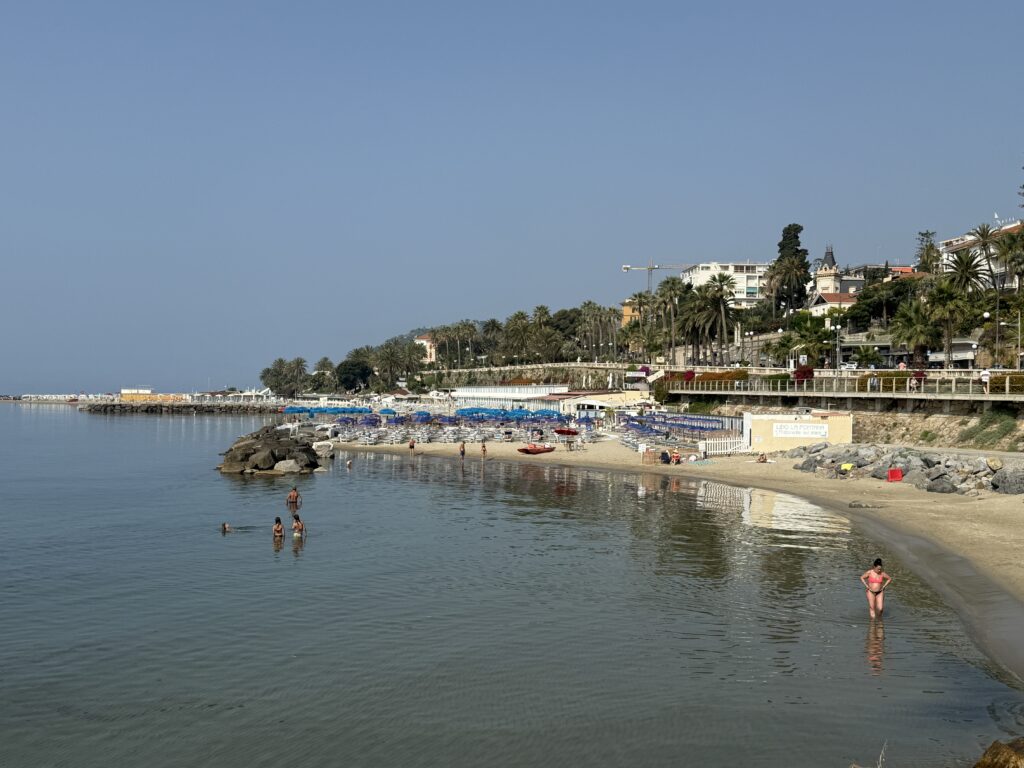
So the next morning, Karen set off on foot to find it. Just beyond the bustle of the modern town, the Sanremo of another era revealed itself. Lining the bay stood the grand old hotels, their faded grandeur still proud, with striped umbrellas and neat rows of chairs spilling onto the sand.
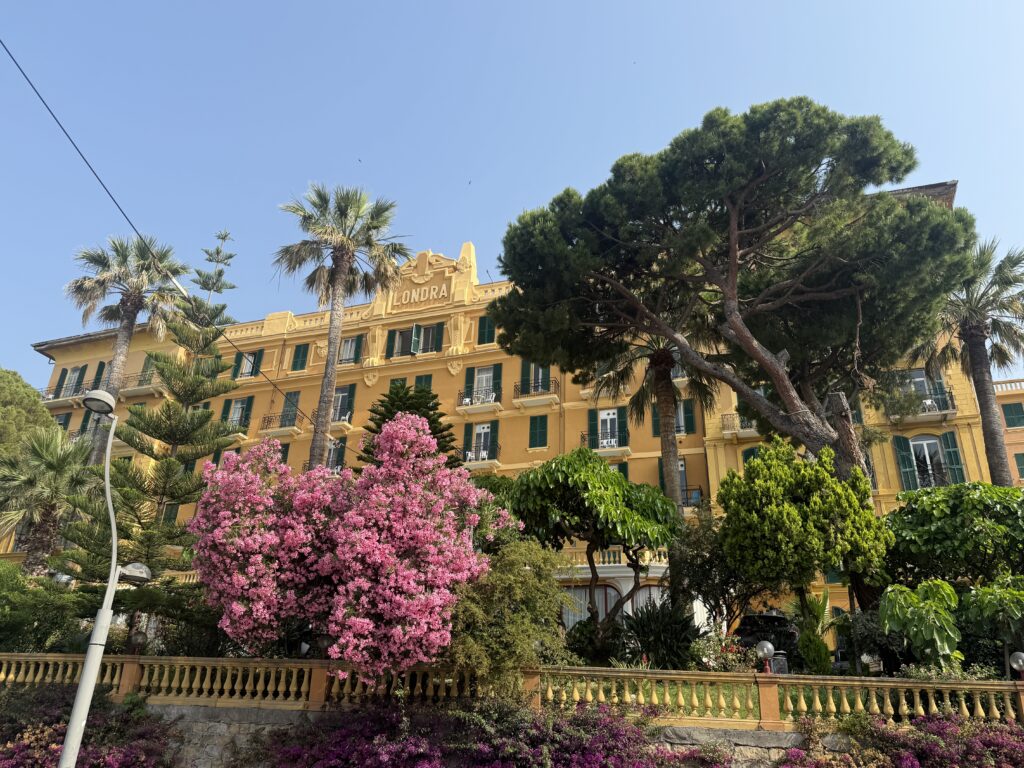
her talk at SPIE Europe in 1997
The beaches presented a perfectly preserved time capsule of old-world structure and elegance. What stood out most, and probably the strongest memory Karen carried with her, was the “camerini privati” (private cabins), sometimes called “spogliatoi” (changing rooms). Not a modest row of shared changing rooms but a dedicated hut for each lounge chair, wrapping around three sides of the beach. This wasn’t just a matter of convenience; it was a tradition. These individual cabins were a hallmark of Italy’s early 20th-century seaside culture when beachgoing was a refined ritual, and modesty mattered. Back then, changing in privacy wasn’t just expected – it was part of the experience, especially for well-to-do families vacationing on the Italian Riviera. It was all about order, elegance, and exclusivity. Here in Sanremo, that spirit still lingers.
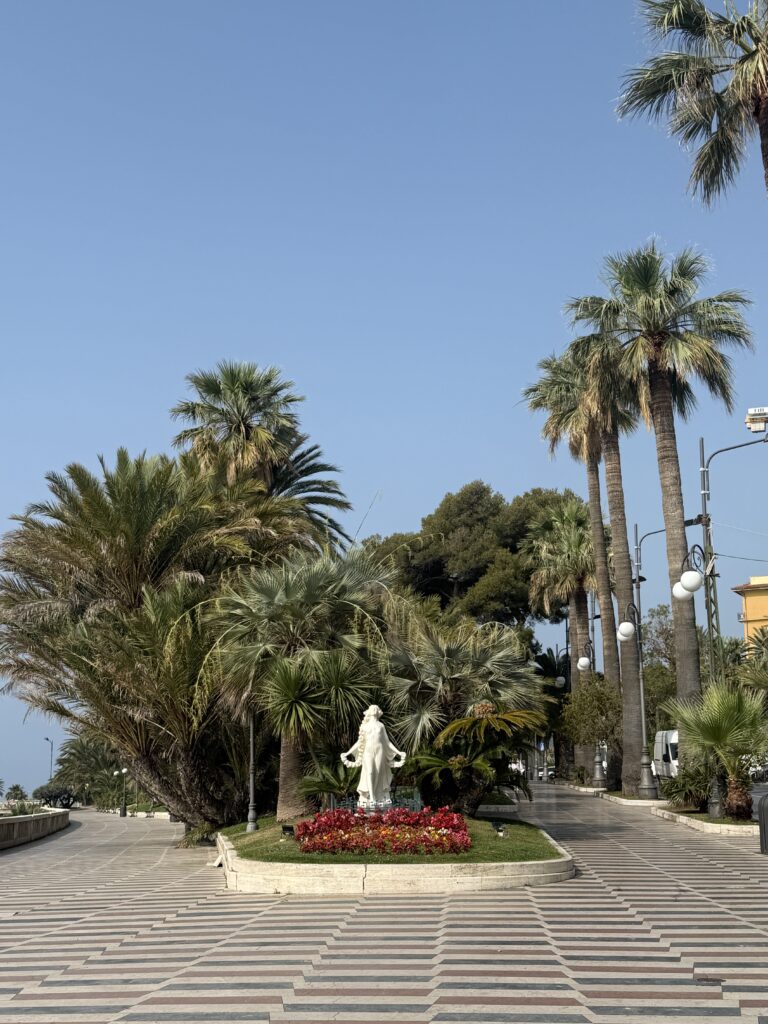
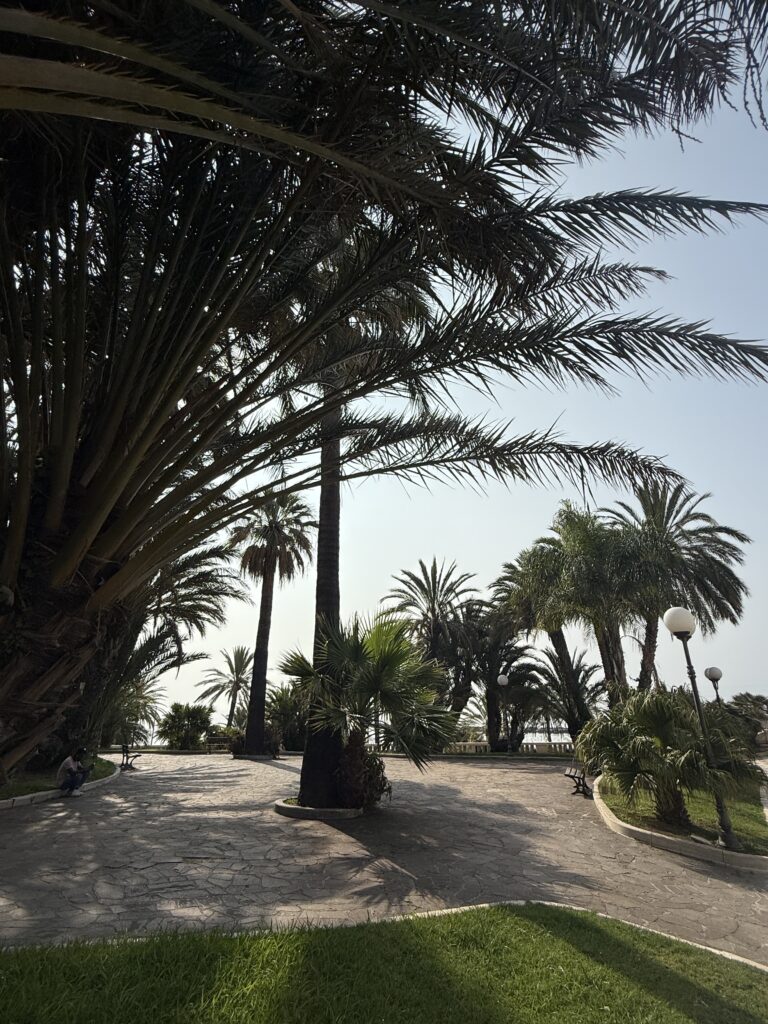
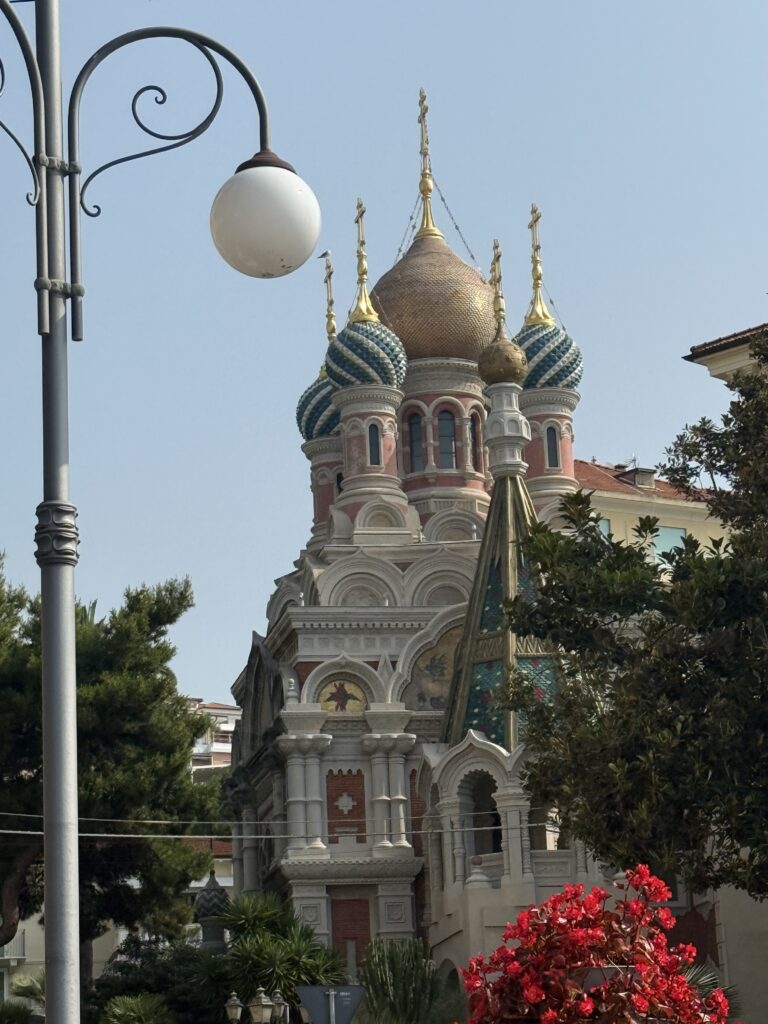
Russian Orthodox Church
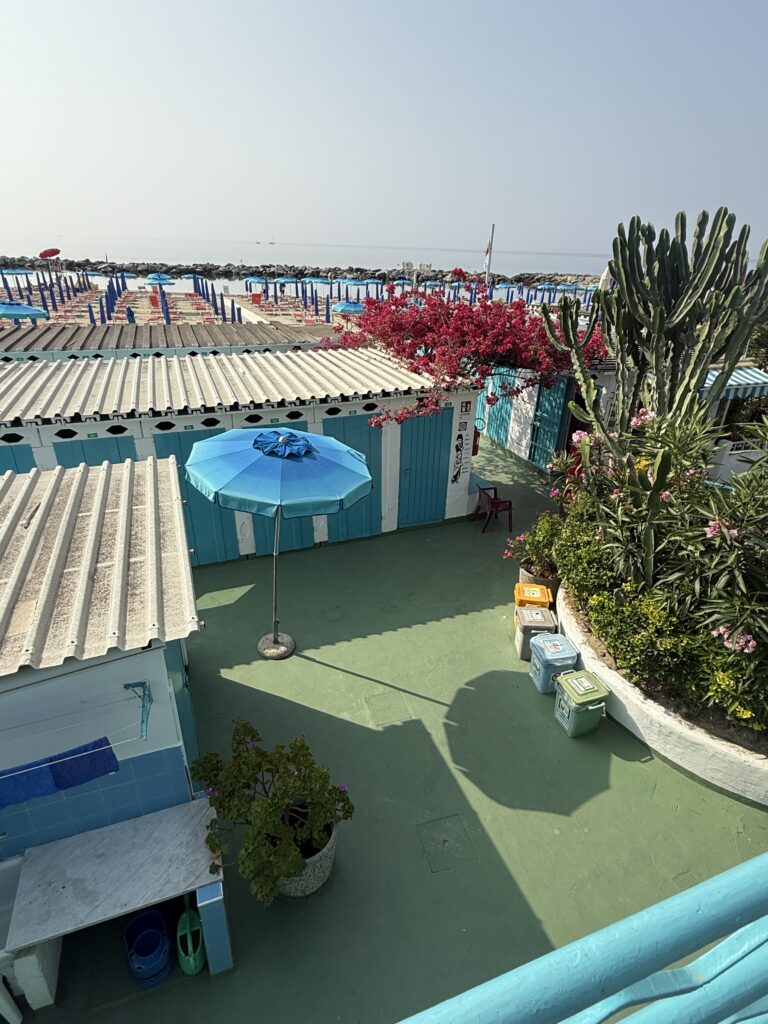
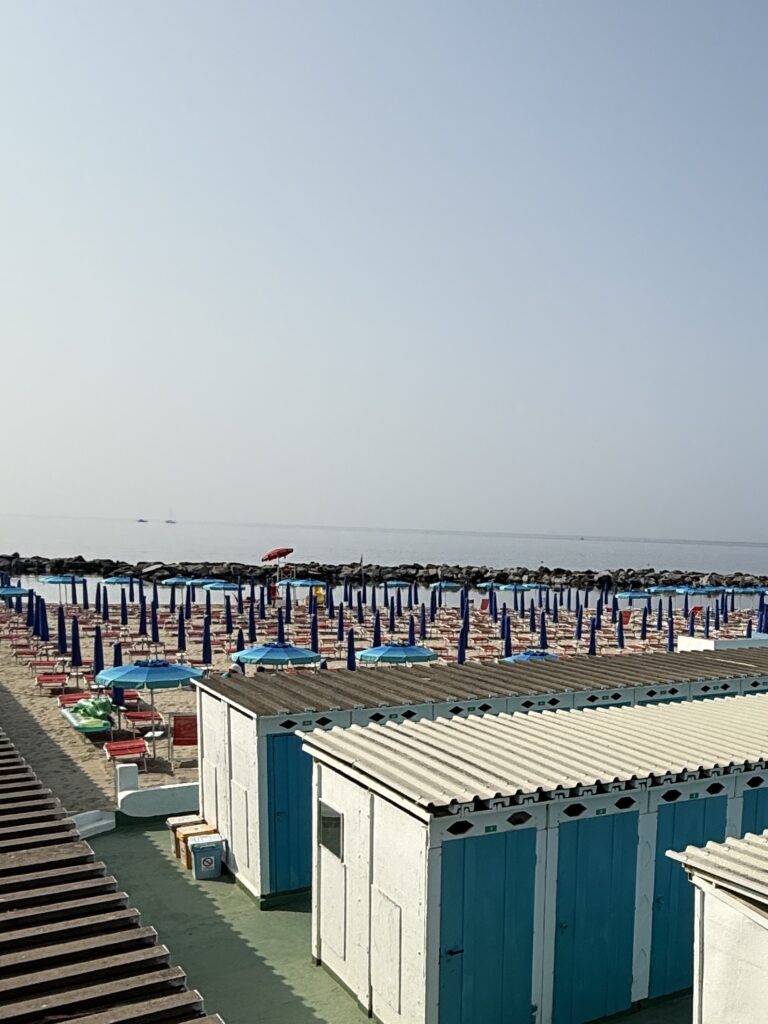
hotel’s private section of the beach